Rolls-Royce has begun global road testing of Project Nightingale, the marque’s first all-electric convertible and the opening model of its new Coachbuild Collection. Only 100 examples will be built. They are invitation-only, hand-crafted at Goodwood, and first customer deliveries are scheduled for 2028.
The news spread quickly after commentator Sawyer Merritt posted that the car is already on public roads: 227 inches long (about 19 feet), fitted with a retractable soft top partly lined in cashmere, and expected to cost more than $5 million each. That figure is not official — Rolls-Royce has not published a price — but it sits at the low end of industry estimates, which range from about $5 million to roughly $9–10 million before personalization.
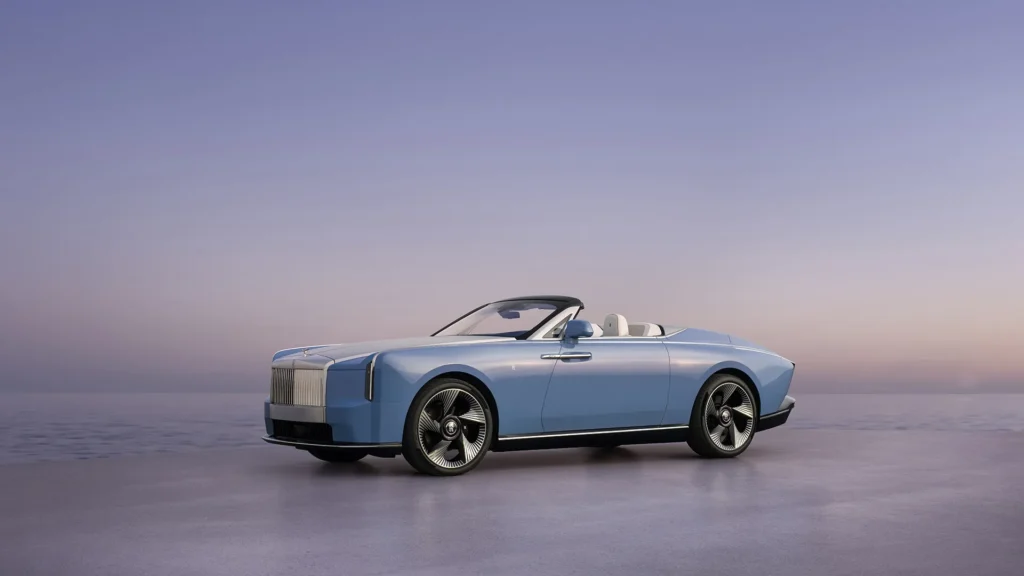
What Project Nightingale actually is
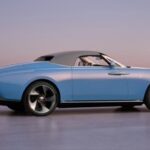
Project Nightingale is not a Spectre with the roof cut off. It is a two-seat, open-top grand tourer built on Rolls-Royce’s Architecture of Luxury aluminum spaceframe — the same modular platform that underpins Spectre — but stretched and restyled as a coachbuilt object. Length is 5.76 meters (18.9 feet / 227 inches), almost identical to a standard-wheelbase Phantom, yet the cabin holds only two people.
The design language mixes 1920s and 1930s glamour with Streamline Moderne: a long, torpedo-like hood, slim vertical headlights, a near one-meter-wide Pantheon grille, a sloping boat-tail rear, and a single central brake lamp. The 24-inch wheels — the largest ever fitted to a production Rolls-Royce — are shaped like yacht propellers viewed from underwater.
The name comes from Le Rossignol (“the nightingale”), the house Henry Royce built for his designers and engineers near his winter home on the French Riviera. Testing has now returned to those same roads.
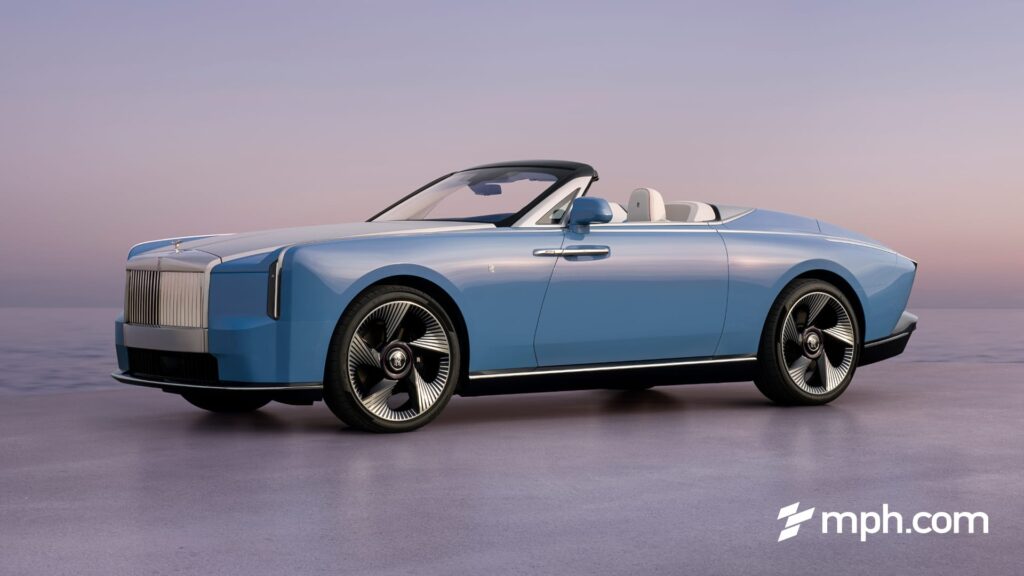
The cashmere roof and the “Piano Boot”
Two details explain why the testing program is so extreme.
The roof. The retractable soft top is lined with a sound-deadening sandwich of cashmere, fabric, and high-performance composites. Rolls-Royce will run it through 10 separate tests covering fabric, mechanism, and performance at temperatures up to 80°C (176°F). The goal is a near-silent cabin whether the top is up or down — quiet enough that rain and birdsong remain audible, but wind roar does not.
The Piano Boot. For the first time on a Rolls-Royce, the trunk opens sideways on a cantilever, like a grand-piano lid. Engineers will cycle it 15,000 times so the gesture still feels theatrical after years of use.
An electric wind deflector is also unique to this car. It is designed to stop high-pressure air from looping forward into the cabin when the roof is down, and to help retain warmth in cold weather.
Inside, the two-seat suite includes a leather-covered saddle armrest aligned with the coachline, hidden compartments, and a Starlight Breeze lighting system of 10,500 illuminated points arranged in waves inspired by nightingale birdsong.
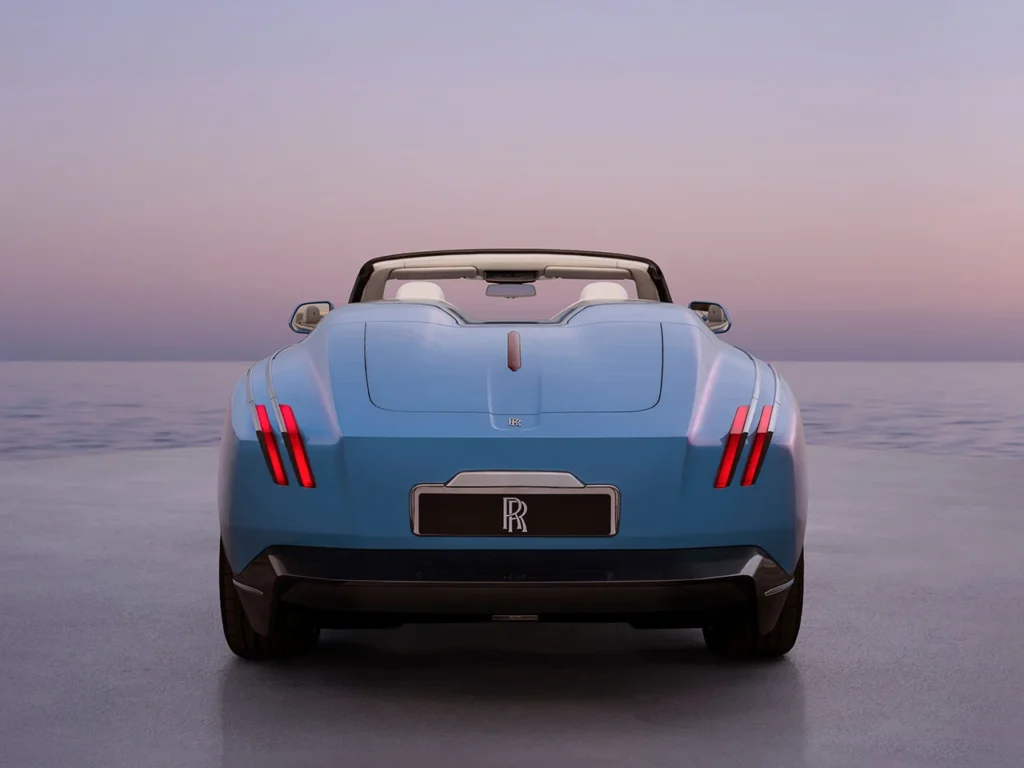
How hard Rolls-Royce is testing it
The company calls this one of the most rigorous programs in its history.
- 350 collective weeks of on-road testing across several prototypes
- Routes from Southern Europe (where testing started more than a century ago) to the Arctic Circle and the Arabian Peninsula
- Altitudes up to 2,750 meters (9,022 feet)
- High-speed validation at up to 155 mph (249 km/h)
- 1,430 hours of aerodynamic modeling and wind-tunnel work already completed before the cars even left the lab
CEO Chris Brownridge framed the program as a continuation of Henry Royce’s 1920s experimental “EX” cars:
“Few motor cars in the marque’s history have asked so much of those who create them. That is why Project Nightingale is being tested with the same rigour with which it was imagined.”
Powertrain and performance: what is known
Rolls-Royce has not released final powertrain figures. Official language is only “the marque’s uncompromising all-electric powertrain.” Because Nightingale shares Spectre’s architecture, most reports expect a dual-motor all-wheel-drive setup in the same family as Spectre / Black Badge Spectre — roughly 580–650+ horsepower and very high torque, with a 0–62 mph time likely in the mid-4-second range and a limited top speed around 155 mph. Range has not been published.
Electric drive is the point. With almost no mechanical noise, the open-top experience can be both potent and silent — something a V12 convertible could never fully achieve.
Price, allocation, and who can buy one
Rolls-Royce does not publish prices for Coachbuild cars.
| Source | Reported figure |
|---|---|
| Sawyer Merritt (Sept 22, 2026) | Over $5 million |
| Autocar / Autoblog | About £7 million (~$9.3–9.5 million) |
| Other industry estimates | $5–10 million, plus personalization |
| Official | Not disclosed |
All 100 cars were reportedly committed before or at the April 2026 reveal. Entry is by invitation only, aimed at long-standing clients described as “design literate.” About one-third of production is expected to go to the United States; none are planned for China because the car is not homologated there under local EV efficiency rules. Each car is specified with its owner and built by hand at Goodwood.
That puts Nightingale in a different league from Spectre. Spectre is a series-production EV. Nightingale is a 100-off coachbuilt object, closer in spirit to Boat Tail and Droptail than to a catalog convertible.
Why this car matters
Rolls-Royce already walked back its 2030 all-electric pledge and will keep selling V12s. Project Nightingale is not a volume EV play. It is a statement that the most expensive, most theatrical Rolls-Royces can still be electric — and that the brand’s next chapter of coachbuilding will use silent propulsion as a design tool, not a compromise.
A 19-foot two-seater with a cashmere roof and a sideways-opening trunk is easy to mock. It is also exactly the kind of object only Rolls-Royce would spend 350 weeks proving in the Arctic and the desert. If the prototypes survive that program, the 100 owners who take delivery from 2028 will own the first electric drophead in the company’s history — and almost certainly one of the quietest convertibles ever built.
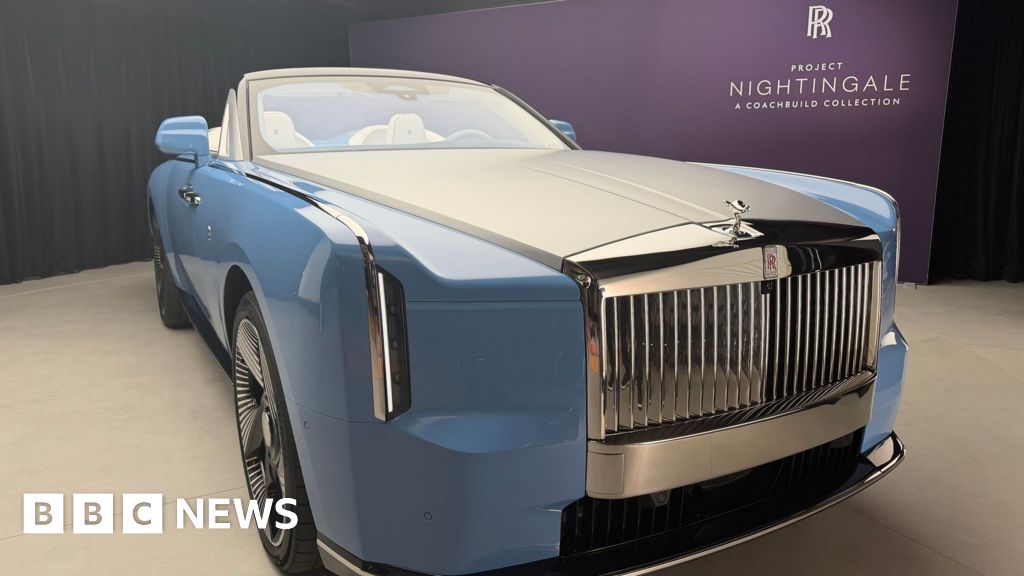
Project Nightingale at a glance
- Official name: Project Nightingale (Coachbuild Collection)
- Type: Two-seat all-electric convertible
- Production: 100 units, invitation only, hand-built at Goodwood
- Length: 5.76 m / 227 in / 18.9 ft
- Platform: Architecture of Luxury (shared with Spectre)
- Wheels: 24-inch (largest on a production Rolls-Royce)
- Roof: Retractable soft top with cashmere / fabric / composite lining
- Signature feature: Side-opening Piano Boot
- Interior lighting: 10,500-point Starlight Breeze
- Testing: 350 weeks on road; 1,430 hours aero; roof at 80°C; boot 15,000 cycles
- Deliveries: From 2028
- Price: Not official; reported from $5 million-plus
Frequently asked questions
Is Project Nightingale the same as Spectre?
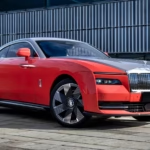
No. Spectre is the series-production electric coupe. Nightingale is a separate, coachbuilt two-seat convertible limited to 100 cars.
Can I order one?
Not through a dealer list. Allocation is invitation-only and appears to be fully committed.
When will it go on sale?
Customer deliveries start in 2028. Road testing began in September 2026.
Why cashmere in the roof?
Rolls-Royce uses it as part of a sound-deadening stack so the cabin stays quiet with the top up and still refined with the top down.
Will there be a cheaper electric Rolls-Royce convertible later?
The company has not announced a volume convertible to replace Dawn. Nightingale is a Coachbuild special, not a preview of a mass-market drophead.