Nuro, Lucid and Uber have started testing fully driverless Lucid Gravity robotaxis on public roads in the San Francisco Bay Area. The companies announced the move on Tuesday, November 24, 2026. There is no safety driver in the vehicle.
Employee rides are next. A public launch on the Uber app is planned for the first quarter of 2027, a few months later than the late-2026 target the partners had talked about earlier.
Where the driverless tests are running
The first streets are in four South Bay cities: Palo Alto, Mountain View, Los Altos and Sunnyvale. The companies say the testing will expand to more of the Bay Area next year. Houston is still in the plan as a second market, later in 2027, after a year of testing there with a safety driver.
This is not the start of the program. Nuro has been running Lucid Gravity robotaxis with a safety operator on public roads in the Bay Area and Houston since December 2025, including overnight testing. The November 24 step is the one that matters for a real service: the driver is out of the car.
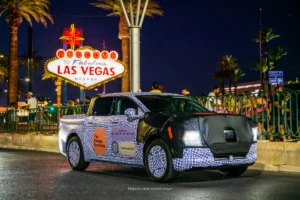
Nuro says that decision followed a structured safety review, including on-road data, large-scale simulation and closed-course work at its Las Vegas facility, where it ran no-vehicle-operator tests on rare and difficult cases such as pedestrian encounters and unusual traffic. In May, Nuro received a California DMV Driverless Testing Permit, which the companies say makes it one of just six firms allowed to test on public California roads with nobody behind the wheel. It also holds a CPUC permit for passenger rides with a safety operator still in the car.
What’s in the Lucid Gravity robotaxi
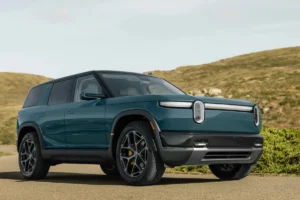
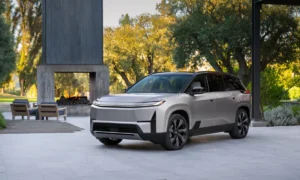
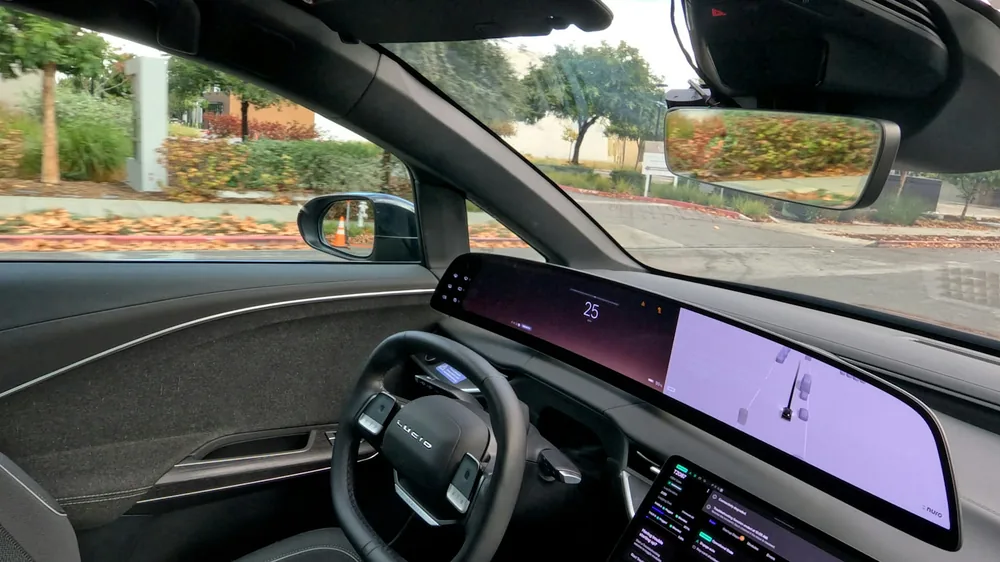
The vehicle is a Lucid Gravity SUV fitted with Nuro’s Level 4 “Nuro Driver” system. The companies and outlets covering the announcement describe a mix of high-resolution cameras, solid-state lidar and radar, plus a roof-mounted LED “halo” that can show a rider’s initials and pickup status.
Lucid has delivered more than 100 of these vehicles, up from a smaller engineering fleet earlier this year. The Verge, citing the companies, says Lucid began building pre-production robotaxis in October to clear safety approvals and planned to start building the commercial fleet in the weeks after the announcement.
Tilo Schwarz, Nuro’s vice president of engineering and head of Nuro Driver, called it a first for the company in a passenger vehicle: “Driverless isn’t new to us, but this marks an exciting first: bringing that experience to a passenger vehicle as we take the next step toward launching our next-generation robotaxi program.”
Kay Stepper, president of Lucid Technologies and Lucid’s chief digital officer, said the milestone “reflects the strength of Lucid’s software-defined vehicles, our manufacturing velocity, and the close collaboration among all three partners.”
The public launch slipped into early 2027
When the three companies first laid out the program in July 2025, the public service was supposed to start in late 2026. That date has moved. Nuro chief operating officer Andrew Chapin told Axios the delay came as the partners finished the product and worked through final permitting, and he described a shift “to the right” as modest given everything that has to come together for a fully driver-out launch.
Riders in the Bay Area are expected to request the cars in the Uber app in the first quarter of 2027. Uber has committed to buying at least 35,000 Lucid vehicles with Nuro’s autonomous system over the coming years, a figure that includes Lucid’s upcoming midsize model, according to Axios and The Verge. Axios also reported that Uber has committed about $500 million each to Nuro and Lucid, and that Uber expects at least 2,000 fully driverless vehicles on its platform by the end of 2027, counting all of its partners.
Uber will not have this lane to itself. Waymo already offers paid robotaxi rides in the Bay Area, and Uber is also working with other autonomous companies. For Lucid, the midsize vehicle in that 35,000-unit commitment is the same program we have been tracking in our Lucid Cosmos 2027 guide. The Gravity robotaxi is the first of those vehicles to go out without a driver.
What this means if you are watching Tesla too
Tesla is already giving Cybercab rides in Texas and has talked about owner-car robotaxi trials, which we have covered in our Cybercab price and specs explainer and our owner robotaxi trials report. This Lucid program is a different approach. The cars are Lucid Gravity SUVs, the driving system is Nuro’s, and Uber will own and operate the vehicles for rides booked in its app, with a California driverless testing permit already in hand.
What nobody has shared yet is the part riders will care about most: what a trip will cost, how large the first service area will be, and how many of those 100-plus Gravity SUVs will actually be on the Uber app on day one. Until those details show up, this is a testing milestone, not a service you can book. We have the early-2027 window on our 2027 EV release calendar as well, and we will update that page once the Uber launch date is firm.
Our take: taking the safety driver out on public Bay Area streets is the hard step, and Lucid, Nuro and Uber have now taken it. The public launch is still a quarter away, and it has already slipped once. If the Q1 2027 Uber debut holds, this will be one of the first times a traditional automaker’s electric SUV is doing paid-style robotaxi work in California without anyone in the front seat.
Would you get in a Lucid Gravity robotaxi with no driver in the Bay Area next year, or are you waiting until the service has a longer track record? Tell us in the comments.
Sources
- Nuro: Nuro, Lucid, and Uber begin driverless testing on public roads in the San Francisco Bay Area (Nov 24, 2026)
- Business Wire: official joint announcement (Nov 24, 2026)
- The Verge: Uber, Nuro, and Lucid kick off fully driverless robotaxi testing (Nov 24, 2026)
- Axios: Nuro and Uber launch driverless testing in San Francisco (Nov 24, 2026)
Image credits: Featured photo of a Lucid Gravity robotaxi in Houston, released by Nuro. Mid-article cabin photo from Nuro’s November 24, 2026 announcement.