The 2026 Volkswagen Atlas delivers significantly more cargo space than the 2026 Subaru Ascent across every seating configuration. Official figures show the Atlas offering a maximum of 96.6 cubic feet with the second and third rows folded, compared to the Ascent’s 75.6 cubic feet. The Atlas also leads behind the third row and behind the second row.
This gap matters for families who regularly haul luggage, sports gear, strollers, or large items. Here’s a clear breakdown of the numbers and what they mean in real-world use.
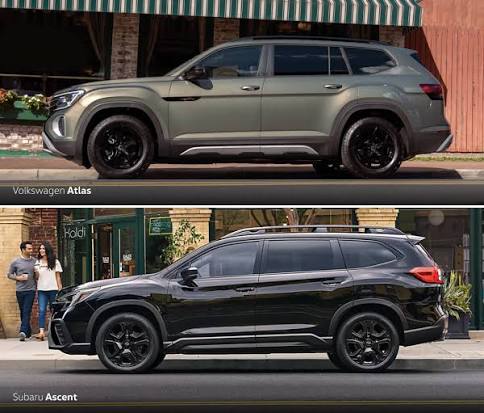
Cargo Space Comparison (2026 Models)
| Configuration | Volkswagen Atlas | Subaru Ascent | Advantage |
|---|---|---|---|
| Behind 3rd row (all seats up) | 20.6 cu ft | 17.8 cu ft | Atlas (+2.8) |
| Behind 2nd row (3rd folded) | 55.5 cu ft | 43.5 cu ft | Atlas (+12.0) |
| Maximum (both rear rows folded) | 96.6 cu ft | 75.6 cu ft | Atlas (+21.0) |
Note: Ascent figures drop slightly (to 17.6 / 42.1 / 72.8 cu ft) on models equipped with a moonroof.
Why the Atlas Wins on Cargo Space
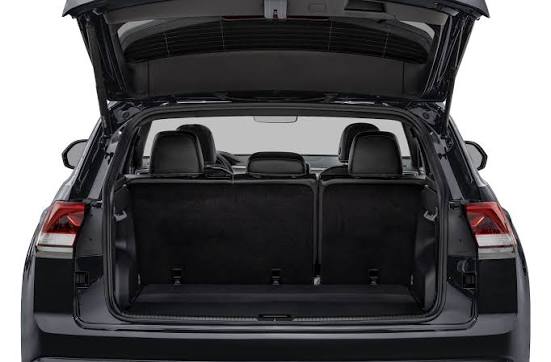
The Atlas benefits from a longer overall length and a more open cargo floor design when the seats are folded. Its second-row seats slide and fold in a way that creates a flatter, more usable load floor. The third-row 50/50 split and second-row 60/40 split further improve flexibility.
In practical terms:
- With all three rows in use, the Atlas still offers enough room for several large suitcases or weekly groceries.
- Folding only the third row gives the Atlas a clear edge for family road trips with luggage or sports equipment.
- Fully flat (both rear rows down), the Atlas approaches the capacity of some smaller vans, making it more capable for moving furniture, camping gear, or college move-in day loads.
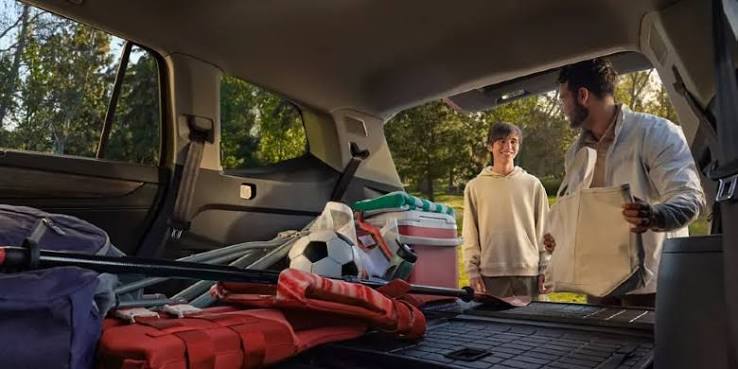
The Ascent remains competitive for most daily needs and includes useful underfloor storage, but it trails noticeably in total volume.
Beyond Cargo: Key Specs Side-by-Side
Seating & Passenger Space
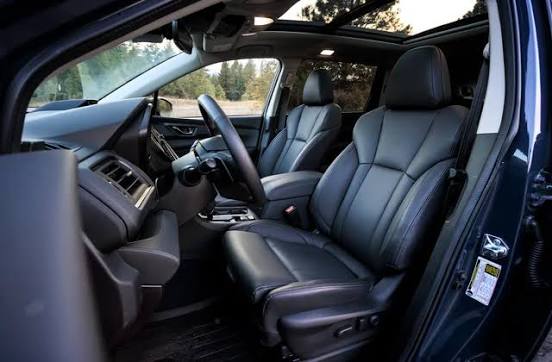
- Atlas: Up to 7 passengers (6 with available second-row captain’s chairs). Passenger volume ≈ 153.7 cu ft.
- Ascent: Up to 8 passengers (second-row bench available). Passenger volume ≈ 153.2 cu ft.
Both feel spacious, but the Ascent’s optional 8-seat layout appeals to larger families, while the Atlas prioritizes cargo flexibility and third-row usability.
Powertrains & Towing
- Atlas: Turbocharged 2.0L four-cylinder, 269 hp and 273 lb-ft of torque. 8-speed automatic. Available front-wheel drive or 4MOTION all-wheel drive. Maximum towing capacity 5,000 lbs.
- Ascent: Turbocharged 2.4L BOXER four-cylinder, 260 hp and 277 lb-ft of torque. CVT with manual mode. Standard Symmetrical All-Wheel Drive. Maximum towing capacity 5,000 lbs.
Both can tow the same maximum weight. The Atlas’s conventional automatic transmission may feel more responsive to some drivers, while the Ascent’s standard AWD and higher ground clearance (8.7 inches) give it an edge in snow or light off-road conditions.
Pricing (Approximate Starting MSRP)
- Atlas: Starts around $39,310–$40,845 depending on drive type.
- Ascent: Starts around $40,795–$42,245.
Pricing is close at the base level. Higher trims on both vehicles climb into the low-to-mid $50,000s.
Which Should You Choose?
Choose the 2026 Volkswagen Atlas if:
- Maximum cargo volume is a top priority
- You frequently fold seats for large items
- You prefer a conventional automatic transmission and slightly more power
Choose the 2026 Subaru Ascent if:
- You need seating for eight
- Standard all-wheel drive and higher ground clearance matter more
- You value Subaru’s reputation for safety systems and long-term reliability in harsh weather
Both are solid three-row family SUVs. For pure cargo capacity, however, the Atlas is the clear winner in the 2026 model year. Its 21-cubic-foot advantage at maximum load and consistent lead in every row configuration make it the more versatile choice for families who prioritize space.
Frequently Asked Questions
Does the 2026 Atlas really have more space behind every row?
Yes. Official SAE cargo volumes confirm the Atlas leads behind the third row (20.6 vs 17.8), behind the second row (55.5 vs 43.5), and at maximum capacity (96.6 vs 75.6).
Can the Ascent close the gap with underfloor storage?
The underfloor compartment is useful for small items, but it does not meaningfully change the overall volume advantage held by the Atlas.
Are these figures the same for all trims?
Cargo volumes are consistent across most trims. Moonroof-equipped Ascents lose a small amount of space.
For the latest pricing, inventory, and test-drive availability in your area, check official Volkswagen and Subaru dealer sites or configure the vehicles online.