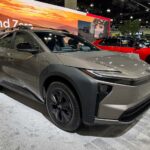
As the electric vehicle market continues to expand, the 2027 Toyota Highlander EV emerges as a game-changer for families seeking a reliable, spacious three-row SUV with zero-emission performance. This all-electric version of Toyota’s bestselling midsize SUV transitions the Highlander nameplate to full electrification, offering enhanced range, advanced technology, and the versatility American drivers expect. With an estimated starting price around $55,000, up to 300+ miles of range, and seating for up to eight, the Highlander EV positions itself against competitors like the Kia EV9 and Hyundai Ioniq 7. If you’re researching 2027 Toyota Highlander EV specs, release date, pricing, or family-friendly features, this detailed guide draws from verified sources to provide the latest insights as of early 2026.
Overview and Design Updates for the 2027 Toyota Highlander EV
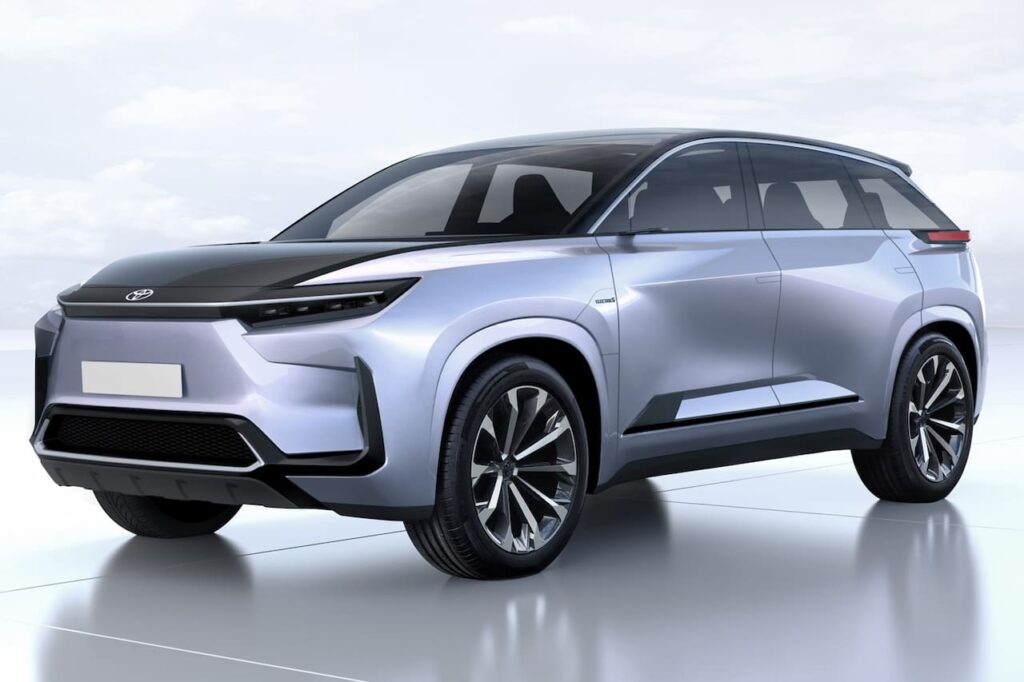
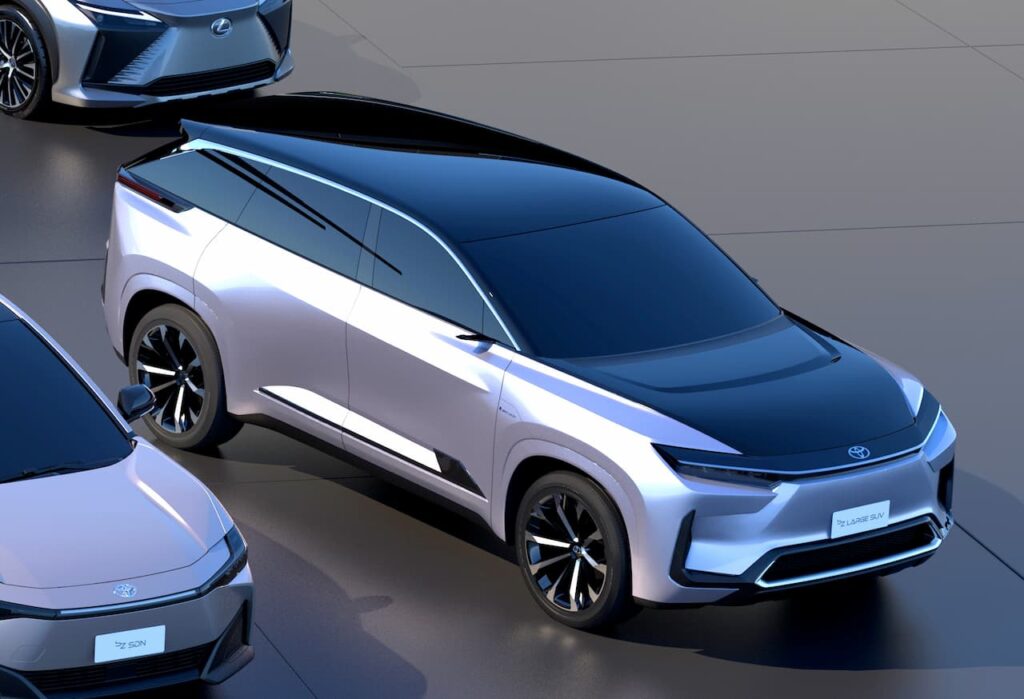
The 2027 Toyota Highlander EV builds on the legacy of the gas-powered Highlander, adopting a dedicated electric architecture likely based on an extended e-TNGA platform for improved efficiency and space. Measuring approximately 197 inches in length, 76 inches in width, and 68 inches in height with a 114-inch wheelbase, it maintains a familiar footprint while incorporating aerodynamic EV-specific styling. Key exterior updates include a sleek, closed-off grille for reduced drag, slim LED headlights with adaptive high beams, and a panoramic glass roof option for an airy feel. The design emphasizes a muscular yet refined profile with available 20-inch alloy wheels, body-colored cladding, and a rear spoiler for better aerodynamics. Ground clearance is around 8 inches, suitable for light off-road use, and the curb weight is estimated at 5,000-5,500 pounds due to the battery pack.
Compared to the 2026 hybrid Highlander, the EV model features a more futuristic aesthetic with flush door handles and a streamlined roofline, optimizing for a drag coefficient under 0.30. It’s designed primarily for U.S. families, with production at Toyota’s Kentucky plant to qualify for federal incentives. This shift to electrification aligns with Toyota’s goal of launching seven new EVs in the U.S. by mid-2027, making the Highlander EV a cornerstone of their sustainable lineup
Powertrain and Performance: Powerful and Efficient Electrification
The 2027 Toyota Highlander EV is expected to feature a dual-motor all-wheel-drive (AWD) system as standard, delivering over 350 horsepower and ample torque for confident acceleration. While exact figures are pending, estimates suggest a 0-60 mph time of around 5.5-6.5 seconds, blending family-hauler practicality with responsive EV dynamics. The powertrain includes permanent-magnet synchronous motors with torque vectoring for enhanced handling on varied surfaces, and regenerative braking with adjustable levels via paddle shifters to maximize energy recovery.
Top speed is likely limited to 115 mph, with EPA-equivalent efficiency ratings projected at 85-95 MPGe combined. Towing capacity could reach up to 5,000 pounds, surpassing many electric SUVs in its class, making it ideal for trailers or boats. The ride is tuned for comfort, with adaptive suspension options on higher trims to handle family road trips smoothly.
Range, Battery, and Charging: Advanced Technology for Long Hauls
A highlight of the 2027 Toyota Highlander EV is its potential use of next-generation solid-state batteries, which promise higher energy density, faster charging, and improved longevity compared to traditional lithium-ion packs. Battery capacity is estimated at 100-120 kWh, enabling an EPA-rated range of 300-350 miles on a full charge—competitive with rivals and sufficient for cross-country drives. Real-world range may vary to 250-300 miles in cold weather or with heavy loads.
Charging capabilities include a North American Charging Standard (NACS) port for Tesla Supercharger compatibility, with DC fast-charging up to 250 kW for a 10-80% charge in about 20-30 minutes under ideal conditions. Level 2 AC charging (11 kW) achieves a full charge in 8-10 hours, while a battery warranty of 10 years/150,000 miles covers capacity retention. Features like battery preconditioning and a heat pump system enhance efficiency in extreme temperatures.
Interior, Technology, and Comfort Features
Inside, the 2027 Toyota Highlander EV offers a premium, family-oriented cabin with seating for seven or eight across three rows. Front legroom measures 42 inches, second-row 41 inches, and third-row 28 inches, with ample headroom throughout. Cargo space starts at 16 cubic feet behind the third row, expanding to 48 cubic feet with the third row folded and up to 84 cubic feet with both rear rows down—versatile for groceries, luggage, or sports gear.
Comfort features include heated and ventilated SofTex or leather seats, tri-zone climate control, and ambient lighting. Technology shines with a 14-inch central touchscreen running Toyota’s latest Audio Multimedia system, supporting wireless Apple CarPlay, Android Auto, and over-the-air updates. A 12.3-inch digital gauge cluster, head-up display, wireless charging, and an available JBL premium audio system with 11 speakers elevate the experience. Connected services include a 3-year trial of navigation, remote start, and vehicle health monitoring.
Safety and Driver Assistance Systems
Toyota’s commitment to safety is evident in the 2027 Highlander EV, which comes standard with Toyota Safety Sense 3.5 or later. This suite includes automatic emergency braking with pedestrian and cyclist detection, adaptive cruise control with lane centering, blind-spot monitoring, rear cross-traffic alert, and lane departure warning with steering assist. Higher trims add Traffic Jam Assist for semi-autonomous highway driving, a 360-degree camera system, and front cross-traffic alert.
The vehicle’s rigid structure, reinforced with high-strength steel, aims for top NHTSA and IIHS ratings. Additional family features include rear-seat reminders and automatic door locks.
Pricing, Trims, and Availability in the USA
The 2027 Toyota Highlander EV is slated for a late 2026 release, with deliveries starting in early 2027. Pricing starts at approximately $55,000 for the base XLE trim, rising to $60,000 for the top Platinum model (before incentives). It may qualify for up to $7,500 in federal EV tax credits if assembled in the U.S. with North American-sourced batteries.
| Trim | Estimated MSRP | Key Features | Range (Est.) |
|---|---|---|---|
| XLE | $55,000 | AWD, Heated Seats, 14″ Touchscreen, Basic Safety Sense | 300 miles |
| Limited | $58,000 | Leather Seats, JBL Audio, Advanced Driver Aids | 300 miles |
| Platinum | $60,000 | Ventilated Seats, Panoramic Roof, Head-Up Display | 300+ miles |
Warranties include 3 years/36,000 miles basic, 5 years/60,000 miles powertrain, and 10 years/150,000 miles on the battery.
Pros and Cons of the 2027 Toyota Highlander EV
Pros:
- Spacious three-row seating and ample cargo
- Potential solid-state battery for superior range and charging
- Toyota’s renowned reliability and safety features
- Competitive towing and AWD performance
Cons:
- Higher starting price than hybrid counterparts
- Range may dip in real-world family use
- Limited third-row space for adults
- Availability delayed to 2027
Why the 2027 Toyota Highlander EV is Ideal for Modern Families
The 2027 Toyota Highlander EV electrifies a family favorite, combining eco-friendly power with practical features for everyday life. Perfect for those seeking a three-row electric SUV under $60,000 with long-range capability, it sets a new standard in the segment. Stay tuned for official reveals, and consult your local dealer for pre-orders— the electric family hauler is here to stay!