Meta Description: Discover how Tesla’s new 325kW Supercharger in Fairbanks, Alaska, shatters cold-weather EV myths. See the Cybertruck charging in -40°F snow – proof that electric vehicles are winter-ready. Read more on USonWheels.com.
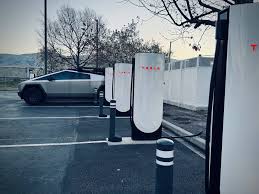
In the heart of Alaska’s frozen frontier, where temperatures plunge to -40°F and blizzards are as common as coffee runs, Tesla is dropping a bombshell that’s sure to warm the hearts of EV skeptics. The electric vehicle giant has quietly unveiled a powerhouse 325kW Supercharger station in Fairbanks – a move that’s not just expanding its charging network but boldly debunking the tired trope that “EVs don’t work in the cold.” Picture this: a sleek Cybertruck plugged in under a blanket of snow, its angular lines glowing against the icy night, surrounded by Tesla’s iconic white pillars standing tall like sentinels in the Arctic dusk.
This isn’t hype; it’s happening now. As shared by Tesla insider Nic Cruz Patane on X (formerly Twitter), the station is operational, ready to juice up vehicles at blistering speeds even when the mercury dips lower than most thermostats dare dream. And with the Cybertruck – Tesla’s rugged, all-electric beast designed for off-road adventures – front and center in the viral photo, it’s a visual mic drop for anyone still clinging to gas-guzzler superiority in winter climes.
Why Fairbanks? Tesla’s Strategic Push into Extreme Cold
Fairbanks isn’t your average pit stop. Nicknamed the “Golden Heart City,” it’s the gateway to Alaska’s vast wilderness and endures some of the harshest winters on the planet. Average lows in January hover around -19°F, but extremes routinely shatter -40°F, with wind chills that could freeze your ambition solid. Yet, Tesla chose here for its latest Supercharger milestone. Why? It’s a calculated flex in the ongoing EV adoption battle.
“Tesla casually opening a 325 kW Supercharger in Fairbanks, Alaska where temperatures can deep to -40°F (and often lower). ‘But EVs don’t work in the cold,'” Patane quipped in his post, capturing the irony perfectly. This isn’t reactive engineering; it’s proactive dominance. Tesla’s Superchargers already boast preconditioning tech that warms batteries en route, ensuring optimal charging even in sub-zero hellscapes. At 325kW, this Fairbanks setup can deliver up to 200 miles of range in just 15 minutes – fast enough to outpace a quick snowball fight.
For Alaskans, this means real freedom. No more white-knuckling gas stations in remote outposts or fretting over range anxiety during aurora-chasing road trips. It’s a lifeline for the state’s growing EV fleet, which saw Tesla registrations spike 150% last year alone, per state data. And let’s not forget the Cybertruck: with its 800-volt architecture and massive 123kWh battery, it’s tailor-made for such extremes, offering up to 340 miles of range even in cold snaps when properly preconditioned.
This launch echoes Tesla’s relentless infrastructure blitz. Just last month, we covered the 2025 Tesla Model Y Performance deliveries kicking off in the US, highlighting how the refreshed Juniper model is winter-optimized with enhanced thermal management. Pair that with today’s Fairbanks news, and it’s clear: Tesla isn’t just building cars; it’s forging an unbreakable EV ecosystem.
Shattering the Cold-Weather EV Myth: Science vs. Skepticism
Let’s address the elephant in the igloo: the persistent myth that electric vehicles falter in freezing temps. Critics point to reduced battery efficiency – yes, cold can sap 20-30% of range without precautions – but Tesla’s data tells a different story. Over 6.5 billion miles logged on Full Self-Driving (Supervised) as of late November, including countless winter jaunts, prove EVs are evolving faster than the doubters can thaw their arguments. (Check our deep dive on those 6.5 billion FSD miles here for the full scoop.)
Tesla’s edge? Battery chemistry wizardry. The Cybertruck’s 4680 cells, wrapped in a steely exoskeleton that shrugs off snow like a polar bear’s fur, maintain charge rates that gas pumps can only envy. Real-world tests from owners in Norway and Canada – EV hotbeds with Fairbanks-level chills – show Cybertrucks holding 80% efficiency post-preconditioning. Add V4 Superchargers like this one, with liquid-cooled cables to prevent icing, and you’ve got a system that’s not just survivable but superior.
Replies to Patane’s tweet hammer it home. One user marveled, “People tell you winter is harsh on batteries and Tesla opens a giant charging station in the heart of Alaska 🥶 This isn’t a response to criticism; this is proof that technology evolves to break the impossible.” Another quipped, “Cold-weather EV myths just keep getting colder.” Even the naysayers concede: one admitted, “I don’t even think about trying to supercharge if the temperature is under 30F. It’s brutal,” but that’s pre-Tesla’s latest upgrades.
Globally, this matters. As EV sales climb toward 20 million units annually by 2030 (per IEA forecasts), cold climates like the northern US, Scandinavia, and Russia represent untapped markets. Tesla’s Fairbanks gambit? It’s a blueprint for global conquest, much like the FSD Supervised demo that wowed Rome’s mayor, signaling Europe’s EV autonomy surge.
Cybertruck in the Snow: A Visual Testament to Tesla Toughness
The tweet’s attached image is pure poetry – a silver Cybertruck mid-charge at the new station, vaulted Superchargers aglow in red and white against a starry, snow-dusted sky. Bare trees frame the scene, with streetlights casting ethereal halos on the fresh powder. It’s not staged; it’s authentic Alaska, where the Cybertruck’s all-terrain tires and adaptive air suspension shine brightest.
For those eyeing a winter warrior, this setup screams capability. The truck’s steer-by-wire system and four-wheel steering make it nimble on slick ice, while over-the-air updates keep software frosty-fresh. Priced from $79,990, it’s a premium pick, but with incentives like the $7,500 federal EV tax credit, it’s more accessible than ever.
What’s Next for Tesla’s Frozen Frontier?
This Fairbanks launch is just the tip of the iceberg. Tesla’s 2025 roadmap includes 2,000 new Supercharger stalls worldwide, with a focus on high-latitude hubs. Expect more in Yukon and the Northwest Territories soon. And with the Tesla Roadster 2026 unveiling on the horizon – a sub-1-second 0-60 supercar that laughs at all weather – Elon Musk’s empire shows no signs of slowing.
In short, Tesla isn’t waiting for winter to thaw; it’s charging straight through it. For EV enthusiasts, adventurers, and anyone tired of frostbitten fuel stops, this is your sign: the future is electric, unbreakable, and gloriously cold-proof.
What do you think – ready to plug in under the northern lights? Drop your thoughts in the comments below, and subscribe to USonWheels.com for the latest in EV news, Tesla updates, and beyond. Follow us on X @USonWheels for real-time scoops!
Related Reads:
- Tesla Model Y Performance 2025: Deliveries Start December 15
- 6.5 Billion Miles on FSD: Tesla’s Autonomy Milestone