
The 2026 Toyota C-HR EV marks the electrified return of Toyota’s stylish subcompact crossover to the U.S. market, blending bold coupe-like design with powerful all-electric performance. As a fully battery electric vehicle (BEV), it ditches the gas engine for dual motors delivering instant torque and up to 338 horsepower, making it a fun-to-drive option in the compact electric SUV segment. With an estimated range of up to 290 miles, fast charging capabilities, and premium features like a 14-inch touchscreen, the C-HR EV targets urban adventurers and eco-conscious families. If you’re researching 2026 Toyota C-HR EV specs, pricing, features, or release date in the USA, this in-depth guide covers everything based on official announcements and expert reviews.
Overview and Design Updates for the 2026 Toyota C-HR EV
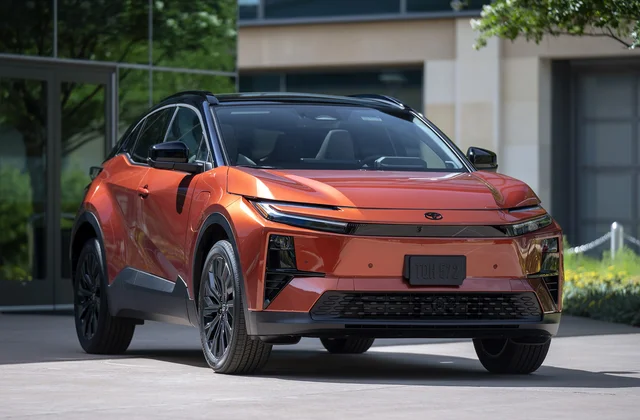
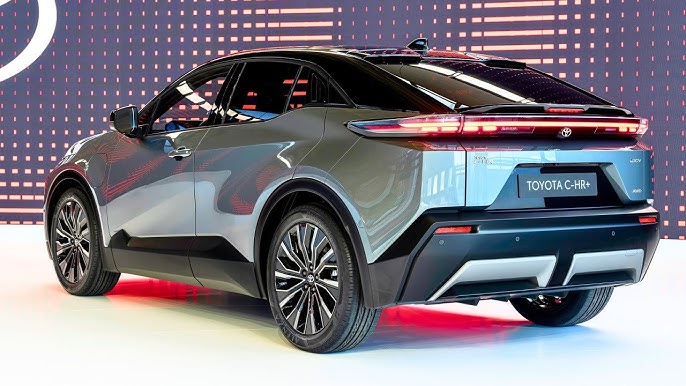
Reviving the C-HR nameplate after a brief hiatus, the 2026 Toyota C-HR EV adopts a sleek, coupe-inspired SUV profile that’s both athletic and aerodynamic. Built on Toyota’s e-TNGA platform shared with models like the bZ, it measures 177.9 inches in length, 73.6 inches in width, 63.8 inches in height, and a 108.3-inch wheelbase—making it compact yet spacious for city driving. The exterior features a “hammerhead” front fascia with slim LED headlights, seamless body lines, and an angular rear end for a dynamic look. Standard low-profile roof rails and a power liftgate enhance utility, while rain-sensing wipers add convenience.
Wheel options include 18-inch black alloy wheels on the SE trim and 20-inch gunmetal-finished alloys on the XSE for a more premium stance. Exterior colors range from Overcast and Tandoori to premium options like Wind Chill Pearl, with two-tone schemes available on XSE (e.g., Tandoori with Midnight Black Metallic roof). Compared to the previous gas-powered C-HR, the EV version offers a lower center of gravity for better handling, thanks to the underfloor battery placement. This design positions it as a stylish competitor to EVs like the Hyundai Kona Electric and Chevrolet Bolt EUV.
Powertrain and Performance: Electrifying Dynamics
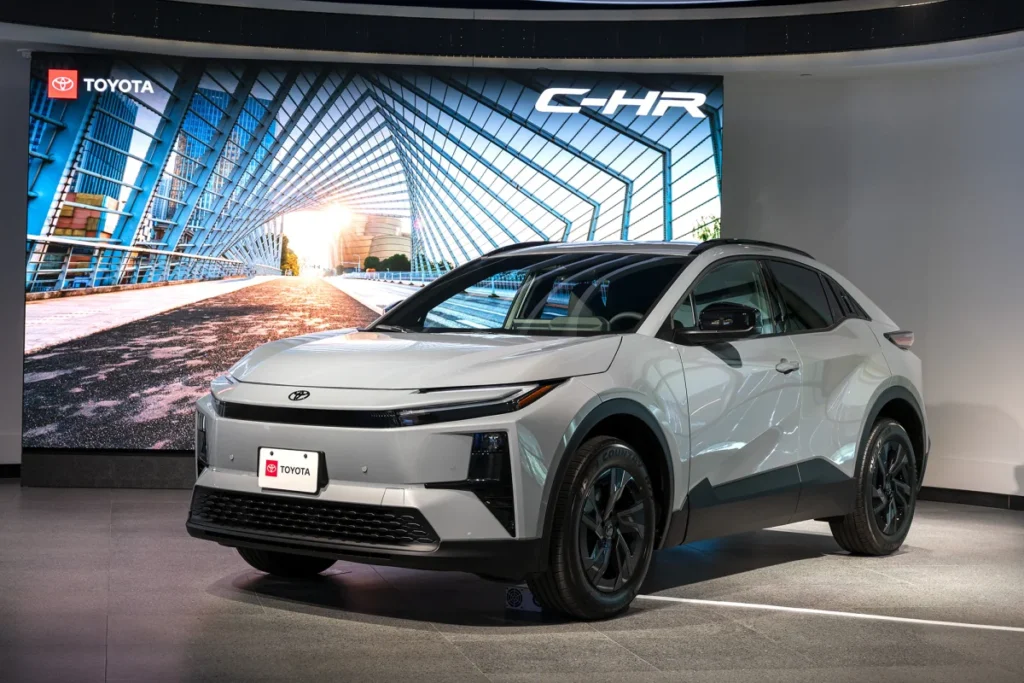
The 2026 Toyota C-HR EV comes standard with all-wheel drive (AWD) powered by dual electric motors—one on each axle—delivering a combined 338 horsepower. This setup provides instant torque for responsive acceleration, with a manufacturer-estimated 0-60 mph time of around 5.0 seconds—quicker than many rivals in its class. The e-TNGA platform includes tuned suspension with optimized springs, dampers, and anti-roll bars for agile handling, while the low battery placement enhances stability.
Regenerative braking via steering wheel-mounted paddle shifters offers four adjustable levels to recapture energy and extend range. Top speed is electronically limited, and EPA fuel economy equivalents are projected at around 100-110 MPGe combined, though official figures are pending. This powertrain makes the C-HR EV ideal for spirited urban drives, with real-world performance praised for its smooth, quiet operation.
Range, Battery, and Charging: Efficient and Convenient
At the heart of the 2026 Toyota C-HR EV is a 74.7 kWh lithium-ion battery (67 kWh usable capacity), offering a manufacturer-estimated range of up to 290 miles on a full charge—competitive for its segment. Range can vary based on weather, driving style, and trim, with some sources noting up to 300 miles in optimal conditions. The battery features redundant monitoring for voltage, current, and temperature to ensure safety and longevity.
Charging is user-friendly:
- DC Fast Charging: North American Charging Standard (NACS) port allows 10-80% charge in about 30 minutes at up to 150 kW, with Plug & Charge for seamless sessions at compatible stations, including Tesla Superchargers.
- AC Charging: 11 kW onboard charger for Level 2 (240V) charging, achieving a full charge in 7-8 hours; includes a dual-voltage cable for Level 1 (120V).
- Additional Features: Battery preconditioning (manual or automatic via navigation) optimizes temperature for faster charging.
The battery warranty covers 8 years/100,000 miles, ensuring peace of mind.
Interior, Technology, and Comfort Features
The 2026 Toyota C-HR EV boasts a premium, open cabin seating five with soft-touch materials and customizable ambient lighting. Front legroom is ample at around 42 inches, with rear space suitable for adults; cargo measures up to 25.4 cubic feet behind the rear seats, expandable via 60/40 split-folding seats. SE trims feature Fabric/SofTex seats with an 8-way power driver’s seat and heated front seats, while XSE adds synthetic suede, an 8-way power passenger seat, and driver memory. A panoramic roof is available for an airy feel.
Tech highlights include a 14-inch touchscreen with Toyota Audio Multimedia, wireless Apple CarPlay/Android Auto, and a digital gauge cluster. Audio options: Six-speaker standard or nine-speaker JBL with an 800-watt amp and subwoofer. Connectivity trials include Drive Connect (3 years), Safety Connect (5 years min), and Remote Connect (3 years) for features like remote climate control and charging scheduling. Dual Qi wireless chargers, USB-C ports, and rear A/C controls enhance usability.
Safety and Driver Assistance Systems
Safety is paramount in the 2026 Toyota C-HR EV, with Toyota Safety Sense 3.0 standard across trims:
- Pre-Collision System with Pedestrian Detection
- Full-Speed Dynamic Radar Cruise Control
- Lane Departure Alert with Steering Assist and Lane Tracing Assist
- Road Sign Assist and Automatic High Beams
- Proactive Driving Assist for subtle braking/steering in curves or traffic
Additional features include Blind Spot Monitor with Rear Cross-Traffic Alert, Safe Exit Alert, and the Star Safety System (VSC, TRAC, ABS, etc.). XSE adds Traffic Jam Assist, Lane Change Assist, Front Cross-Traffic Alert, and Panoramic View Monitor. Crash-test ratings from NHTSA and IIHS are expected to be excellent, building on Toyota’s safety reputation.
Pricing, Trims, and Arrival Date in the USA
The 2026 Toyota C-HR EV is affordably positioned, with estimated starting prices around $35,000 for the SE trim and $38,000 for the XSE (before destination fees and incentives). It may qualify for federal EV tax credits up to $7,500 under the Inflation Reduction Act, potentially lowering the effective cost below $30,000. Available in SE and XSE trims, with XSE adding premium features like larger wheels and advanced driver aids.
| Trim | Estimated MSRP | Key Features | Range (Est.) |
|---|---|---|---|
| SE | $35,000 | 18″ wheels, Heated seats, 14″ touchscreen, TSS 3.0 | Up to 290 miles |
| XSE | $38,000 | 20″ wheels, JBL audio, Advanced driver assists, Panoramic roof | Up to 290 miles |
Arrival date: Now available at U.S. Toyota dealerships as of early 2026, following its debut in May 2025. Warranty includes 3 years/36,000 miles basic, 5 years/60,000 miles powertrain, and ToyotaCare for 2 years/25,000 miles maintenance.
Pros and Cons of the 2026 Toyota C-HR EV
Pros:
- Stylish design and quick acceleration
- Competitive range and fast charging
- Advanced tech and safety features
- Affordable pricing with potential incentives
Cons:
- Limited cargo space compared to larger EVs
- No front-wheel-drive option
- Pricing estimates may vary until official
- Range slightly lower than some competitors
Why the 2026 Toyota C-HR EV is Worth Considering
The 2026 Toyota C-HR EV combines fun performance, modern features, and Toyota’s reliability in an affordable package, making it a strong contender for buyers seeking a stylish electric crossover under $40,000. With its early 2026 arrival, now is the time to explore options at your local dealer. Whether for daily commutes or weekend escapes, this EV elevates the subcompact segment—test drive one today!