In a groundbreaking development that’s set to redefine the future of autonomous transportation, Tesla has rolled out an update allowing passengers to occupy the front seat in its unsupervised Robotaxi service. This move comes hot on the heels of Tesla’s rapid advancements in Full Self-Driving (FSD) technology, marking a significant milestone in making driverless rides more practical and efficient for everyday users.
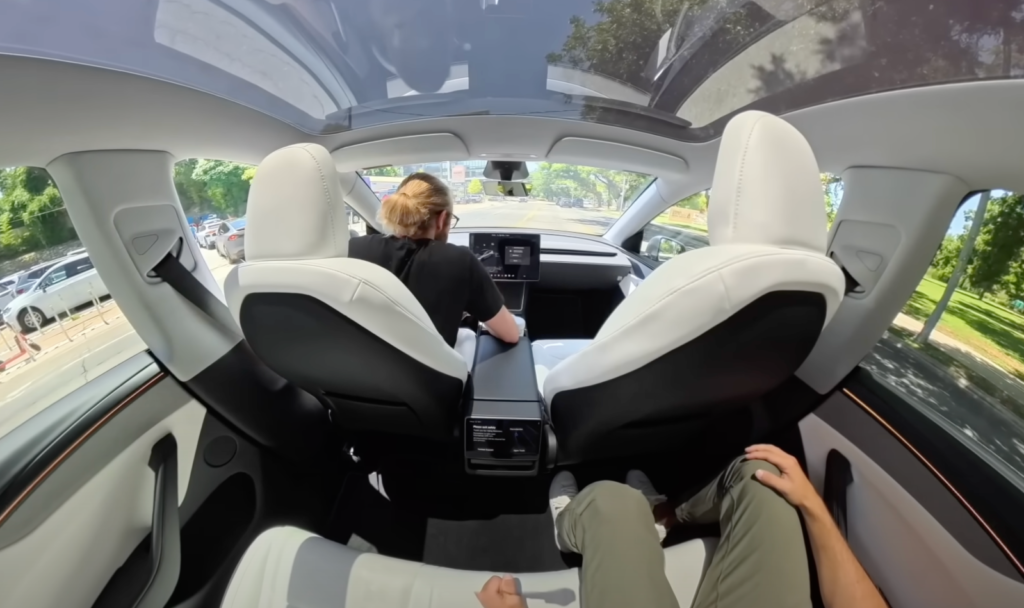
The news broke via a viral post on X (formerly Twitter) from Tesla enthusiast Nic Cruz Patane, showcasing a hands-on demonstration of the new feature. In the video, a passenger sits comfortably in the front seat of a Tesla Robotaxi navigating urban roads without any human intervention. When the rider attempts to touch the steering wheel, the vehicle’s display promptly flashes a warning: “Do not touch the steering wheel when the vehicle continues the drive.” This seamless integration highlights Tesla’s confidence in its AI-driven system, which now disables manual inputs from the wheel during unsupervised operation.
Key Highlights from the Demonstration
- Front Seat Accessibility: Previously, unsupervised Robotaxi rides were limited to rear passengers only, with safety monitors or restrictions in place for the front. The update expands capacity, potentially allowing up to four passengers in models like the Model Y-based Robotaxi.
- Media Controls and User Experience: Riders can now interact with the front touchscreen to control media, syncing seamlessly with their Tesla app for personalized entertainment during the journey.
- Safety Protocols: The system actively discourages interference with driving controls, ensuring the AI maintains full authority. This aligns with Tesla’s ongoing emphasis on safety, backed by billions of miles of real-world FSD data.
Patane’s post, which has garnered thousands of views and engagements, quotes an earlier demonstration from TSLA99T, an ex-Tesla AI engineer, who shared footage of riding in the passenger seat. “In passenger seat now,” the quote reads, underscoring the shift toward fully autonomous, occupant-free operations where possible.
Broader Implications for Tesla’s Robotaxi Fleet
This update is part of Tesla’s aggressive push to scale its Robotaxi network, starting in Austin, Texas, where unsupervised rides without safety monitors have already begun for select users. Tesla AI Director Ashok Elluswamy confirmed that a small fleet of fully unsupervised vehicles is now integrated into the service, with plans to increase the ratio as FSD performance data accumulates in real-city traffic.
Experts and enthusiasts alike are buzzing about the potential. As one X user noted, “This is the moment the robotaxi era officially starts.” With no need for a safety driver, Tesla can optimize fleet efficiency, reduce operational costs, and accelerate deployment to other cities. Elon Musk has previously hinted at solving unsupervised FSD, predicting Robotaxis operating without front-seat occupants by early 2026 – a timeline that’s now materializing.
For context, Tesla’s FSD (Unsupervised) builds on over 6.5 billion miles of supervised driving data from its global fleet, making it one of the most robust autonomous systems available. This data-driven approach has proven safer than human drivers in complex scenarios, from navigating traffic cones to handling urban chaos.
How This Fits into Tesla’s Larger EV Ecosystem
At USonWheels, we’ve been tracking Tesla’s autonomous ambitions closely. Just last week, we reported on the Tesla Cybercab Production Set to Launch in Less Than 100 Days: Revolutionary Unboxed Process to Slash Assembly Times, where Tesla’s innovative manufacturing could cut assembly times by up to 50%, paving the way for mass Robotaxi production.
Earlier sightings, like the Tesla Cybercab Spotted Cruising Next to Model Y: Stunning Size Comparison Highlights 60% Fewer Body Parts in Revolutionary Robotaxi Design, showcased the compact, efficient design that’s now enabling these front-seat capabilities. And don’t miss our deep dive into What Does 6.5 Billion Miles Mean for Tesla’s Full Self-Driving?, which explains how this massive dataset is fueling unsupervised advancements.
What’s Next for Autonomous Rides?
As Tesla continues to refine FSD through real-world testing, expect expansions beyond Austin. Challenges remain, such as regulatory approvals and scaling to high-speed highways, but early reviews are overwhelmingly positive: smooth, silent, and intervention-free rides that eliminate awkward small talk and tips.
If you’re in Austin, hail a Robotaxi via the Tesla app and experience the future firsthand. Stay tuned to USonWheels for the latest updates on Tesla, EVs, and autonomous tech – your go-to source for wheels in motion.