In a major leap forward for electric vehicle technology, Chinese automaker BYD has officially launched its God’s Eye 5.0 assisted driving system. This cutting-edge update promises enhanced safety and performance through AI-driven innovations, drawing from an unprecedented volume of real-world driving data. As EV enthusiasts and industry watchers keep a close eye on autonomous and assisted driving advancements, BYD’s latest rollout positions the company as a formidable player in the global market.

What is BYD’s God’s Eye 5.0 Assisted Driving System?
BYD’s God’s Eye 5.0 represents the newest iteration of the company’s in-house assisted driving software, first introduced in early 2025. Unlike traditional rule-based systems, this version emphasizes reinforcement learning and end-to-end, closed-loop control. It processes real-time driving inputs to dynamically update decision-making logic, making the system more adaptive to complex road scenarios.
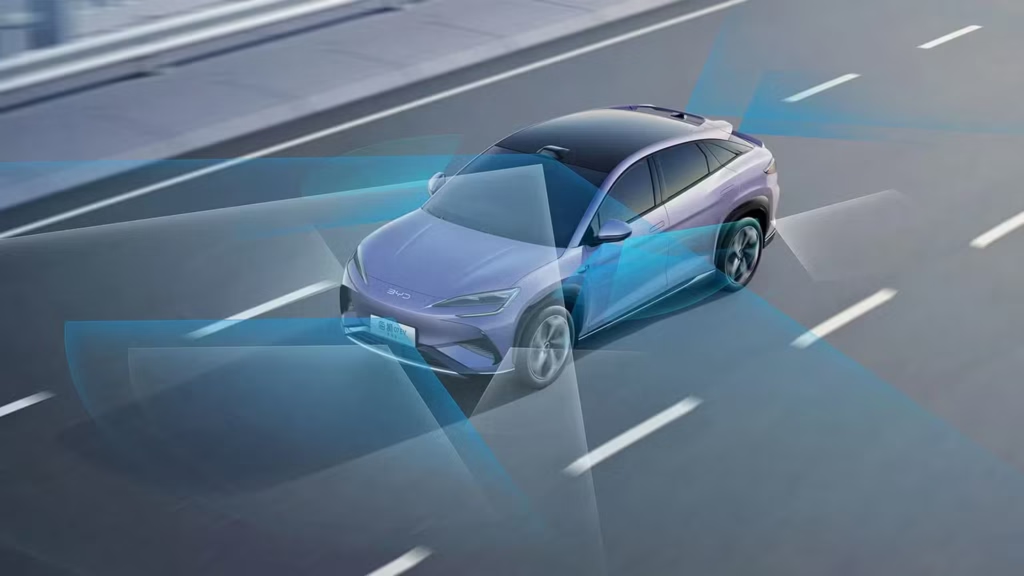
The system is branded under different tiers—God’s Eye C, B, and A—corresponding to BYD’s DiPilot 100, 300, and 600 hardware configurations. These tiers vary in sensor integration, with higher-end models featuring advanced multi-sensor setups including cameras, millimeter-wave radar, and ultrasonic sensors, all powered by a high-computing platform.
Massive Data Collection Fuels Innovation
One of the standout aspects of God’s Eye 5.0 is its reliance on big data. BYD reports gathering over 160 million kilometers (approximately 99 million miles) of driving data daily from more than 2.3 million vehicles equipped with previous versions of the system. This data is collected only when assisted driving functions are active and is used to train and refine the software’s perception and vehicle control algorithms.
This approach mirrors strategies employed by leading EV manufacturers worldwide, enabling rapid iterations and improvements. By the end of 2025, over 2 million BYD vehicles in China were already outfitted with God’s Eye technology, with the total surpassing 2.3 million as more models adopted the system.
Key Features and Safety Enhancements
God’s Eye 5.0 introduces several upgraded features designed to boost driver safety and convenience:
- Automatic Emergency Steering and Braking: Improved responses to stationary vehicles, pedestrians, and children, even in challenging environments like low-visibility tunnels.
- AI-Driven Decision Making: Shifting from fixed rules to reinforcement learning allows the system to learn from diverse driving conditions, enhancing overall reliability.
- Over-the-Air (OTA) Updates: Features are delivered seamlessly via software releases, ensuring vehicles stay up-to-date without needing physical modifications.
These enhancements are positioned as assisted-driving tools rather than full autonomy, aligning with current regulatory standards in China and emphasizing driver oversight.
Deployment and Vehicle Compatibility
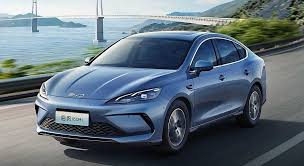
Currently available in China, God’s Eye 5.0 is deployed across a broad spectrum of BYD’s electric vehicle lineup, from entry-level to premium models. The system’s capabilities scale with the vehicle’s hardware, making it accessible to a wide range of consumers. BYD’s unified branding under God’s Eye simplifies the user experience, regardless of the underlying DiPilot tier.
This widespread deployment underscores BYD’s commitment to scaling intelligent driving technologies, with over 2.3 million vehicles now contributing to the data ecosystem.
Implications for the EV Market and Future Outlook
BYD’s aggressive push into assisted driving comes at a time when the global EV market is heating up, with competitors like Tesla and others vying for dominance in autonomous tech. By leveraging its massive fleet for data collection, BYD is accelerating its R&D cycle, potentially closing the gap with industry leaders.
For US drivers and EV buyers, this development signals exciting possibilities as BYD expands internationally. While the system is initially China-focused, global rollouts could follow, bringing advanced safety features to more markets.
Stay tuned to US on Wheels for more updates on EV innovations, autonomous driving trends, and BYD’s latest moves. If you’re interested in how this compares to other systems, check out our previous coverage on electric vehicle advancements.