The Dodge Super Bee is one of the most honest muscle cars Detroit ever built: less chrome, more torque, and a price that working buyers could actually reach. Born in 1968 as Dodge’s answer to the Plymouth Road Runner, the Super Bee spent four short years as a budget B-body bruiser, vanished for decades, then returned on the Charger—first with HEMI V8s, and now, for 2027, with a 600-horsepower twin-turbo inline-six.
This guide covers every generation, the engines that defined the badge, collector values, and why the Super Bee still matters in 2026.
What Is the Dodge Super Bee?
The Super Bee is Dodge’s value-first performance package. Unlike the more luxurious Coronet R/T or Charger R/T, the original Super Bee stripped out extras and put the money into a heavy-duty suspension, a four-speed (or TorqueFlite), and a big-block V8 that could embarrass cars costing hundreds more.
The name itself is a pun. Designer Harvey J. Winn combined Chrysler’s B-body platform with the Scat Pack bumblebee mascot. The result: Super Bee. The cartoon bee on the fenders, the tail stripe, and later the Ramcharger hood became instant identifiers.
Key identity points that never really changed:
- Affordable muscle first, luxury second
- Bold graphics and high-impact colors
- Real performance hardware, not just badges
- A direct rival to the Plymouth Road Runner
Dodge sold far fewer Super Bees than Plymouth sold Road Runners—about 56,000 original cars versus well over 180,000 Road Runners through 1971—which is exactly why surviving Bees are now prized.
1968–1970: The Original Coronet Super Bee
Dodge rushed the Super Bee into production mid-1968 after watching the Road Runner fly off lots. The first cars were pillared two-door Coronet 440 coupes on the 117-inch B-body. Base price: $3,027.
Standard equipment was serious for the money:
- 383 Magnum V8 (335 hp, 425 lb-ft) using 440 heads, cam, and manifolds
- Heavy-duty Torsion-Aire suspension
- Four-speed with Hurst Competition-Plus shifter (TorqueFlite optional)
- Rallye gauges from the Charger
- Dual exhaust and performance tires
The only other engine in 1968 was the 426 Street Hemi at 425 hp. At roughly $600–$1,000 extra, it clashed with the Bee’s budget mission. Dodge built only 125 Hemi Super Bees that first year. Total 1968 production: 7,844.
1969: The Year the Bee Found Its Sting
1969 added a hardtop body, a refreshed grille, and—mid-year—the engine that made the Super Bee a legend: the 440 Six Pack. Three Holley two-barrels on a high-rise manifold produced 390 hp and 490 lb-ft. The A12 package that came with it also brought the lift-off Ramcharger fiberglass hood, black steel wheels, and often a Dana 60 with 4.10 gears.
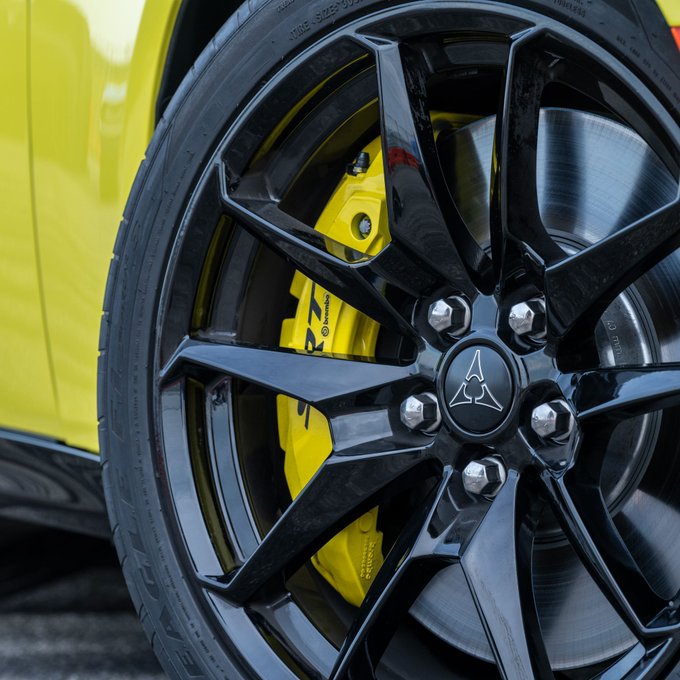
Period tests put a 440 Six Pack Super Bee at 0–60 in about 6.3 seconds and the quarter-mile in 13.8 seconds at 104 mph. That was Hemi-adjacent performance at a much lower price.
1969 production jumped to about 27,800 cars:
- 383 Magnum: 25,727
- 440 Six Pack: 1,907
- 426 Hemi: 166
1970: Peak Classic Bee
Styling tightened again. The 383, 440 Six Pack, and 426 Hemi remained. Production fell to 15,506 as insurance rates and emissions pressure started to bite. Hemi cars dropped to just 36 units.
Classic first-generation specs at a glance:
| Engine | Years | Rated HP | Torque | Notes |
|---|---|---|---|---|
| 383 Magnum 4-bbl | 1968–1970 | 335 | 425 lb-ft | Base engine; 440 heads/cam |
| 440 Six Pack 3×2-bbl | 1969½–1970 | 390 | 490 lb-ft | A12 package; best value |
| 426 Hemi 2×4-bbl | 1968–1970 | 425 | 490 lb-ft | Rare and expensive |
1971: The Super Bee Moves to the Charger
When the Coronet lost its two-door body, Dodge transferred the Super Bee name to the new fuselage Charger. It stayed the affordable alternative to the Charger R/T. Base price was about $3,271.
This one-year car is the rarest original Super Bee. Dodge built only about 5,054. A small-block 340 (275 hp) became the new base engine; the 383 was detuned to 300 hp; the 440 Six Pack continued; Hemi production collapsed to 22 cars.
The 1971 Super Bee is the only original Bee with the Coke-bottle Charger shape, and Hemi examples now sit at the top of the market.
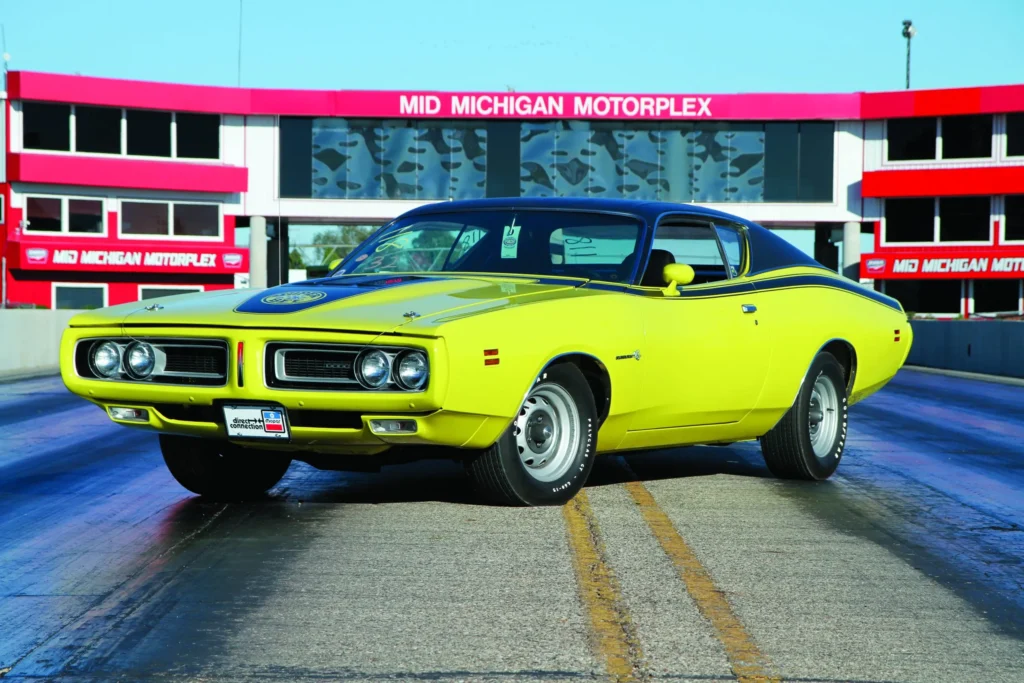
The 1971 Charger Super Bee is the rarest original generation—only about 5,000 built, and just 22 with the 426 Hemi.
The Long Hiatus and Modern Charger Super Bees
After 1971 the U.S. Super Bee disappeared (Mexico kept a compact version into 1980). Dodge revived the name on the LX Charger:
- 2007–2009: Limited Charger SRT-8 Super Bee in Detonator Yellow with black graphics. 6.1L HEMI, about 425 hp. Only 1,000 units in 2007.
- 2012–2014: 6.4L 392 HEMI, 470 hp. Sedan only.
- 2023 Last Call: Final LX-platform Charger Super Bee with the 6.4L HEMI at 485 hp / 470 lb-ft, 0–60 in about 4.3 seconds, quarter-mile around 12.4. Widebody versions exist. This was the last factory V8 Super Bee.
Those modern cars kept the bee graphics and the “no-frills performance” idea, but they were no longer cheap strippers. They were special-edition Chargers for enthusiasts who already knew the name.
2027 Dodge Charger Super Bee Launch Edition: The Most Powerful Bee Ever
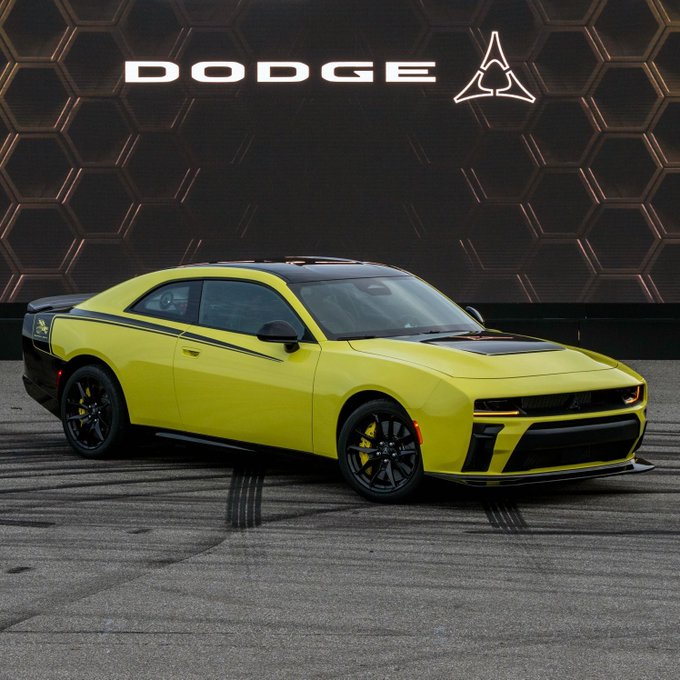
In August 2026 Dodge brought the Super Bee back on the new Charger—without a V8 for the first time in U.S. history. The 2027 Super Bee Launch Edition uses a Super Bee-specific version of the twin-turbo 3.0-liter Hurricane High-Output inline-six.
Headline numbers:
- 600 hp and 531 lb-ft
- Larger 56 mm Garrett turbos, more than 30 psi of boost
- Torque peaks earlier (3,000 rpm)
- Cooling capacity up more than 50%
- Claimed 0–60 in 3.6 seconds
- Claimed quarter-mile in 11.8 seconds
- Eight-speed automatic, AWD standard with a selectable RWD mode
- 16-inch Brembos (six-piston front), 20-inch forged wheels, Goodyear Eagle F1 Supercar 3 tires
- Unique aero fascia adding over 100 lb of downforce at 150 mph
- Track Mode, Drag Mode, Launch Control, Line Lock, Torque Reserve
That makes it the quickest and most powerful factory Super Bee ever built, and the most power-dense Dodge muscle car at 200 hp per liter. It is still slower in a straight line than a Hellcat Redeye on paper, but it beats the 2023 HEMI Super Bee by a wide margin and undercuts the Scat Pack Sixpack by 0.3 seconds to 60.
Dodge has not published a final MSRP. Expect a premium over the Scat Pack Sixpack (mid-$60,000s) and limited Launch Edition volume for 2027, with a wider Super Bee rollout planned for 2028. Colors include high-visibility “Sucker Punch” yellow-green with black hood graphics. Coupe and sedan both get the package.
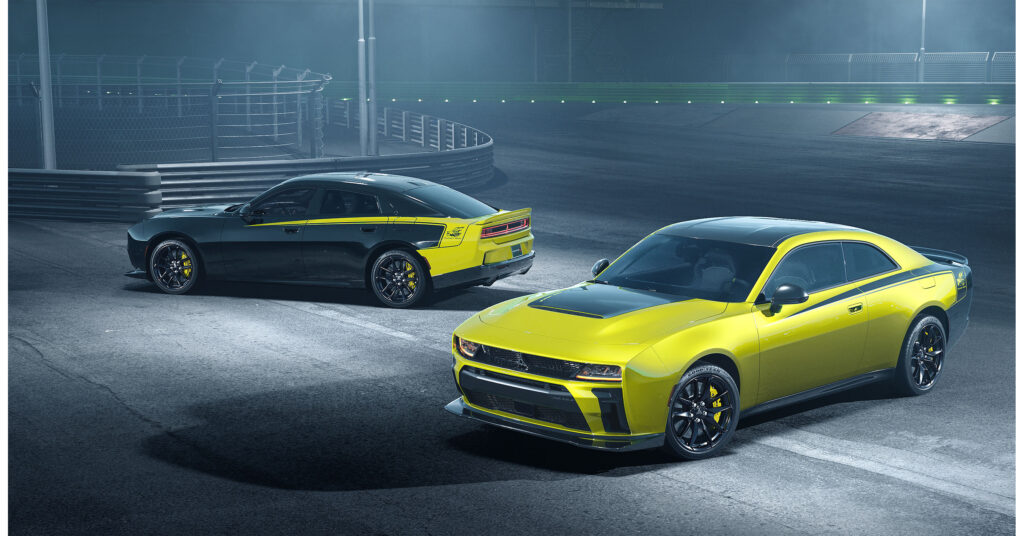
The 2027 Charger Super Bee Launch Edition is the first U.S. Super Bee without a V8—and the most powerful Super Bee Dodge has ever built.
Super Bee vs Road Runner: Why the Bee Lost the Sales War
Both cars shared the same formula and much of the same hardware. The Road Runner won on marketing (the Warner Bros. bird, the horn, the advertising) and price. The Super Bee cost a little more because Dodge included a better dash, Hurst shifter, and slightly nicer trim. Buyers voted with their wallets. Today that sales gap works in the Bee’s favor: fewer cars means stronger collector demand for clean, documented examples.
What a Dodge Super Bee Is Worth Today
Values swing hard with engine, documentation, and originality.
Classic 1968–1970 Coronet Super Bee
- Driver-quality 383 cars: often $40,000–$70,000
- Nice hardtops and documented Six Pack (A12) cars: $80,000–$150,000+
- Documented Hemi cars: well into six figures; exceptional examples have sold above $200,000
- Recent market medians for 1968–1970 Super Bees cluster around the mid-$70,000s, with a wide spread.
1971 Charger Super Bee
- Typical auction range recently around $30,000–$50,000 for non-Hemi cars
- Hemi cars are unicorns and command six-figure money when they appear
Modern Charger Super Bees (2007–2014, 2023)
- 2007–2009 and 2012–2014 cars often trade from the mid-teens to around $40,000 depending on miles and condition
- 2023 Last Call Super Bees sit higher as the last HEMI cars
Always verify fender tags, broadcast sheets, and matching numbers. A cloned Six Pack or Hemi is common; a real A12 or factory Hemi is not.
Why the Super Bee Still Matters
The Super Bee never had the Mustang’s movie fame or the GTO’s origin-story status. What it had was a clear brief: give a young buyer big-block power without a GTO price. That brief is why the name keeps coming back.
The 2027 car is the boldest interpretation yet. Purists will argue a Super Bee without a V8 is not a Super Bee. Dodge’s answer is numbers: 600 hp, 3.6 seconds to 60, and more downforce and cooling than any Bee before it. Whether that wins the argument will be decided on streets and drag strips, not forums.
If you want the original experience, hunt a documented 1969–1970 440 Six Pack. If you want the fastest factory Bee ever, the 2027 Launch Edition is the one that finally outruns every V8 ancestor in a straight line.
Dodge Super Bee FAQ
What years was the original Super Bee made?
1968–1971 in the U.S. (Coronet 1968–1970, Charger 1971). A Mexican compact Super Bee continued into 1980.
What engine did the Super Bee come with?
Base 383 Magnum (335 hp), optional 426 Hemi (425 hp), and from mid-1969 the 440 Six Pack (390 hp). 1971 added a 340 small-block as the new base engine.
How many Super Bees were built?
Roughly 7,844 (1968), 27,800 (1969), 15,506 (1970), and about 5,054 (1971). Hemi cars are extremely rare in every year.
Is the 2027 Super Bee a V8?
No. It uses a 600-hp twin-turbo 3.0-liter Hurricane inline-six—the first U.S.-market Super Bee without a V8.
Is a Super Bee a good investment?
Documented Six Pack and Hemi cars have been strong. Generic 383 cars are more affordable entry points. Condition and paperwork matter more than the badge alone.
The Super Bee was never the loudest name in the muscle-car wars. It showed up with the right engine, the right price, and a bee on the fender. Fifty-eight years later, that formula still works.