In a seismic CES 2026 keynote that shattered expectations and redefined the future of mobility, NVIDIA CEO Jensen Huang unleashed Alpamayo – the groundbreaking open-source AI family that’s not just driving cars, but thinking like a superhuman behind the wheel! This isn’t your average software update; it’s the “ChatGPT moment for physical AI,” propelling autonomous vehicles from reactive robots to reasoning powerhouses that conquer the road’s most treacherous edge cases with unyielding precision and transparency. Paired with the all-new 2025 Mercedes-Benz CLA – the electric luxury coupe that’s set to become the ultimate self-driving beast – this integration promises Level 4 autonomy that’s safer, smarter, and streets ahead of competitors like Tesla’s closed FSD system. Buckle up as we dive deep into this game-changing tech that’s optimizing the autonomous driving landscape for 2026 and beyond, packed with SEO-friendly insights on NVIDIA Alpamayo AI, open-source autonomous driving tools, Mercedes-Benz CLA self-driving features, and the Vera Rubin AI platform revolution.
Unleashing Alpamayo: The Open-Source AI That’s Rewiring Autonomous Driving Brains for Ultimate Domination
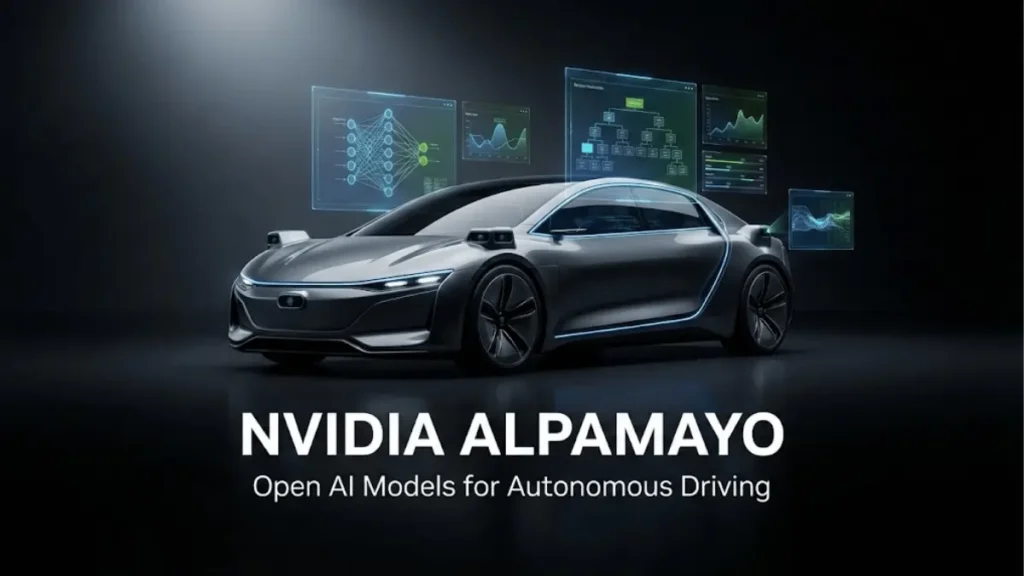
Imagine an AI that doesn’t just see the road – it reasons through chaos like a chess grandmaster plotting 10 moves ahead! NVIDIA’s Alpamayo family of open-source AI models is exactly that: a 10-billion-parameter Vision-Language-Action (VLA) juggernaut that ingests raw video feeds, spits out flawless driving trajectories, and explains every decision with crystal-clear “chain-of-thought” logic. This isn’t passive cruise control; it’s active intelligence that tackles the infamous “long tail” of rare scenarios – think sudden deer darts, erratic cyclists, or freak weather freakouts – with human-like intuition amplified by machine precision.
At its core, Alpamayo 1, the flagship model, processes multimodal inputs (video, sensor data, and natural language queries) to generate not just actions, but traceable reasoning traces. Why did it swerve? How did it predict that pedestrian’s jaywalk? It tells you – and regulators – in plain English, demolishing the black-box mysteries that have plagued self-driving tech for years. NVIDIA’s bold move positions it as the “Android of Autonomy,” inviting developers worldwide to build, tweak, and turbocharge this ecosystem on their unbeatable CUDA platform. For anyone searching for “NVIDIA Alpamayo AI details” or “open-source AI for self-driving cars,” this is the holy grail: free model weights on Hugging Face, ready to download and deploy for custom AV projects.
But NVIDIA didn’t stop at models. They’ve dropped AlpaSim, an end-to-end simulation framework that’s a virtual adrenaline rush for testing AV scenarios without real-world risks. Paired with Physical AI Open Datasets – over 1,700 hours of hyper-realistic driving footage capturing everything from urban gridlock to rural mayhem – developers can train models that laugh in the face of complexity. This open-source trifecta isn’t just innovative; it’s an explosive catalyst for the entire autonomous driving industry, accelerating adoption and innovation at warp speed.
| Key Aspect | Details |
|---|---|
| Announcement | NVIDIA unveils Alpamayo, open-source AI models for autonomous driving at CES 2026. |
| Main Model | Alpamayo 1: 10-billion-parameter Vision-Language-Action model using chain-of-thought reasoning for edge cases; explains decisions in plain language. |
| Quote from CEO | Jensen Huang: “ChatGPT moment for physical AI” for safer, transparent driving. |
| Releases | Model weights on Hugging Face; AlpaSim simulation framework; 1,700+ hours driving dataset. |
| Partnership & Launch | Ships in 2025 Mercedes-Benz CLA EV: US Q1 2026, Europe Q2, Asia later. |
| System Details | Level 2+ MB.DRIVE ASSIST PRO; 30 sensors (10 cameras, 5 radars, 12 ultrasonics); Powered by NVIDIA Vera Rubin (six-chip AI platform). |
| Impact | Makes self-driving tech more accessible via open-sourcing. |
Mercedes-Benz CLA 2025: The Electric Self-Driving Powerhouse Fueled by NVIDIA’s Unstoppable AI Arsenal
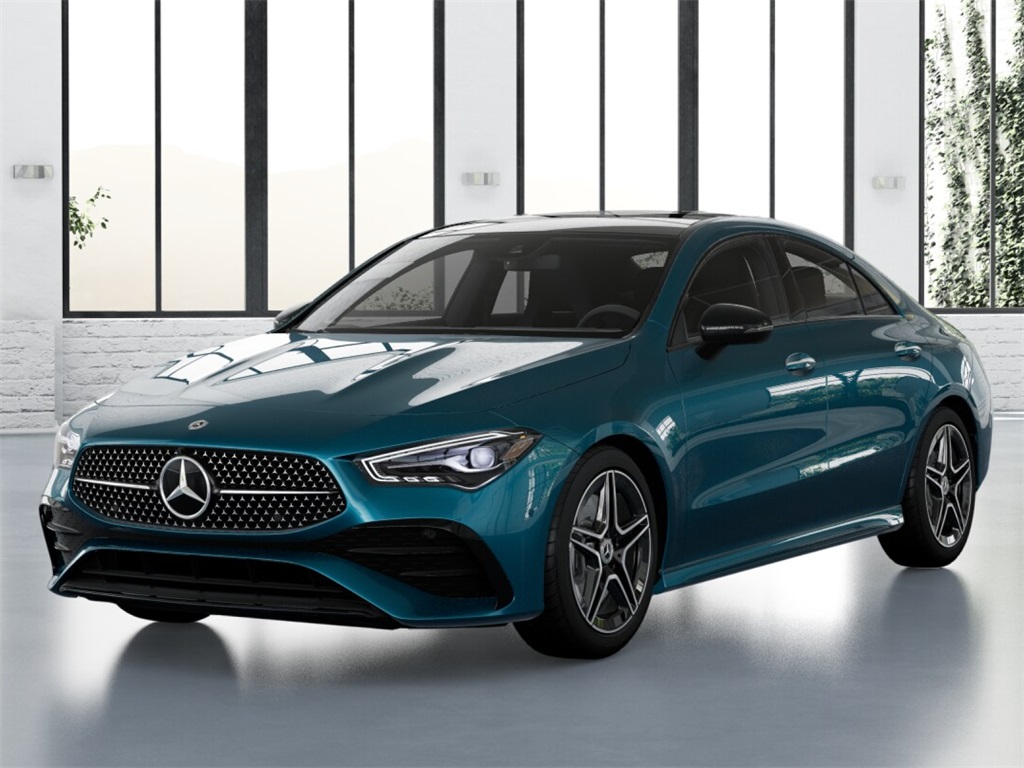
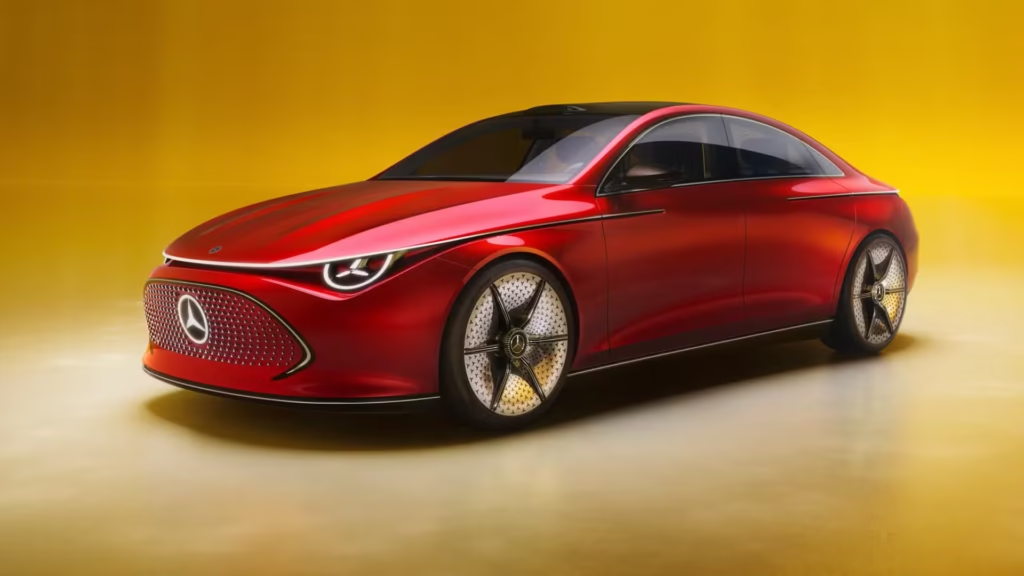
Hold onto your steering wheels – or don’t, because the 2025 Mercedes-Benz CLA is ditching human oversight for NVIDIA’s full-throttle DRIVE AV stack! As the first production vehicle to embed Alpamayo end-to-end, this sleek electric coupe (previewed in stunning concept form) launches in Q1 2026 in the US as a Level 2+ system, but with upgrades eyeing full Level 4 hands-free domination. Europe follows in Q2, Asia later – marking a global assault on outdated driving norms.
Dubbed MB.DRIVE ASSIST PRO, this beast merges advanced driver assistance with seamless navigation, handling everything from parking lot pandemonium to highway heroics without a single deactivation. Picture cooperative steering that adapts on the fly, point-to-point autonomy that navigates city streets like a local pro, and safety features that make Tesla’s FSD look like child’s play. For “Mercedes-Benz CLA NVIDIA integration 2026” seekers, here’s the scoop: It’s powered by NVIDIA DRIVE AGX compute, ensuring blistering performance in real-time decision-making.
The sensor suite? A fortress of 30 high-tech guardians – 10 cameras for 360-degree eagle eyes, 5 radars for impenetrable distance detection, and 12 ultrasonics for close-quarters combat. This isn’t just a car; it’s a rolling AI fortress, optimized for urban warfare against traffic unpredictability. Mercedes-Benz execs hail it as the pinnacle of luxury meets autonomy, with the CLA’s aerodynamic EV design (up to 466-mile range in concepts) amplifying efficiency and thrill.
The Technical Titan Behind the Throne: Vera Rubin Platform and NVIDIA’s AI Hardware Onslaught
Fueling this autonomous apocalypse is NVIDIA’s Vera Rubin platform – a six-chip AI colossus that’s the nuclear successor to Blackwell, now in full production and ready to crush computational limits. With Rubin GPUs and Vera CPUs, it’s training future Alpamayo iterations at hyperscale, ensuring your self-driving ride evolves faster than you can say “autopilot.” This hardware-software synergy hooks automakers into NVIDIA’s ecosystem, making proprietary rivals obsolete.
For tech enthusiasts googling “CES 2026 NVIDIA Vera Rubin details,” know this: It’s not just chips; it’s a modular DRIVE Hyperion setup for Level 4 scalability, blending open models with proprietary power for unmatched flexibility. Benefits? Regulatory gold – reasoning traces provide transparency for approvals; developer heaven – open tools foster innovation; and safety supremacy – addressing AV failures head-on.
Why This Changes Everything: From Tesla Takedown to Physical AI Domination
NVIDIA’s Alpamayo isn’t a tweak; it’s a total takedown of closed systems like Tesla’s FSD, opening the floodgates for collaborative AV evolution. As humanoid robots get a nod in NVIDIA’s broader “physical AI” push, autonomous driving leads the charge, promising a world where cars think, adapt, and conquer. With Mercedes-Benz CLA as the vanguard, 2026 isn’t just a launch year – it’s the dawn of an adrenaline-fueled, AI-driven mobility era that’s safer, faster, and infinitely more intense.
Ready to embrace the future? Dive into NVIDIA Alpamayo open-source AI for autonomous driving today, and watch as self-driving cars evolve from dream to dominant reality!