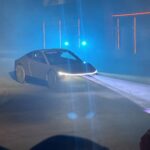
In the fast-evolving world of electric vehicles and autonomous driving, Tesla continues to push boundaries with its Cybercab Robotaxi. A recent video shared on X (formerly Twitter) has given EV enthusiasts a rare glimpse of the Tesla Cybercab rolling alongside a Model Y, offering an eye-opening size comparison that underscores the compact efficiency of this next-gen autonomous vehicle. This sighting not only fuels excitement for Tesla’s Robotaxi fleet but also highlights impressive engineering feats, including a dramatic reduction in parts that could redefine EV manufacturing.
As Tesla ramps up testing for its Cybercab—unveiled at the “We, Robot” event in October 2024—these real-world appearances are becoming more frequent. Just last week, we covered fan renders of a stunning matte black Tesla Cybercab with white interior, which sparked widespread buzz among EV fans. Now, this new footage takes things a step further by placing the Cybercab in direct context with one of Tesla’s bestsellers, the Model Y.
What the Viral Video Reveals About Tesla Cybercab vs. Model Y
The video, originally posted by Tesla investor and photographer Adan Guajardo (@AdanGuajardo) on X, captures the Cybercab and Model Y driving side by side on a busy urban street at night.
Filmed from an elevated vantage point, the clip shows the two vehicles navigating traffic, braking, and signaling turns. The Cybercab appears noticeably sleeker and more compact, with a minimalist rear design lacking traditional door handles or mirrors—hallmarks of its fully autonomous focus.
Key visual takeaways from the footage:
- Size and Proportions: The Cybercab looks shorter and narrower than the Model Y, optimized for two passengers and urban ridesharing. Its low-slung profile emphasizes aerodynamics, potentially boosting range and efficiency in city environments.
- Lighting and Design Cues: Both vehicles feature Tesla’s signature red taillight bars, but the Cybercab’s seamless integration highlights its futuristic aesthetic. As they brake, the Cybercab’s lights illuminate cleanly, drawing attention to its simplified body structure.
- Real-World Performance: The pair moves fluidly through intersections, with the Cybercab demonstrating smooth handling alongside the larger Model Y. This side-by-side view dispels myths about the Robotaxi’s practicality, showing it holds its own in everyday traffic.
Guajardo’s post, captioned “Cybercab rolling with Model Y side by side!”, quickly went viral, amassing thousands of views and sparking discussions on Tesla’s autonomous future. It’s a timely reminder of how Tesla is blending its existing lineup with groundbreaking innovations like the Cybercab.
Breaking Down the Impressive Part Reduction in Tesla Cybercab
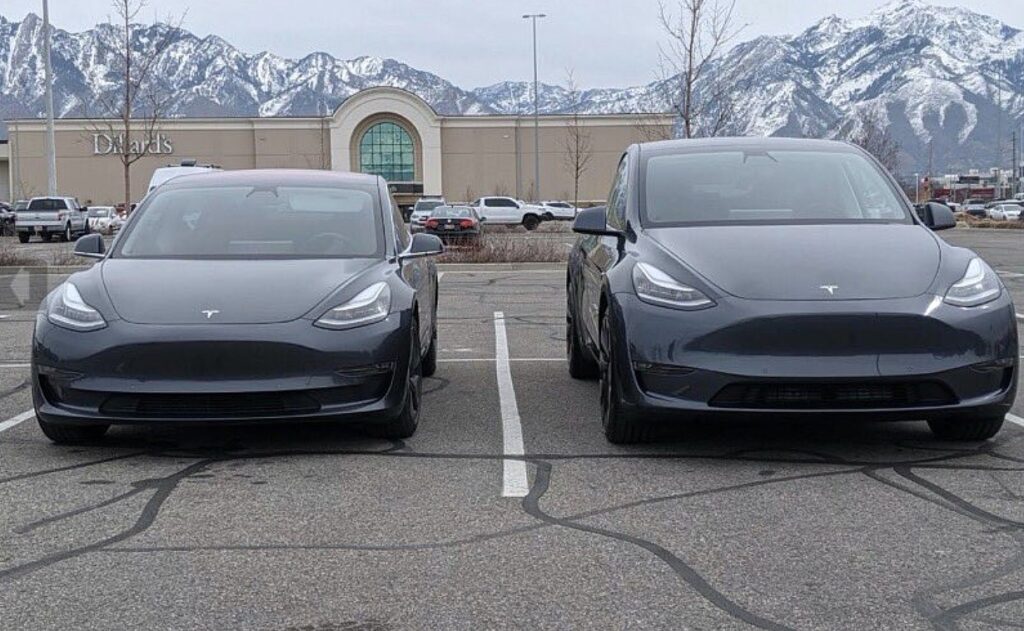
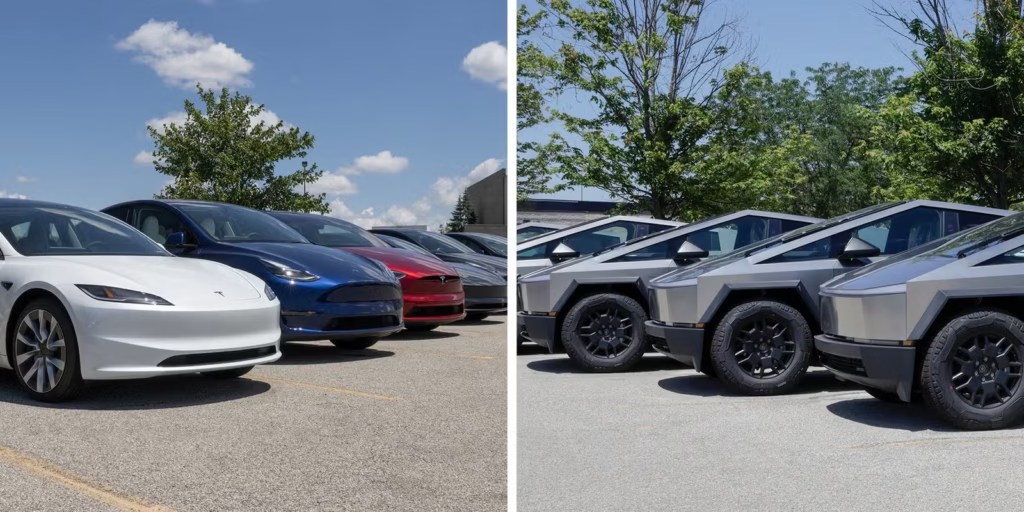
What makes this comparison even more intriguing are the engineering details shared in a follow-up post by Nic Cruz Patane (@niccruzpatane), a deep-dive Tesla analyst. According to Patane, the Cybercab boasts “~60% fewer parts in its body structure than a Model Y” and “overall, it has 50% fewer parts than a Model 3.”
This aligns with statements from Tesla’s lead engineers, who have emphasized the Robotaxi’s lean design. In a recent interview, Tesla’s principal engineer for the Cybercab project revealed that the vehicle will have roughly half the parts of a current Model 3, achieved through innovations like a two-seat layout and optimized aerodynamics. Independent analysis from firms like Munro & Associates supports these claims, noting that such reductions slash costs, weight, and complexity—potentially bringing the Cybercab’s price under $30,000 as promised by Elon Musk.
| Feature | Tesla Cybercab | Tesla Model Y | Key Difference |
|---|---|---|---|
| Seating Capacity | 2 passengers | Up to 7 | Optimized for ridesharing efficiency |
| Body Structure Parts | ~40% of Model Y’s count | ~200 parts | 60% reduction for lighter, cheaper build |
| Overall Parts Count | ~50% of Model 3 | Comparable to Model 3 | Streamlined for mass production |
| Target Price | Under $30,000 | Starting at $44,990 | Affordable autonomous entry |
| Range (Est.) | 200-300 miles | Up to 320 miles | Focused on urban use |
These efficiencies aren’t just numbers—they represent Tesla’s shift toward scalable Robotaxi production, expected to begin in late 2026 or early 2027. As we reported in our earlier piece on Tesla Cybercab prototypes spotted with Cybertruck steering wheels, these test vehicles are incorporating modular components to accelerate development.
Why This Matters for the Future of Autonomous EVs
This Cybercab-Model Y pairing isn’t just a cool visual; it’s a preview of Tesla’s broader ecosystem. With Full Self-Driving (FSD) Supervised already logging billions of miles, the Cybercab could transform urban mobility by offering cheap, on-demand rides without human drivers. Imagine hailing a compact Robotaxi that’s easier to maintain and cheaper to operate than traditional EVs like the Model Y or Model 3.
For Tesla fans in the US, this sighting builds on recent launches, such as the 2026 Model Y with black headliner and upgraded display in China, hinting at global rollouts. As competition heats up from rivals like Waymo and Cruise, Tesla’s part-reduction strategy could give it a cost edge in the autonomous vehicle race.
Stay tuned to USonwheels.com for more EV news, including updates on Tesla’s Robotaxi progress and other electric innovations. What do you think of the Cybercab’s size next to the Model Y? Share your thoughts in the comments below!