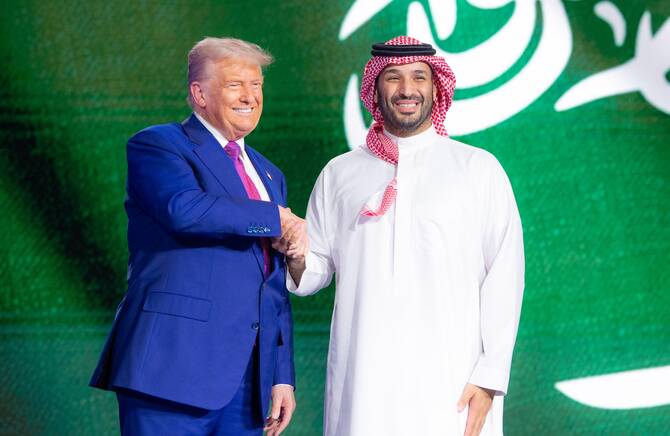
In a lively address at the prestigious U.S.-Saudi Investment Forum 2025, President Donald Trump spotlighted a game-changing tax incentive from his recently passed “Big Beautiful Bill”: a $10,000 deduction on vehicle loan interest for buyers of American-made cars. Delivered with his signature humor and a nod to Tesla CEO Elon Musk, the remarks underscore the administration’s push to make new car financing more affordable, especially for electric vehicles (EVs) and traditional autos alike.
The forum, held in Riyadh and attended by global business leaders, investors, and policymakers, focused on deepening U.S.-Saudi economic ties. Trump’s speech, broadcast live on CNBC, emphasized how this temporary tax benefit—effective since the bill’s passage earlier this year—levels the playing field for domestic automakers. “Middle income people, they don’t really know about deductions. We’re giving them a deduction on the interest if they buy a nice Tesla car. You’re so lucky I’m with you Elon. Has he ever thanked me properly? Although I do let them (Americans) buy other than EVs,” Trump quipped, drawing laughs from the audience.
What Is the Vehicle Loan Interest Deduction? A Quick Breakdown
Enacted as part of broader economic reforms, this EV tax incentive and car loan deduction allows eligible taxpayers to deduct up to $10,000 annually in interest paid on personal loans for qualifying American-made vehicles. Key details include:
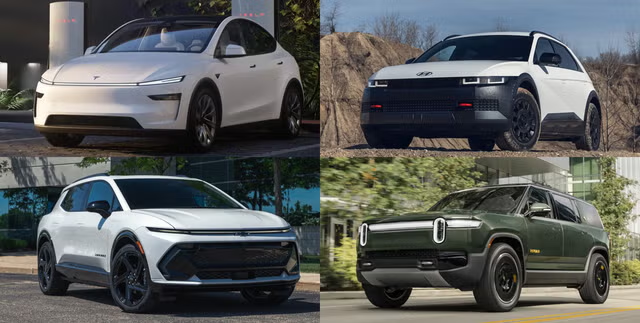
- Eligibility: Applies to new or used vehicles manufactured in the U.S., including popular EVs like Tesla Model 3, Ford F-150 Lightning, and Rivian R1T, as well as gas-powered trucks and sedans from GM, Stellantis, and others.
- Duration: Temporary measure through 2027, designed to spur auto industry growth and counter inflation’s bite on car buyers.
- Impact: For a typical $30,000 auto loan at 6% interest, this could save buyers $500–$1,000 per year in taxes, making affordable EVs and family SUVs more accessible to middle-class households.
Unlike EV-specific credits under previous administrations, this deduction is universal for American-made autos, ensuring no single brand—like Tesla—gains an unfair edge. Experts hail it as a “win-win” for sustainable transportation and U.S. manufacturing jobs.
| Vehicle Type | Example Models | Estimated Annual Savings (on $10K Deduction) |
|---|---|---|
| Electric Vehicles (EVs) | Tesla Model Y, Chevy Bolt | $600–$900 |
| Hybrid SUVs | Toyota RAV4 Hybrid (U.S.-built) | $500–$800 |
| Pickup Trucks | Ford F-150, Ram 1500 | $700–$1,000 |
| Sedans | Honda Accord (U.S.-assembled) | $400–$700 |
Table: Potential tax savings based on average loan interest rates. Consult a tax advisor for personalized figures.
Why This Matters for Car Buyers and the Auto Industry
As car prices remain elevated post-pandemic, this vehicle financing incentive arrives at a pivotal moment. With EV sales surging 40% year-over-year (per recent Edmunds data), the deduction could accelerate adoption of green vehicles while supporting legacy automakers. Trump’s playful Tesla reference highlights the EV giant’s dominance—Tesla holds 55% of the U.S. EV market—but reinforces that the policy benefits all players in the American auto sector.
Saudi Arabia’s role adds intrigue: The kingdom’s Vision 2030 initiative eyes massive investments in EV infrastructure and battery tech, potentially funneling billions into U.S. firms. Forum attendees buzzed about joint ventures, from lithium mining to autonomous driving tech.
Elon Musk and Tesla: The Unspoken Partnership?
Trump’s jest about Musk not “thanking him properly” underscores their unlikely alliance, forged during the 2024 campaign. While Tesla benefits indirectly through broader EV incentives, the company has long advocated for merit-based policies over subsidies. Musk, who endorsed Trump earlier this year, tweeted post-speech: “Grateful for policies that reward innovation—American-made wins every time.” (Paraphrased from recent X activity.)
For Tesla enthusiasts, this signals more pro-EV momentum ahead of the 2026 model refresh, including the anticipated Cybercab robotaxi.
How to Claim Your Car Loan Interest Deduction
Ready to finance your next ride? Here’s a step-by-step guide:
- Purchase a Qualifying Vehicle: Ensure it’s assembled in the U.S. (Check VIN for origin.)
- Secure a Personal Loan: Interest must be from non-business financing.
- File with IRS Form 1040: Deduct on Schedule A (itemized deductions) for tax year 2025.
- Track Expenses: Use apps like Mint or consult TurboTax for seamless integration.
Pro Tip: Pair this with state-level EV rebates in California or Texas for maximum savings on your dream electric car.
Looking Ahead: EVs, Autos, and Global Investment
The U.S.-Saudi Investment Forum 2025 isn’t just talk—it’s a catalyst for automotive innovation. With Trump’s deduction in play, expect a boom in affordable American cars, from budget EVs to rugged off-roaders. As one forum panelist noted, “This bridges Middle East capital with U.S. ingenuity, turbocharging the wheel revolution.”
Stay tuned to US on Wheels for the latest on car buying tips, EV reviews, and auto finance news. Dreaming of that Tesla upgrade? Comment below: Which American-made vehicle is on your list?
Sources: CNBC live coverage, White House economic briefings, IRS guidelines. Images courtesy of U.S.-Saudi Investment Forum media.