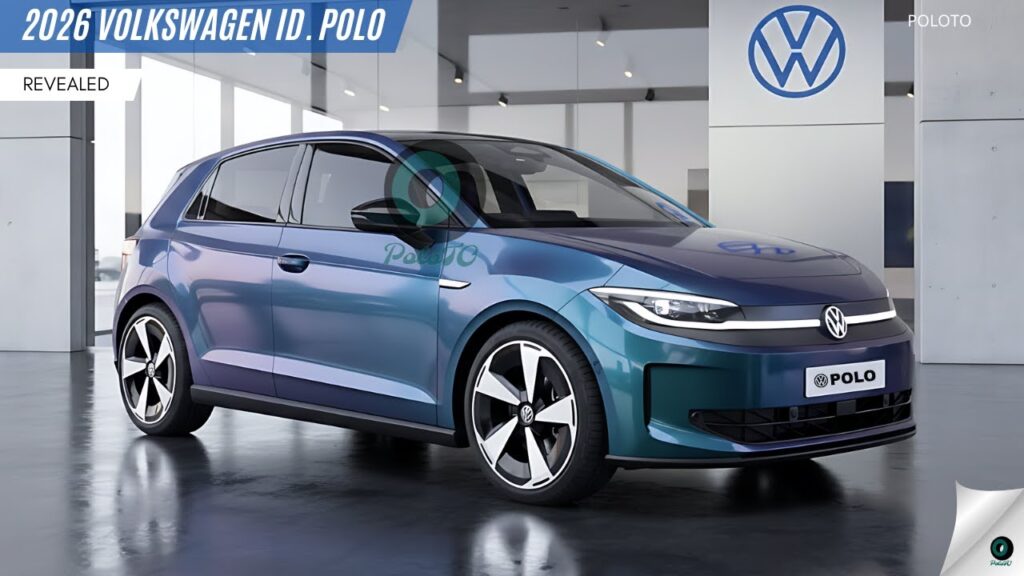
In a nostalgic nod to its automotive heritage, Volkswagen is revolutionizing the interior of its electric vehicles (EVs) with a redesigned cockpit debuting in the all-new ID. Polo. Set to roll out across future ID. models starting in 2026, this update blends 1980s-inspired retro digital displays with modern intuitive controls, addressing key customer feedback on usability. If you’re searching for the latest in Volkswagen EV interior redesigns, VW ID cockpit updates 2026, or physical buttons return to electric cars, this is the breakthrough you’ve been waiting for.
As EV adoption surges in the US—with sales projected to hit 1.6 million units in 2026—Volkswagen’s pivot signals a broader industry shift toward user-centric designs that balance innovation with familiarity. This comes hot on the heels of Tesla’s Cybercab unveil, which we covered extensively in our Tesla Cybercab Rear Design Evolution 2026 article, highlighting how automakers are racing to perfect EV cabins for everyday drivers.
Why Volkswagen is Bringing Back Physical Buttons in EVs
Volkswagen admits it “made a mistake” by phasing out tactile controls in favor of all-touch interfaces, a trend that frustrated many drivers. Customer surveys revealed a demand for more physical buttons in EV dashboards to enhance safety and ease of use, especially during dynamic driving scenarios.
The new cockpit architecture prioritizes “clarity, quality, and intuitive controls,” incorporating familiar VW operating patterns while introducing high-quality, recycled materials for a sustainable touch. Kai Grünitz, Volkswagen’s Board Member for Technical Development, emphasized this customer-first approach: “Our new interior architecture… elevates the customer experience to a new level: with clean lines, high-quality materials, and an intuitive operating environment with physical buttons and newly structured screens.”
This redesign isn’t just reactive—it’s a strategic play to boost VW’s competitiveness in the compact EV segment, where the ID. Polo aims to rival the likes of the Tesla Model 3 and Hyundai Ioniq 5. For more on Hyundai’s autonomy challenges, check our deep dive into Hyundai’s Self-Driving Chief Departure.
Key Features of the 2026 VW ID. Cockpit
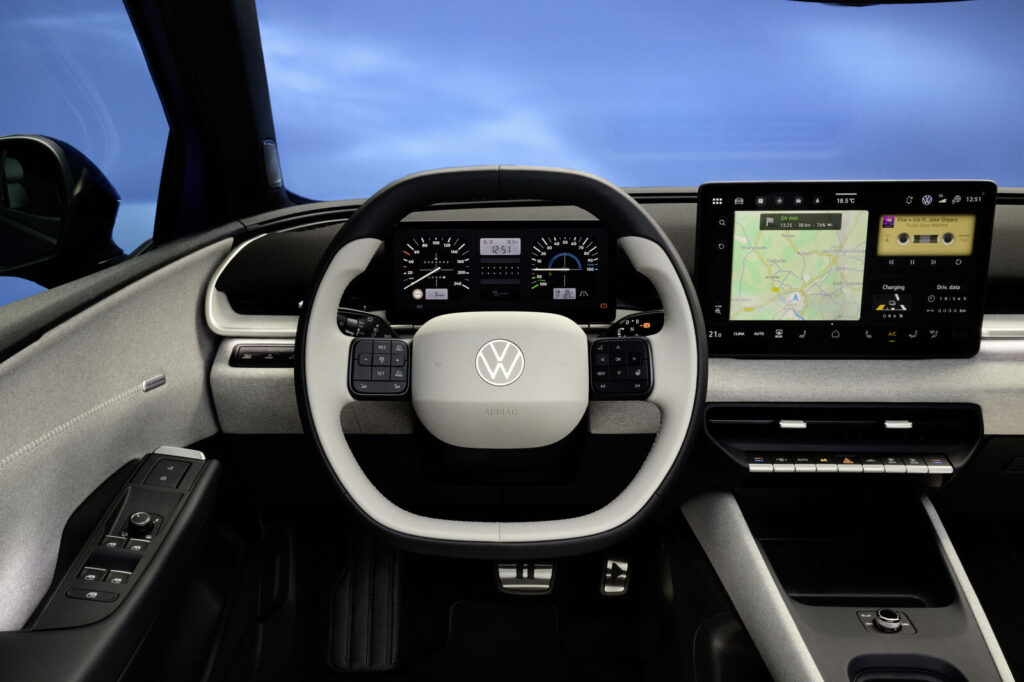
The cockpit’s star is its horizontal layout, featuring dual screens for seamless driver and passenger interaction. Here’s a breakdown of the standout elements:
- Dual High-Res Displays: A 10.25-inch digital driver display and a nearly 13-inch infotainment touchscreen, both with crisp graphics and tidy menu structures for effortless navigation.
- Retro 1980s Mode: Press a button to transform the instrument cluster into pixelated views echoing the original Golf’s analog gauges—a “playful wink” to VW’s heritage that adds emotional charm without sacrificing functionality.
- Expanded Physical Controls: Dedicated buttons for climate, hazard lights, and audio, plus a multi-function steering wheel with clearly labeled fields. A rotary knob between cup holders handles volume intuitively.
- Advanced Driver Assistance: Third-generation Travel Assist now detects red traffic lights and stop signs, paired with one-pedal driving and enhanced parking aids for urban EV mastery.
- Ambient ID.Light Upgrade: Strips of light span the dashboard and doors, creating a welcoming “Pure Positive” atmosphere with fabric-trimmed surfaces and warm tones.
| Feature | Benefit | EV Impact |
|---|---|---|
| 10.25″ + 13″ Screens | High-res, horizontal setup for shared access | Reduces eye strain, boosts passenger engagement |
| Physical Buttons Return | Direct access to essentials | Improves safety over touch-only systems |
| Retro Display Toggle | Nostalgic 1980s vibes | Builds emotional connection for heritage fans |
| Travel Assist Gen 3 | Red light/stop sign recognition | Safer semi-autonomous driving in cities |
| Recycled Materials | Sustainable fabric dashboard | Appeals to eco-conscious US buyers |
These upgrades position the ID. Polo as an “affordable friend for everyday life,” per Chief Designer Andreas Mindt, who called it “‘Pure Positive’ in its purest form.”
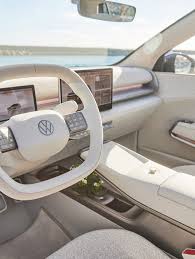
Retro Design Inspiration: Channeling the 1980s in Modern EVs
Drawing from the charm of the first-generation Golf, VW’s retro display mode isn’t mere gimmickry—it’s a deliberate fusion of past and future. The pixelated aesthetics evoke the era’s simplicity, contrasting today’s minimalist EV trends like Tesla’s yoke steering (as explored in our Tesla Roadster 2026 preview). This “secret sauce,” as VW dubs it, aims to make EVs feel approachable, countering perceptions of tech overload.
The overall ‘Pure Positive’ language emphasizes positivity through soft fabrics, straight lines, and an uncluttered sightline—perfect for the compact ID. Polo’s urban focus.
Rollout Timeline and What It Means for US EV Buyers
The cockpit debuts as a near-production concept in the ID. Polo, with market availability expected mid-2026 in Europe and a US launch to follow shortly after, aligning with VW’s aggressive electrification push. It will standardize across all upcoming ID. models, potentially influencing rivals to rethink button-less designs.
For American drivers eyeing affordable EVs under $30,000, this could tip the scales toward VW, especially with federal incentives. As EV interiors evolve—much like the Tesla Cybertruck’s adaptive setup we reviewed—this VW refresh underscores a key truth: nostalgia sells in a high-tech world.
Stay tuned to USonWheels.com for hands-on ID. Polo reviews and more 2026 EV news. What do you think of VW’s retro revival—genius or gimmick? Drop your thoughts in the comments below, and subscribe for daily updates on cars, bikes, and the EV revolution!
Sources: Volkswagen Newsroom, Electrek, InsideEVs, CarScoops.