The Tesla Model 3 was never just another electric car — it was the vehicle that was supposed to prove EVs could be mass-market, profitable, and desirable. When Elon Musk unveiled it in 2016, critics called the $35,000 price tag and ambitious specs impossible. Fast-forward to 2026, and the numbers speak louder than any skeptic ever could.
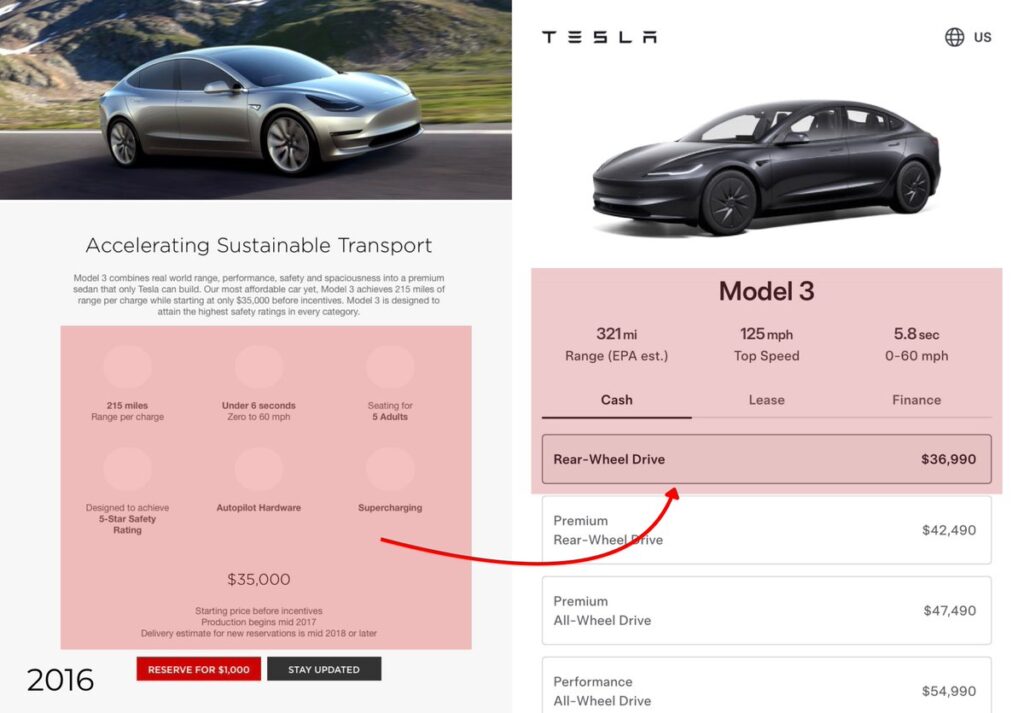
A viral X post by Tesla enthusiast Nic Cruz Patane (@niccruzpatane) perfectly captures this decade of progress with a stunning side-by-side comparison. It shows exactly how far the Model 3 has come — and why it’s still the EV that started it all.
Tesla Model 3 2016: The Bold Promise That Critics Said Was Impossible
When the Model 3 was first revealed on March 31, 2016, Tesla set the bar high:
- Starting price: $35,000 (before incentives)
- Range: 215 miles (EPA est.)
- 0-60 mph: Under 6 seconds
- Autopilot hardware: HW2.5
- Safety: Designed for 5-star ratings across the board
- Other highlights: Supercharging capability, seating for 5 adults
The message was clear: Tesla wanted to accelerate sustainable transport by making a premium EV accessible to millions. Production delays and scaling challenges followed, but the vision never wavered.
Tesla Model 3 2026: Better in Every Way — and Cheaper in Real Terms
Today, the rear-wheel-drive Model 3 starts at $36,990. On paper, that looks like a slight increase. But when you adjust for inflation (using CPI data), that $36,990 in 2026 dollars equals roughly $27,086 in 2016 dollars — a massive real-world discount.
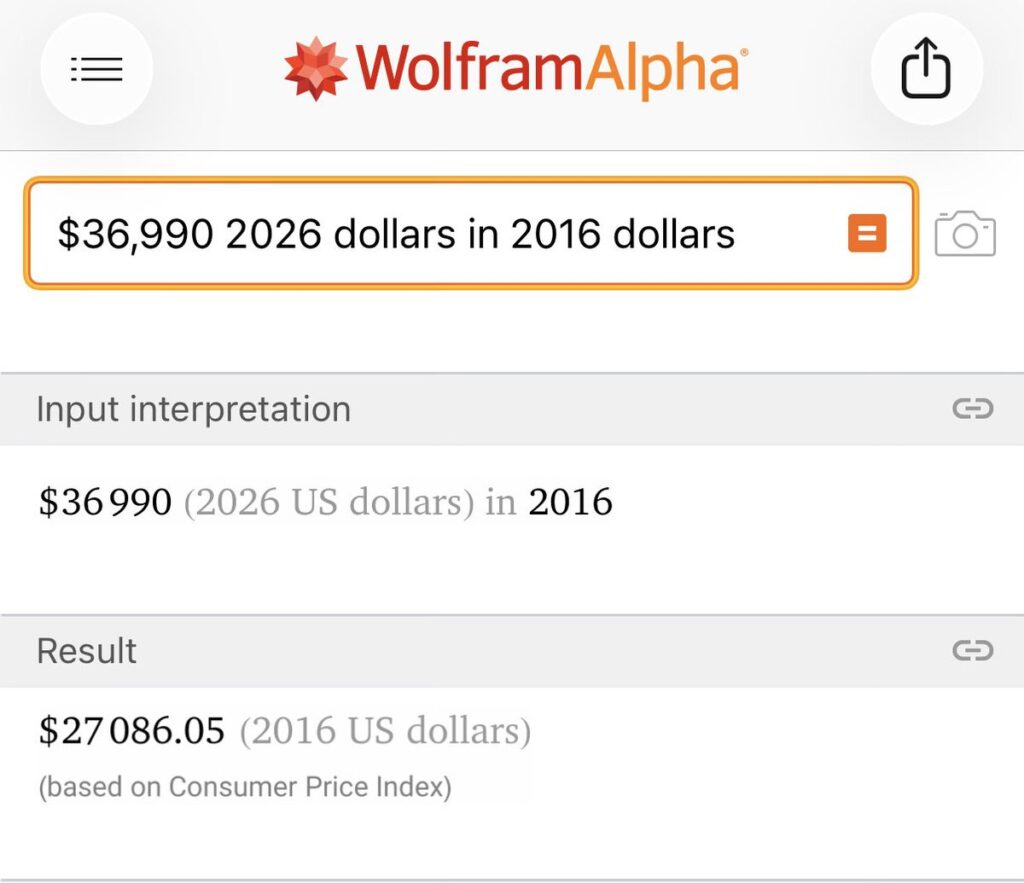
Here’s the full 2016 vs 2026 spec showdown:
| Feature | 2016 Model 3 (Launch) | 2026 Model 3 (RWD) | Improvement |
|---|---|---|---|
| Starting Price | $35,000 | $36,990 | ~23% cheaper in real terms |
| Range (EPA est.) | 215 miles | 321 miles | +49% |
| 0-60 mph | Under 6 seconds | 5.8 seconds | Faster |
| Autonomy Hardware | HW2.5 (basic Autopilot) | HW4 Self-Driving | Major leap |
| Top Speed | Not emphasized | 125 mph | Higher |
| Inflation-Adjusted Price | $35,000 (2016) | $27,086 (2016 dollars) | Deflation |
Key takeaway: You’re getting nearly 50% more range, significantly better acceleration, and full self-driving-capable hardware — all while paying less than the original promise when adjusted for inflation.
Why This Matters: Tesla’s Deflationary Innovation
Tesla didn’t just hit the $35k goal — it smashed it while delivering superior performance, safety, and technology. The company has been consistently profitable for years, proving that high-volume EVs can be made at scale without subsidies propping up the bottom line.
This isn’t just about one car. The Model 3 democratized EVs:
- It became the best-selling EV in history in many markets.
- It forced legacy automakers to accelerate their own electric strategies.
- It showed the world that software-defined vehicles with over-the-air updates can improve over time instead of depreciating.
And the story isn’t over. As highlighted in the original thread, Tesla is now beginning production of an even more advanced Model 3 variant — one that starts at just $18,306 in 2016 dollars and features no steering wheel or pedals. This unsupervised Full Self-Driving (FSD) version points toward the robotaxi future while keeping the Model 3 platform at the heart of Tesla’s mass-market strategy.
The Broader Impact on the EV Market
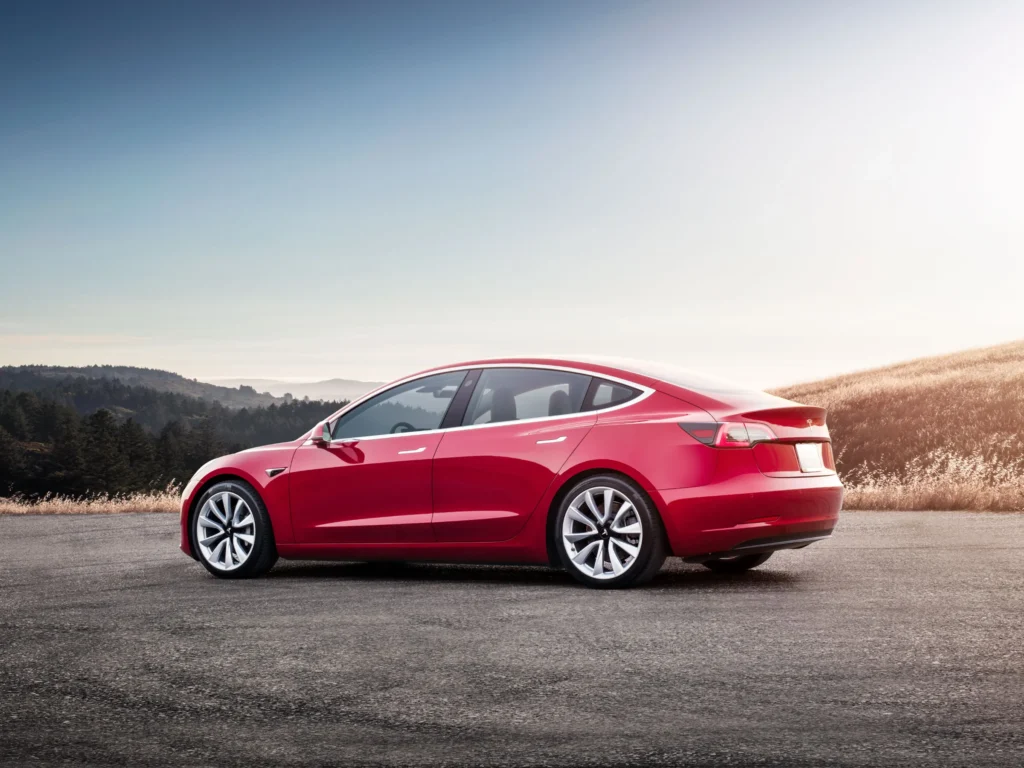
Ten years ago, the idea of a profitable, sub-$35k EV seemed like science fiction. Today, Tesla’s Model 3 proves it’s not only possible — it’s the new baseline. Competitors are now racing to match range, price, and software capabilities that Tesla established as standard.
For consumers, this means:
- Lower total cost of ownership (cheaper to buy + fuel + maintain)
- Rapid technology improvements via OTA updates
- Real progress toward sustainable transport
Final Thoughts: The Model 3 Legacy Continues
The Tesla Model 3 didn’t just survive the critics — it thrived and redefined what’s possible in the automotive industry. From the 2016 unveiling to the 2026 reality, Tesla has delivered more performance, more range, more autonomy, and less cost in real dollars.
If you’re considering an EV in 2026, the Model 3 remains the benchmark. It’s not just the car that started the mass-market EV revolution — it’s the one that keeps winning it, year after year.
Ready to experience the future? Check current Tesla Model 3 pricing and specs directly on Tesla’s site. The numbers don’t lie — and they keep getting better.