In the rapidly evolving world of electric vehicles and autonomous driving, Tesla continues to captivate enthusiasts with innovative designs that push the boundaries of automotive technology. The latest buzz surrounds the Tesla Cybercab—also known as the Robotaxi—with a viral video showcasing its powered butterfly doors opening and closing in a real-world setting for the first time. Captured by @artsimage and shared widely on X (formerly Twitter), this footage provides an unprecedented glimpse into the Cybercab’s sleek door mechanism, highlighting Tesla’s commitment to seamless, futuristic user experiences.
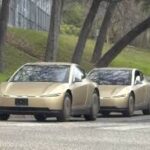
As Tesla gears up for Cybercab production in the coming months, this revelation comes at a pivotal time. At USonWheels.com, we’ve been tracking Tesla’s autonomous vehicle developments closely, from the initial unveil to production timelines. For more on the Cybercab’s journey, check out our earlier coverage on Tesla Cybercab Production Set to Launch in Less Than 100 Days and Tesla Cybercab Spotted Cruising Next to Model Y.
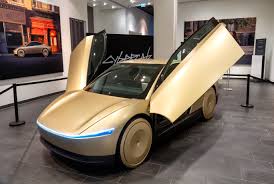
How the Tesla Cybercab Butterfly Doors Work: A Detailed Breakdown
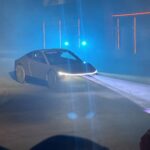
The video, filmed in a dimly lit parking lot, shows a gold-colored Cybercab prototype parked neatly between lines. A person approaches the vehicle and presses a discreet button located along the B-pillar—the structural support between the front and rear doors. This triggers the powered butterfly doors to lift upward gracefully, reminiscent of high-end supercars but optimized for everyday autonomous ridesharing.
Key highlights from the footage:
- Button Placement: The open/close buttons are ingeniously integrated into the B-pillar, ensuring easy access without compromising the Cybercab’s minimalist aesthetic. As noted by Tesla enthusiast @niccruzpatane in his follow-up post, “Cybercab’s powered butterfly door buttons are located right along the B-pillar. I love these doors.”
- Opening Sequence: The doors rise smoothly in about 10-15 seconds, providing ample space for entry. The interior reveals two plush seats, aligning with Tesla’s design for efficient, compact robotaxi operations.
- Closing Mechanism: Once activated, the doors descend and seal shut securely, demonstrating reliability even in a public environment.
This design not only enhances accessibility but also addresses practical concerns like tight parking spaces. Tesla’s engineering ensures the doors can potentially adjust opening angles using onboard cameras to avoid obstacles, similar to the Model X falcon-wing doors.
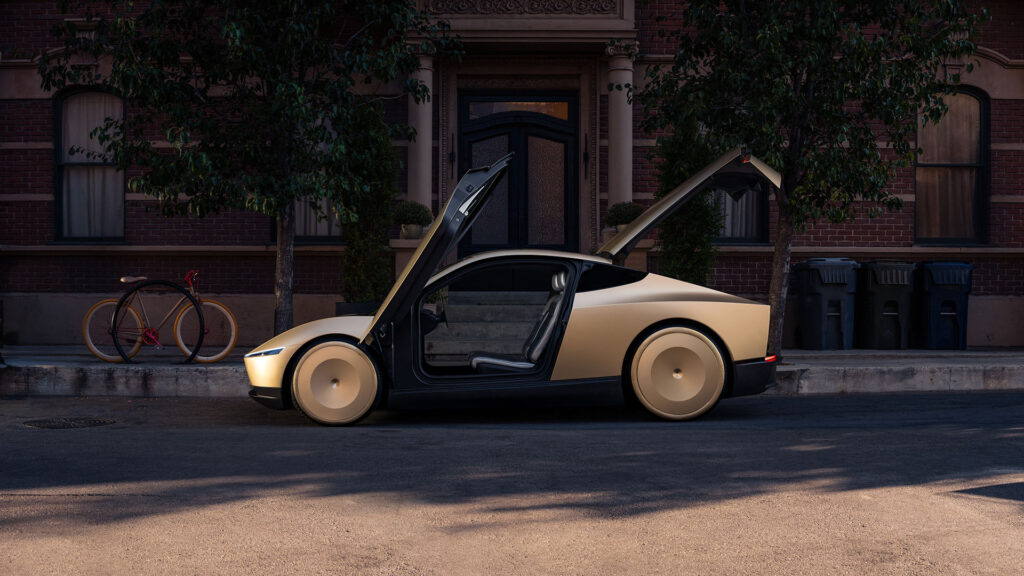
Why Butterfly Doors Matter for Tesla’s Robotaxi Revolution
Butterfly doors aren’t just a stylistic choice; they’re integral to the Cybercab’s role as an autonomous vehicle. By eliminating traditional door handles and hinges, Tesla reduces manufacturing complexity—boasting 60% fewer body parts compared to models like the Model Y. This aligns with the company’s “unboxed” production process, which promises to slash assembly times and costs, making robotaxis more affordable at an estimated $30,000 per unit.
In our previous article on Upcoming Tesla Models in the Second Half of 2026 and 2027, we discussed how the Cybercab fits into Tesla’s broader lineup, including refreshed Semi trucks and enhanced Full Self-Driving (FSD) capabilities. With FSD miles surpassing 6.5 billion as of late 2025, the Cybercab is poised to launch in key states like Nevada, Arizona, Florida, and Texas by mid-2026, revolutionizing urban mobility.
Community reactions on X highlight excitement mixed with practical questions:
- Users praised the doors’ elegance but raised concerns about opening speed in busy scenarios.
- Suggestions included larger, illuminated buttons for public use and emergency mechanical releases.
- One commenter speculated on camera-based adjustments for partial openings in cramped spots.
For a deeper dive into Tesla’s FSD advancements, read our piece on What Does 6.5 Billion Miles Mean for Tesla’s Full Self-Driving?.
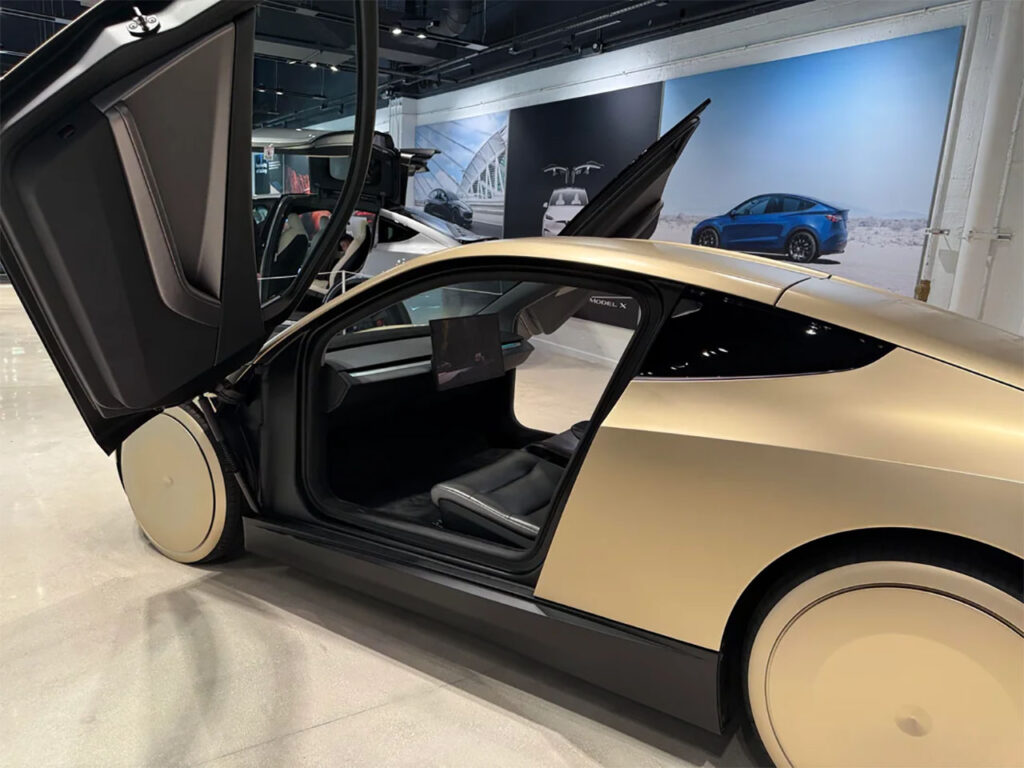
Tesla Cybercab Doors: Implications for EV Enthusiasts and the Future of Autonomous Driving
This first-in-the-wild demonstration underscores Tesla’s progress toward fully autonomous ridesharing. As production ramps up, expect more sightings and updates that could influence everything from urban planning to personal transportation. At USonWheels.com, we’re committed to bringing you the latest EV news, car reviews, and insights into America’s automotive landscape.
Stay tuned for more on Tesla’s innovations, including the refreshed 2026 Model Y and Semi truck designs. If you’re excited about the Cybercab, share your thoughts in the comments below—what do you think of these butterfly doors?