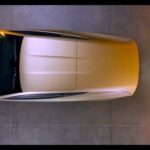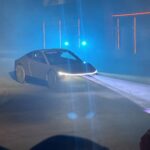
Recent sightings of Tesla’s Cybercab prototypes on public roads have sparked excitement and confusion among Tesla enthusiasts. Photos shared on X (formerly Twitter) show what appears to be a Cybercab equipped with a steering wheel—prompting questions like: Is Tesla backtracking on its fully autonomous vision? The answer is no. These are temporary testing setups using Cybertruck steering wheels as placeholders, and production Cybercabs will remain true to their original design: no steering wheel, no pedals, and fully unsupervised autonomy.
This development highlights the practical realities of developing a groundbreaking robotaxi. Let’s break it down in detail.
Lars Moravy, VP of Vehicle Engineering, mentioned during an interview that they were using a Cybertruck wheel as a placeholder for testing. Production versions of Cybercab will not have a steering wheel.
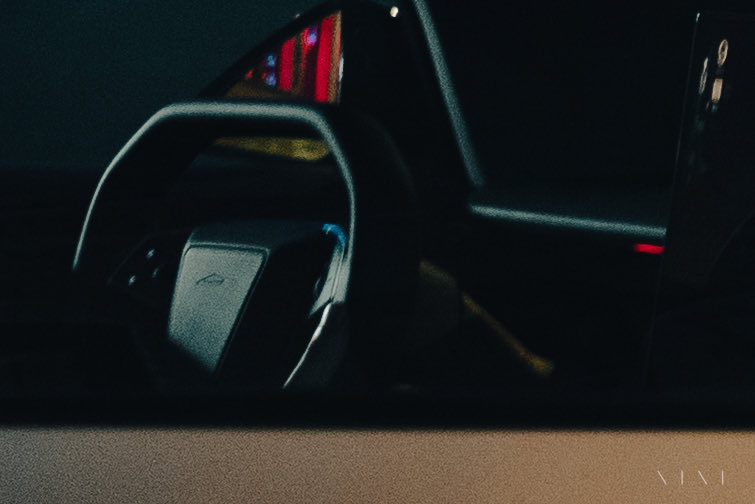
Recent Cybercab Sightings in Austin
On January 11, 2026, Tesla investor and photographer Adan Guajardo posted photos of a Cybercab navigating downtown Austin, Texas, complete with a visible steering yoke. The images quickly went viral, leading to speculation about whether Tesla might add controls to the vehicle.
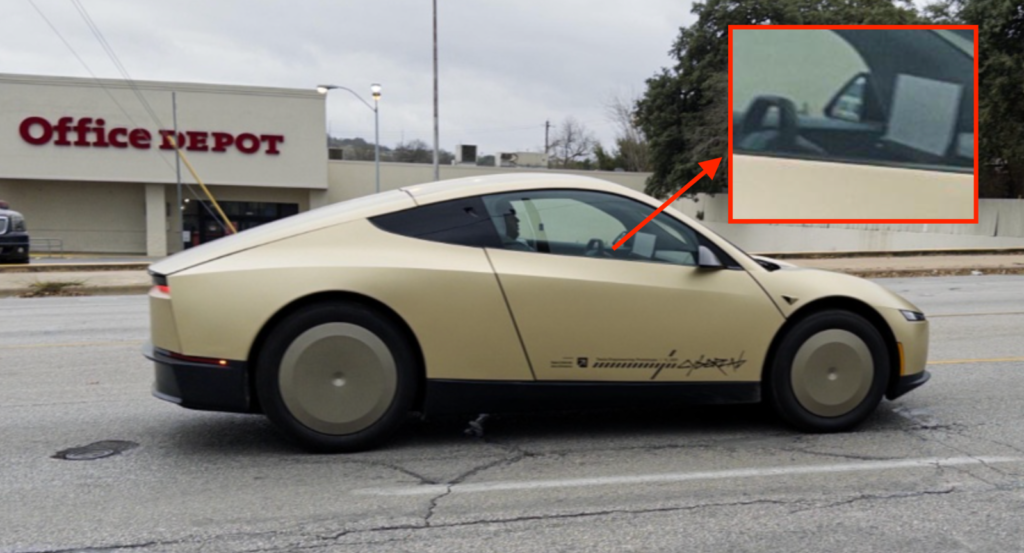
These real-world tests mark important progress toward Tesla’s planned unsupervised Full Self-Driving (FSD) deployment. But the steering wheel isn’t a sign of hesitation—it’s a smart engineering choice.
Why Cybertruck Steering Wheels? Insights from Tesla’s VP of Vehicle Engineering
Tesla expert Nic Cruz Patane clarified the situation directly on X, pointing out that the Cybercab prototypes are using Cybertruck steering wheels for testing. Lars Moravy, Tesla’s Vice President of Vehicle Engineering, has previously explained in interviews that prototypes often include temporary controls for safety, firmware development, stability testing, and crash validation.
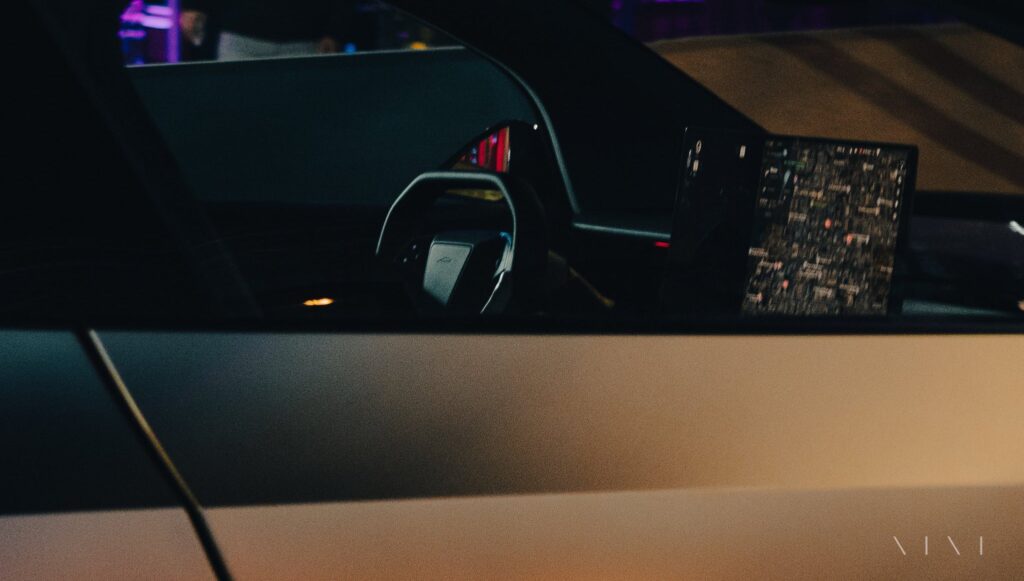
The Cybertruck is currently Tesla’s only production vehicle with steer-by-wire technology—no mechanical linkage between the wheel and tires, relying instead on electronic signals. Since the Cybercab will also use steer-by-wire for its autonomous design, borrowing the Cybertruck yoke makes perfect sense as a ready-made, tested component during early prototyping.
This approach accelerates development without reinventing the wheel (literally). Once full autonomy is validated, the controls are removed—exactly as Tesla has done with earlier FSD test fleets.
Official Cybercab Design: No Controls, Pure Autonomy
Tesla unveiled the Cybercab at the “We, Robot” event in October 2024 as a purpose-built, two-passenger robotaxi with butterfly doors, inductive charging, and a sleek, futuristic interior. The production version will have zero traditional controls to maximize space, reduce complexity, and optimize for ride-hailing economics.
This design enables lower manufacturing costs, higher margins, and a seamless experience where passengers simply summon a ride via the Tesla app—no driver, no wheel, no pedals.
Broader Implications for Tesla’s Robotaxi Network
Seeing Cybercabs on public roads with temporary controls is actually a bullish sign. It means Tesla is deep into real-world validation, crash testing, and software refinement—critical steps before scaling unsupervised FSD for robotaxis.
Prototypes with controls allow engineers to:
- Test edge cases in manual mode
- Gather data on steer-by-wire performance
- Ensure regulatory compliance during early phases
Once Tesla achieves the required safety metrics (far exceeding human drivers), the controls disappear, unlocking the full potential of the Cybercab as a high-margin, autonomous fleet vehicle.
Final Thoughts
The Cybercab prototypes using Cybertruck steering wheels aren’t a compromise—they’re a pragmatic step toward the future Tesla envisions. As Lars Moravy and the engineering team have emphasized, these are testing tools only. Production Cybercabs will deliver the pure, wheel-free autonomy promised since day one.
Stay tuned for more updates as Tesla pushes toward unsupervised robotaxi deployment. The Cybercab isn’t just a vehicle—it’s the foundation of a transformative mobility network.
What do you think about these sightings? Share your thoughts below! #Tesla #Cybercab #Robotaxi #FSD #TeslaAutonomy
(Original sighting and clarification sourced from X posts by @AdanGuajardo and @niccruzpatane on January 11, 2026. Additional context from Lars Moravy’s prior interviews and Tesla engineering updates.)