
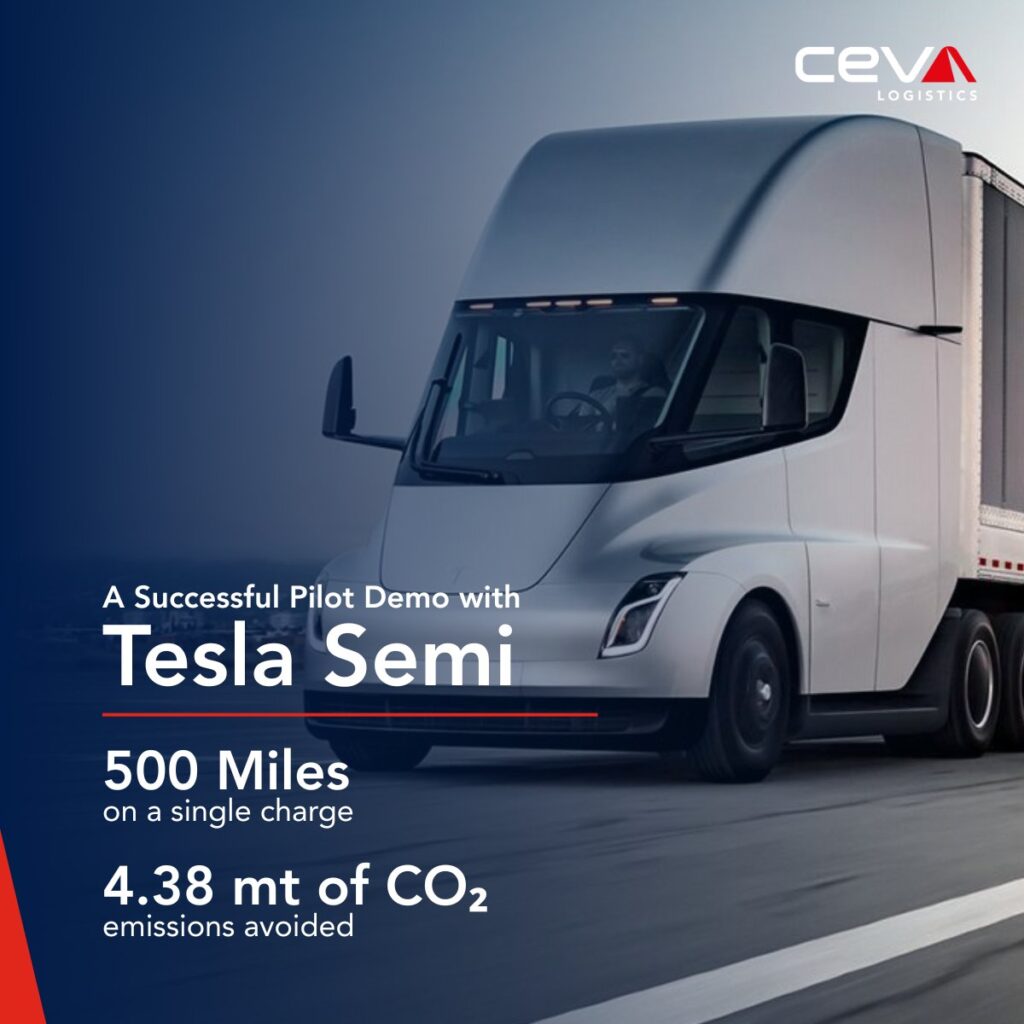
In a groundbreaking move toward sustainable trucking, CEVA Logistics has completed a three-week pilot program with the Tesla Semi electric truck on the U.S. West Coast. The trial not only demonstrated the vehicle’s impressive 500-mile range on a single charge but also highlighted its potential to slash carbon emissions—avoiding an estimated 4.38 metric tons of CO₂ during the demo alone. This real-world test underscores the Tesla Semi’s role in transforming heavy-duty logistics, making electric semi trucks a viable option for long-haul operations and paving the way for the EV trucking revolution.
As electric vehicle adoption accelerates in the commercial sector, this pilot aligns with growing demands for greener supply chains. With diesel prices fluctuating and regulatory pressures mounting, companies like CEVA are turning to innovations like the Tesla Semi to cut costs, reduce emissions, and enhance operational efficiency.
Pilot Program: Testing the Limits of Electric Semi Trucks
CEVA Logistics, a global leader in end-to-end supply chain solutions and part of the CMA CGM Group, partnered with Tesla to evaluate the long-range Tesla Semi in practical scenarios. The objective? To assess how this all-electric Class 8 truck could integrate into daily workflows on demanding West Coast routes, from regional hauls to longer interstate runs.
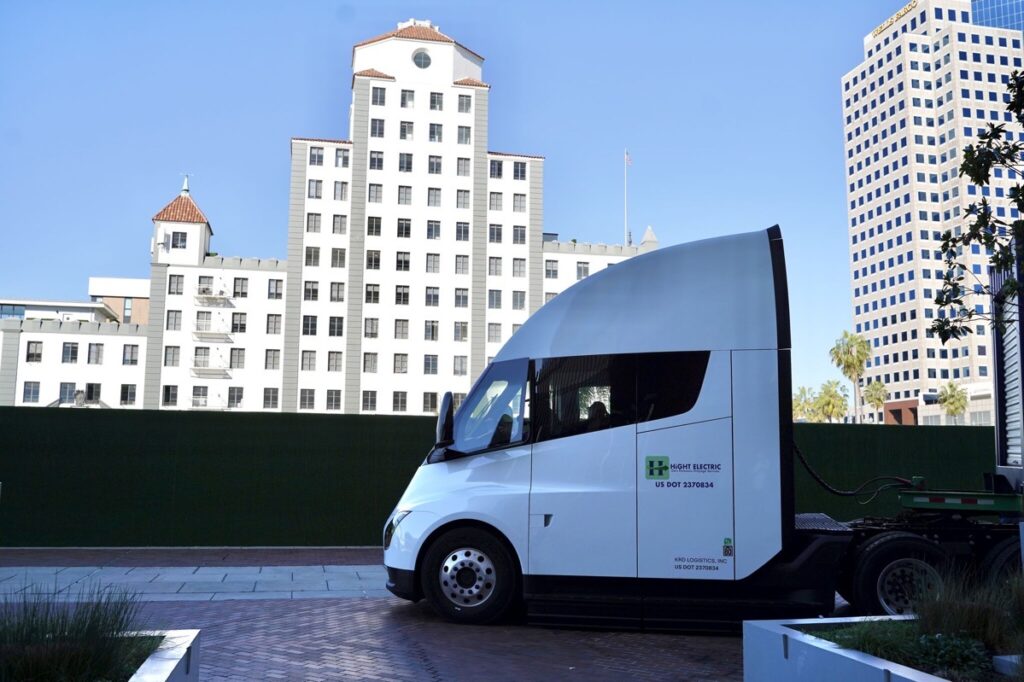
Launched as part of CEVA’s broader commitment to achieving Net Zero Carbon by 2050, the pilot focused on key challenges in EV trucking: range anxiety, charging logistics, and payload performance. Over three weeks, the Tesla Semi handled real freight loads, navigating the diverse terrain of California’s highways and urban depots without missing a beat.
While exact routes weren’t disclosed, the trial emphasized adaptability—optimizing charge planning, dwell times, and real-time range monitoring to mimic everyday logistics operations. This hands-on approach provided invaluable data on how electric semi trucks like the Tesla Semi can disrupt the traditional diesel-dominated industry.
Performance Highlights: 500 Miles on a Single Charge and Seamless Integration
The star of the show was the Tesla Semi’s long-range variant, boasting a massive 900 kWh battery pack that delivered up to 500 miles on a single charge, even under fully loaded conditions weighing up to 82,000 pounds. This exceeds many competitors’ offerings and matches Tesla’s own efficiency claims, with the truck logging thousands of miles while maintaining high uptime.
Charging proved to be a non-issue, thanks to Tesla’s high-power Megacharger infrastructure. CEVA teams integrated sessions into natural breaks, ensuring quick turnarounds and zero disruptions to schedules. “Charging was successfully integrated into CEVA’s daily workflow… enabling reliable turnaround times and supporting consistent route execution,” noted the pilot report.
Early indicators suggest the Tesla Semi outperformed expectations in energy efficiency, potentially translating to lower total cost of ownership (TCO) for fleets. While specific cost savings weren’t detailed, the seamless operation hints at reduced maintenance and fuel expenses—critical for sustainable logistics in an era of rising diesel costs.
For those tracking the EV trucking space, this builds on Tesla’s ongoing Semi deployments. Previous pilots with partners like PepsiCo and UPS have shown similar promise, but CEVA’s West Coast focus highlights scalability in high-traffic corridors.
Environmental Impact: A Major Win for Sustainable Logistics
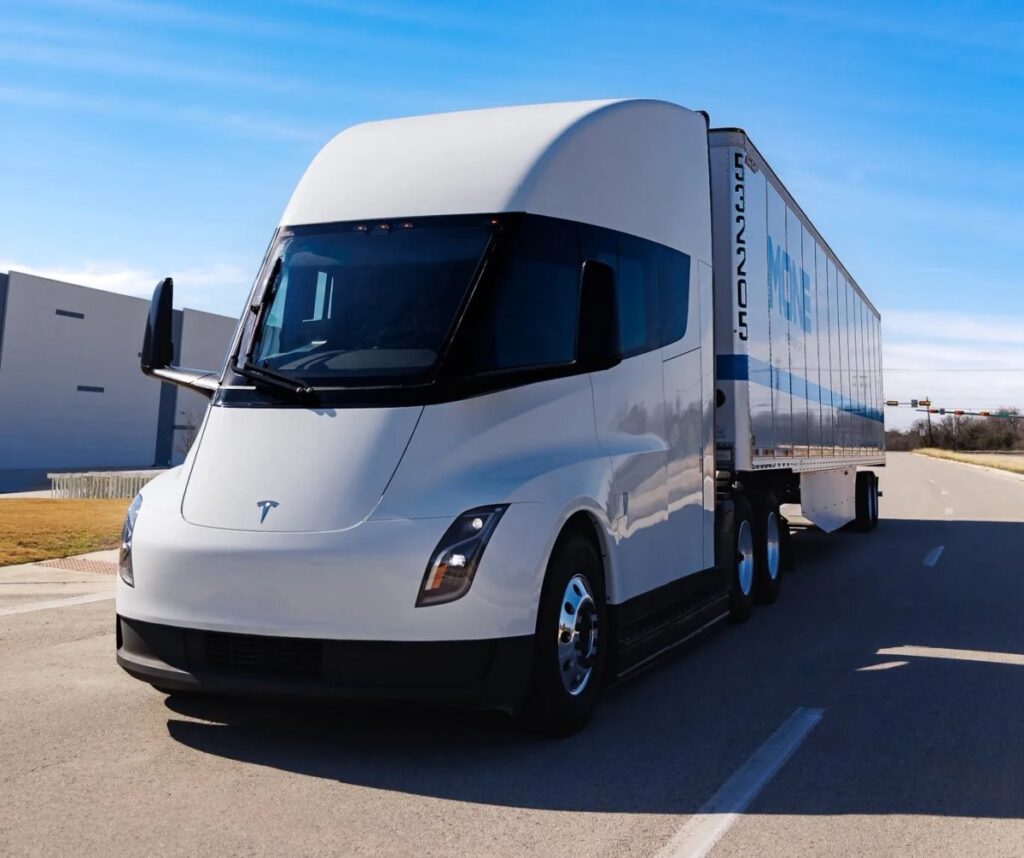
Sustainability was at the heart of this Tesla Semi pilot, and the numbers speak volumes. By swapping diesel for electric power, CEVA avoided 4.38 metric tons (9,656 pounds) of CO₂ emissions over the three weeks—equivalent to removing several gas-powered cars from the road for a year.
Scaling this up, the real-world data projects an annual reduction of about 76.9 metric tons (169,536 pounds) per truck, a game-changer for logistics giants aiming to decarbonise their fleets. In an industry responsible for nearly 30% of U.S. transportation emissions, such advancements could accelerate the shift to zero-emission trucking.
This pilot exemplifies how electric semi trucks contribute to broader environmental goals, from California’s strict clean air standards to global net-zero pledges. As more companies adopt EV solutions, expect ripple effects: cleaner air, lower greenhouse gases, and a blueprint for carbon-neutral supply chains.
The Road Ahead: Implications for EV Trucking and Fleet Adoption
The CEVA-Tesla collaboration isn’t just a one-off demo—it’s a signal of momentum in sustainable logistics. With production ramping up at Tesla’s Nevada Gigafactory, the Semi is poised for wider rollout, potentially pressuring legacy truck makers like Freightliner and Volvo to electrify faster.
For fleet operators, the takeaways are clear: The Tesla Semi’s 500-mile range and operational reliability make it ready for prime time. Challenges like upfront costs and charging infrastructure are diminishing, with ROI potentially under two years in high-mileage scenarios.
CEVA plans to leverage these insights for future lower-carbon initiatives, testing more EV technologies globally. As the logistics sector eyes electrification, pilots like this will drive adoption, fostering a greener, more efficient future for trucking.
Stay tuned to Usonwheels.com for the latest in electric vehicles, semi truck innovations, and EV news. What do you think—will the Tesla Semi dominate U.S. highways by 2030? Share your thoughts in the comments below!
Sources: CEVA Logistics Case Study, Sawyer Merritt on X, and industry reports.