
The electric vehicle revolution is accelerating into the heavy-duty trucking sector, and Tesla is leading the charge. In a major update that’s buzzing across the EV community, Tesla has refreshed its Semi truck website, unveiling final production trims just months before customer deliveries kick off in 2026. This move signals Tesla’s commitment to transforming logistics with sustainable, high-performance electric semis. For fleet operators and EV enthusiasts alike, the Tesla Semi 2026 promises game-changing efficiency, range, and autonomy features that could redefine long-haul transportation in the US.
As reported by industry insiders, Tesla’s latest Semi specs highlight advancements in battery technology and aerodynamics, making it a formidable competitor to traditional diesel trucks. With deliveries slated for early 2026, this electric truck is poised to cut operating costs dramatically while reducing emissions.
Tesla Semi 2026 Trims: Standard Range vs. Long Range Specs
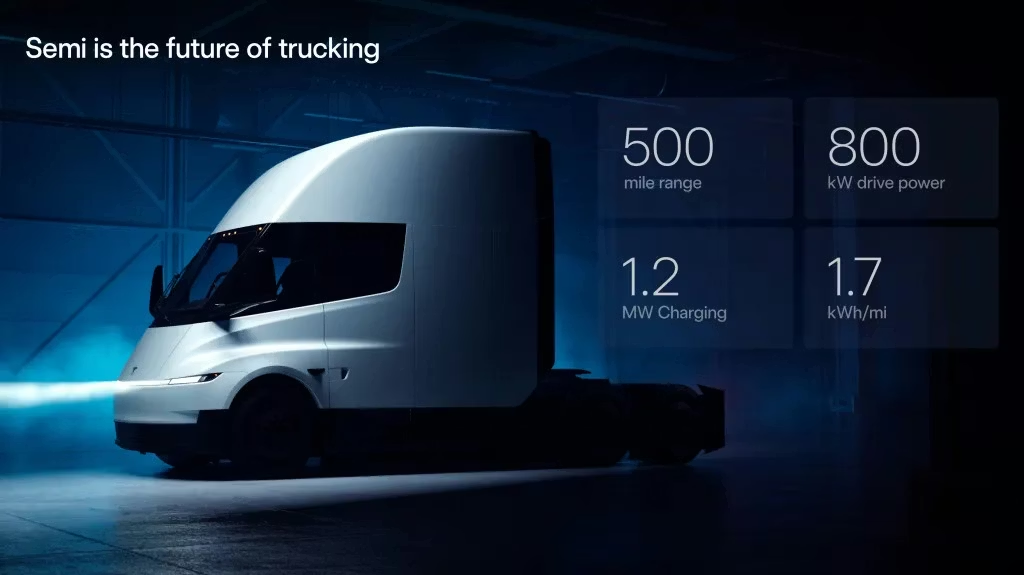
Tesla has introduced two trims for the Semi: the Standard Range and the Long Range, each optimized for different operational needs. Both models boast an energy consumption of 1.7 kWh per mile, which translates to significant savings—roughly $0.17 per mile compared to $0.60 for diesel, potentially slashing operating costs by 70% before maintenance factors in.
Here’s a detailed comparison of the key specifications:
| Feature | Standard Range | Long Range |
|---|---|---|
| Range (at 82,000 lbs GCW) | Approximately 325 miles | Approximately 500 miles |
| Curb Weight | <20,000 lbs | 23,000 lbs |
| Energy Consumption | 1.7 kWh per mile | 1.7 kWh per mile |
| Powertrain | 3 independent motors on rear axles | 3 independent motors on rear axles |
| Drive Power | Up to 800 kW | Up to 800 kW |
| Fast Charging | Up to 60% in 30 minutes | Up to 60% in 30 minutes |
| Charge Type | MCS 3.2 | MCS 3.2 |
| Peak Charging Speed | Not specified | 1.2 MW (1,200 kW) |
| ePTO (Electric Power Take Off) | Up to 25 kW | Up to 25 kW |
| Other Features | Designed for autonomy | Designed for autonomy |
These specs, pulled directly from Tesla’s updated site, emphasize real-world performance under full load, addressing past criticisms of prototype demos. The consistent energy efficiency across trims reduces uncertainty for fleet managers planning routes.
Design Refresh: Aerodynamics and Tech Upgrades for 2026
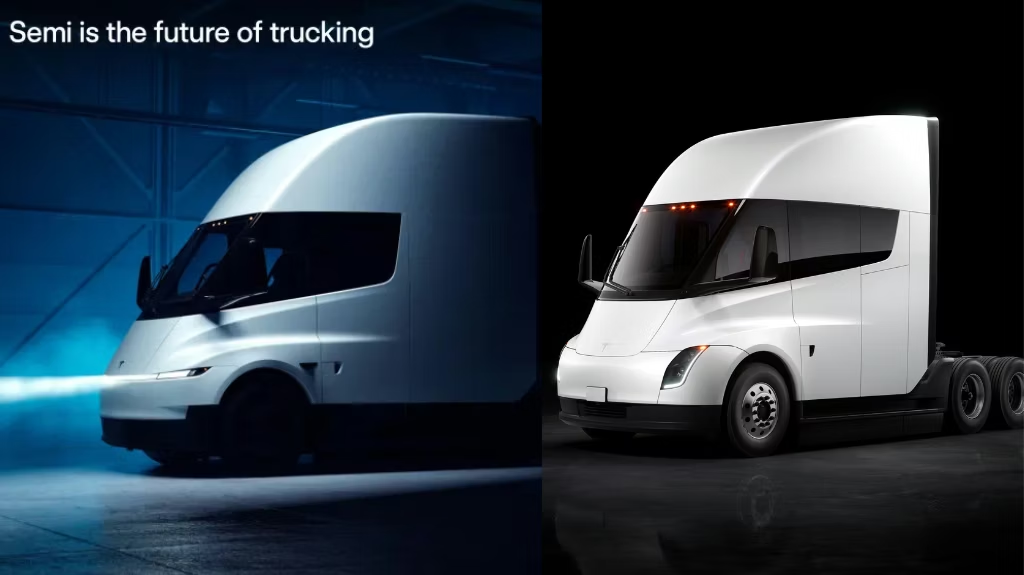
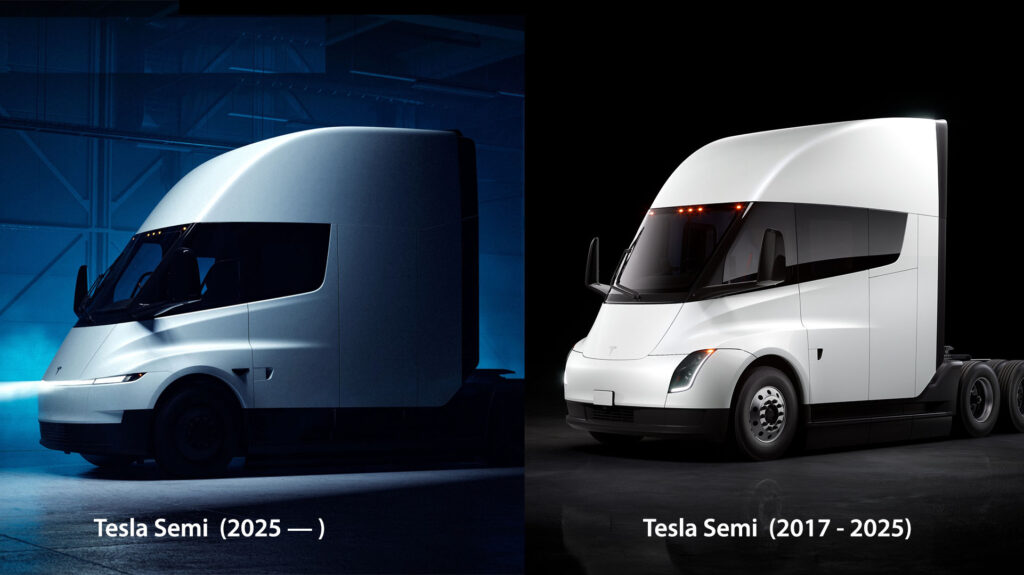
Tesla hasn’t just tweaked the specs; the Semi has undergone a subtle yet impactful redesign. Updates include a more aerodynamic chassis, sleeker headlights, a smaller windshield for better wind resistance, and interior enhancements for driver comfort. These changes build on the original 2017 concept, improving efficiency and payload capacity.
Compared to legacy diesel semis, the Tesla Semi’s curb weight allows for competitive payload without sacrificing range. Early adopters like PepsiCo and DHL have already integrated pilot units, reporting positive results on long-haul routes. DHL plans to expand its fleet in 2026 once series production ramps up.
Production Timeline: From Nevada Factory to US Roads
Production of the Tesla Semi is set to scale up at Tesla’s new Nevada factory, with a capacity of up to 50,000 units annually. While limited production begins late 2025, full customer deliveries are targeted for the first half of 2026, starting with Tesla’s own logistics fleet before expanding to external buyers.
Elon Musk has reiterated this timeline, though analysts like those from ACT Research predict a modest 1,400 units shipped in 2026. Tooling is already installed, and infrastructure for megawatt charging is expanding, with new stations opening in 2026 to support fleet operations.
This aligns with Tesla’s broader push into autonomous vehicles, as seen in our recent coverage of the Tesla Cybercab Massive Screen Spotted: Bigger than Cybertruck? February 2026 Updates.
Impact on the Trucking Industry: Efficiency, Costs, and Sustainability
The Tesla Semi 2026 isn’t just about specs—it’s a disruptor. With Full Self-Driving hardware built-in, it paves the way for autonomous trucking, potentially revolutionizing logistics. Fleets could see massive savings, but challenges remain, like scaling megawatt charging infrastructure, which experts call a “grid-level headache.”
As the US shifts toward greener transport, the Semi could pressure diesel manufacturers. For more on Tesla’s EV innovations, check our article on the 2027 Tesla Model Y: Release Date, Features, Price & What USA Buyers Need to Know.
Final Thoughts: The Future of Electric Trucking Arrives in 2026
Tesla’s Semi update is a clear signal that electric trucking is no longer a concept—it’s imminent. With deliveries starting in 2026, this truck could accelerate the adoption of EVs in commercial fleets, offering unmatched efficiency and lower costs. Stay tuned to USonWheels.com for more updates on Tesla and the EV landscape, including our take on the Tesla Roadster 2026: Production Version Unveil in April Sparks Massive Excitement Among EV Enthusiasts.