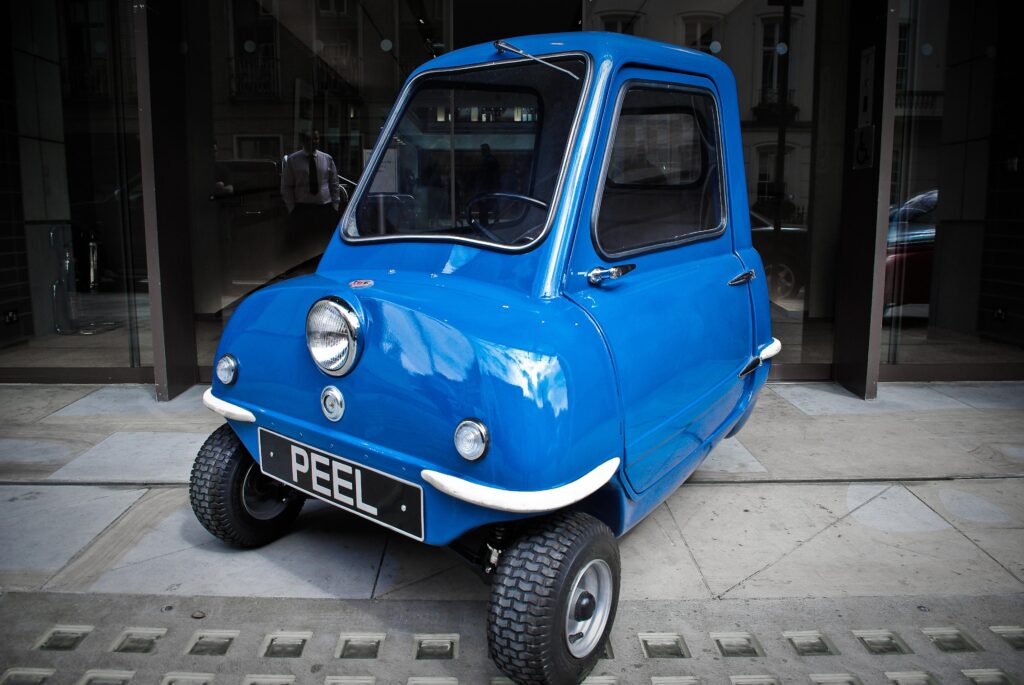
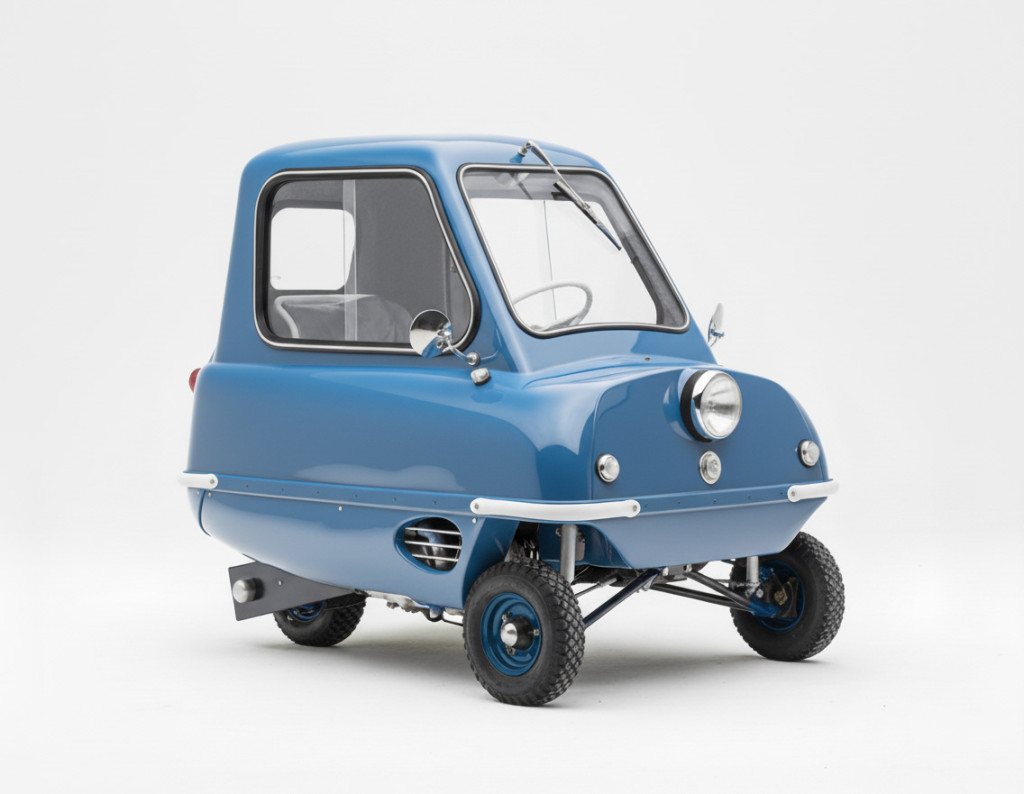
The Peel P50 is officially the world’s smallest production car, holding the Guinness World Record since 2010. At just 1.37 metres (54 inches) long, this tiny three-wheeled microcar from the 1960s continues to capture imaginations in 2026 as both a collector’s icon and a quirky urban runabout. Whether you’re a car enthusiast, history buff, or simply curious about the tiniest road-legal vehicle ever made, the Peel P50 remains unmatched.
A Brief History of the Peel P50: From Isle of Man to Global Icon
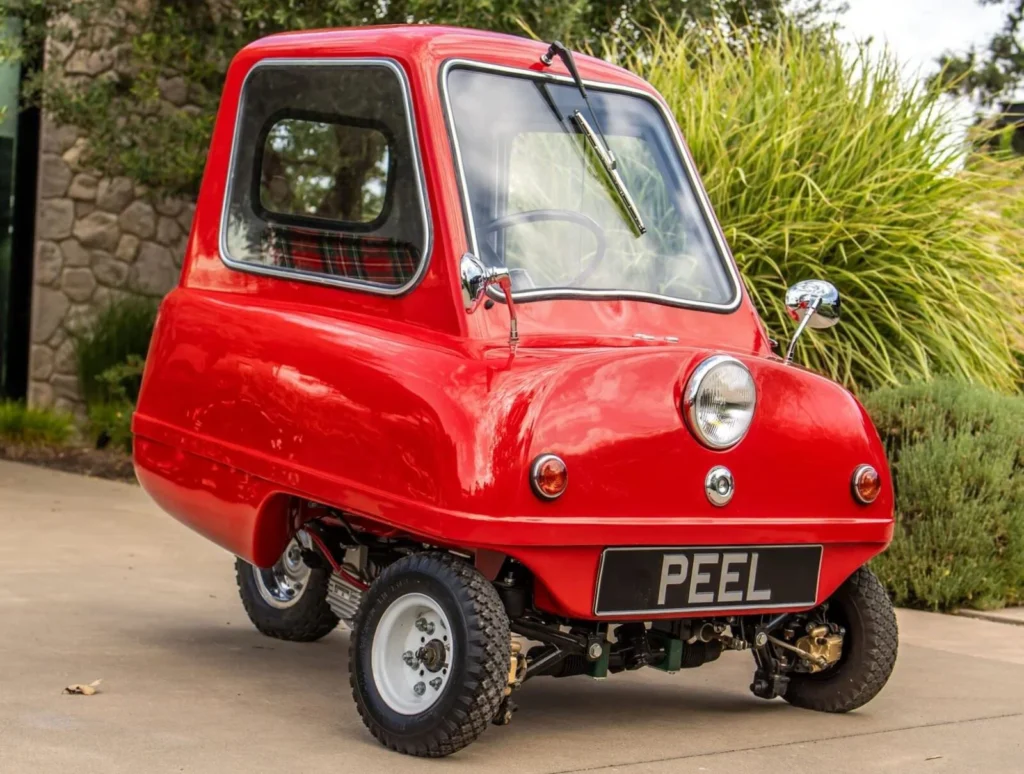
Designed in 1962 by the Peel Engineering Company on the Isle of Man, the original Peel P50 was built as an ultra-compact city car. It was marketed as seating “one adult and a shopping bag” and produced in tiny numbers — just 50 units between 1962 and 1965. Fewer than 30 originals are known to survive today, making them extremely rare (one sold for over $176,000 at auction).
The P50 was never intended for mass production. Its creator, Cyril Cannell, focused on minimalism: no reverse gear (just lift it by the rear handle and turn it around by hand), one door on the left, and a single headlight. It quickly became a symbol of 1960s British ingenuity and microcar madness.
In 2010, continuation models returned to production in the UK, staying faithful to the original design while adding modern engineering. These hand-built replicas are still available today through official UK builders.
Why the Peel P50 Is the World’s Smallest Production Car
Guinness World Records confirms the Peel P50 as the smallest production car ever made, based on its external dimensions and production status. No other vehicle has beaten its tiny footprint while being road-legal and factory-built (even in limited runs).
Key dimensions that make it legendary:
- Length: 1,370–1,372 mm (54 inches) — shorter than a Vespa scooter
- Width: 991–1,040 mm (39–41 inches) — narrower than a standard phone box
- Height: ~1,000 mm (39.4 inches)
- Weight: 59 kg (130 lbs) for originals; 98–105 kg for modern versions
- Turning circle: Just 3.66 metres (12 feet)
It’s small enough to fit in an elevator or be carried by one person — a feat no modern EV or city car can match.
Peel P50 Specifications (Original vs. 2026 Modern Models)
Here’s a quick comparison table:
| Feature | Original (1962–1965) | Modern Continuation (2026) |
|---|---|---|
| Engine | 49cc DKW 2-stroke (4.5 hp) | 49cc 4-stroke petrol OR electric motor |
| Top Speed | ~61 km/h (38 mph) | ~45 km/h (28 mph) |
| Transmission | 3-speed manual (no reverse) | CVT / single-speed |
| Weight | 59 kg | 98–105 kg |
| Wheels | 3 | 3 |
| Seats | 1 | 1 |
| Production | ~50 units | Limited hand-built (kits + factory) |
Modern versions are available in petrol (for UK/Europe enthusiasts) or electric (popular for US export and low emissions). Both are road-legal in many countries as microcars or quadricycles.
What’s It Like to Drive the World’s Smallest Car?
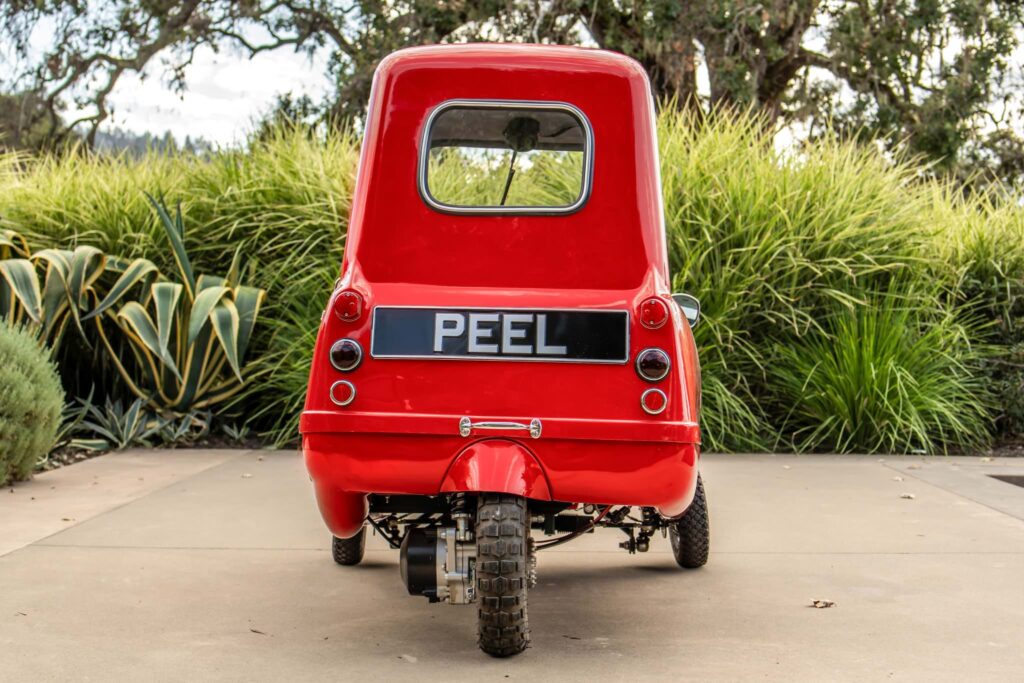
Owners describe the Peel P50 as pure fun — zippy in traffic, effortless parking, and impossible not to smile while driving. Its lightweight design makes it feel like a go-kart with a roof. Top speed is modest, but for city commuting or as a novelty second vehicle, it’s unbeatable. The electric version offers silent, emission-free motoring with surprising usability.
Note for Indian buyers: While not officially sold in India, continuation models can be imported. Check local RTO rules for microcars/quadricycles, as they may qualify under special categories or require modifications for full road legality.
How to Buy a Peel P50 in 2026: Prices, Kits & Availability
- Official source: p50cars.com (UK) — factory-built or self-build kits. Hand-crafted to order with custom colours.
- Alternative US-focused options: peel50.com offers cabriolet-style variants.
- Pricing: Modern replicas typically start from £10,000–£18,000 (approx. ₹11–20 lakh), depending on petrol/electric and build type. Originals fetch $100,000+ at auction.
- Kits are popular for enthusiasts wanting the full DIY experience.
Limited annual production keeps it exclusive — perfect for collectors.
Fun Facts About the Peel P50
- It has appeared in Top Gear, museums, and viral videos worldwide.
- You can literally pick it up and carry it (originals weigh less than many e-scooters).
- Standard colours were Daytona White, Dragon Red, and Dark Blue.
- Its bigger sibling, the Peel Trident (two-seater bubble car), is also available today.
Final Thoughts: Is the Peel P50 Still Relevant in 2026?
In an era of massive SUVs and 500+ hp EVs, the Peel P50 reminds us that less can be more. It’s not just the world’s smallest car — it’s a piece of automotive history that’s still drivable today. Whether you want it as a showpiece, daily city commuter, or conversation starter, the Peel P50 delivers smiles per mile like nothing else.
Ready to own the smallest car on the planet? Visit p50cars.com for the latest builds and kits, or search for rare originals on auction sites.
What do you think — would you drive the world’s smallest car? Drop your thoughts below or ask about specific specs, import tips for India, or comparisons with other microcars like the Citroën Ami!