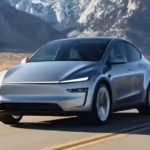
Tesla has officially manufactured its 10 millionth vehicle — a sleek Diamond Black Model Y built at the Fremont Factory in California this week.
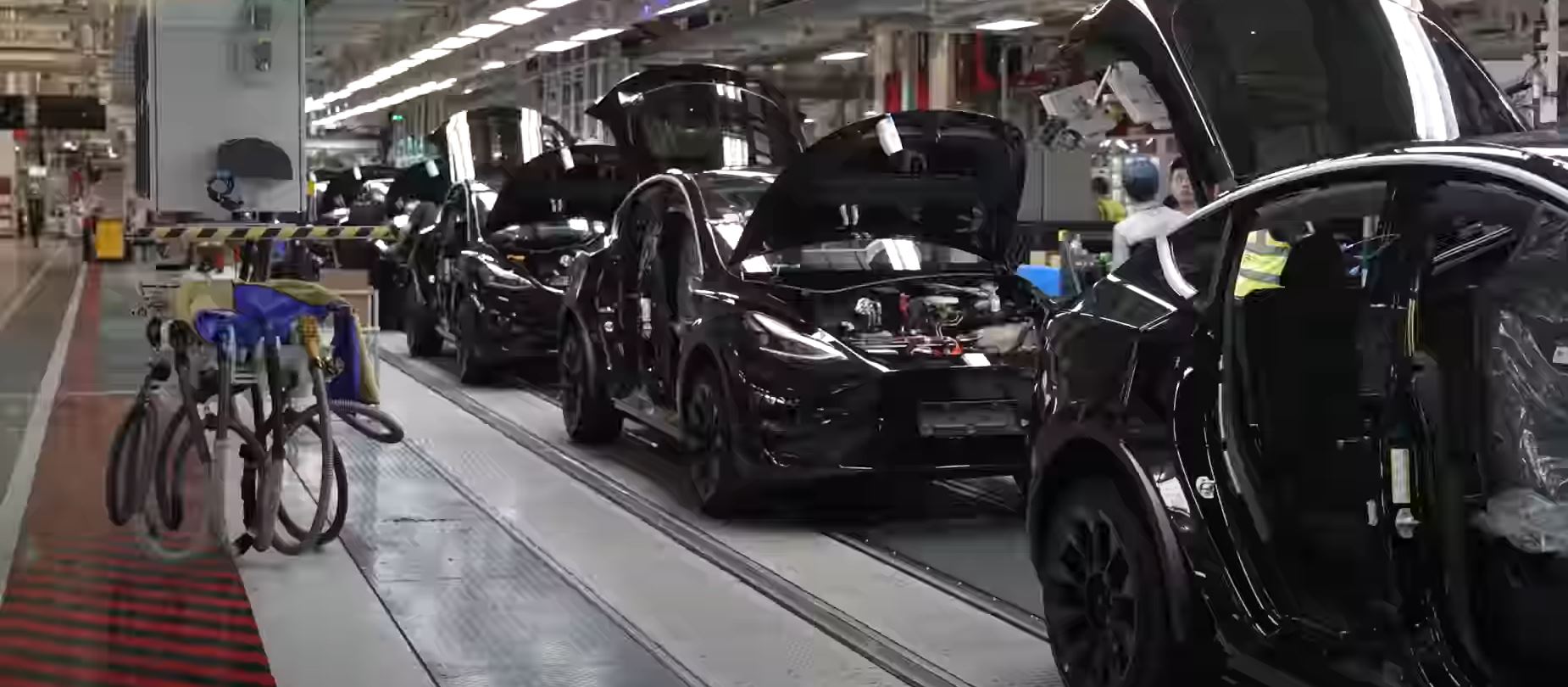
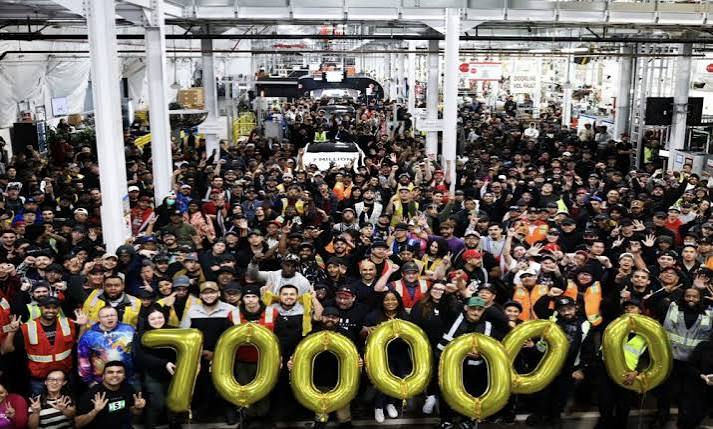
The company shared the news on July 30, 2026, with a celebratory video showing the black Model Y rolling off the line amid cheering workers, falling confetti, and a massive group photo featuring golden “10000000” balloons. Signs held by team members highlighted contributions from Fremont, Giga Berlin, Giga Shanghai, and Giga Texas.
Elon Musk quickly congratulated the team: “Congratulations to the Tesla Team! 10 million vehicles manufactured is an incredible amount of work.”
From 1 Million to 10 Million in Just Six Years
Tesla produced its first million vehicles in March 2020 — also a Model Y at Fremont. That first million took roughly 12 years from the start of Roadster production in 2008.
The next nine million followed in just over six years. Tesla’s official post noted: “Only 6 years ago, Fremont Factory made our 1 millionth vehicle.” Reports circulating with the announcement indicate the most recent million vehicles were completed in only about 211 days, underscoring the dramatic acceleration in manufacturing efficiency.
This scaling curve remains unmatched in the modern auto industry. Tesla transformed a former NUMMI plant into one of the highest-volume EV factories in the world while simultaneously ramping up new Gigafactories on three continents.
Why the Model Y Matters
The 10 millionth vehicle being a Model Y is fitting. The compact crossover has been Tesla’s volume leader for years and one of the best-selling electric vehicles globally. The Diamond Black finish (a relatively recent paint option) gave the milestone car a premium, understated look as it rolled through the body fit area under banners reading “10M Vehicles.”

Fremont remains central to Tesla’s U.S. production of Model 3 and Model Y, and the plant has also begun supporting Optimus humanoid robot production. The celebration video prominently featured workers from across Tesla’s global network, reinforcing that the 10 million figure is a company-wide achievement rather than the output of a single factory.
Production Context in 2025–2026
Tesla produced approximately 1.65 million vehicles in 2025. In the first half of 2026 the company built roughly 860,000 vehicles (408,000 in Q1 and about 452,000 in Q2), keeping cumulative production on track to cross the 10 million mark in late July.
While annual volumes have fluctuated with demand cycles, pricing adjustments, and competition (particularly in China), the long-term trajectory from startup to 10 million units in under two decades stands as one of the most impressive manufacturing stories in automotive history.
What This Milestone Means
Reaching 10 million vehicles carries several implications:
- Manufacturing maturity — Tesla has proven it can scale high-volume EV production at a pace legacy automakers have struggled to match.
- Software leverage — The majority of these 10 million cars run Tesla’s Full Self-Driving (Supervised) software stack, creating a massive real-world data advantage.
- Global footprint — Production is now distributed across Fremont, Shanghai, Berlin, and Texas, reducing single-factory risk and improving regional responsiveness.
- Foundation for the next phase — The same industrial engine that delivered 10 million cars is now being applied to next-generation vehicles, energy products, and Optimus robots.
Industry observers have already begun asking the natural follow-up question: when will Tesla manufacture its 10 millionth Optimus?
Looking Ahead
Tesla’s official statement was characteristically brief and focused on gratitude to the team. The video closed with the simple line: “Thanks to everyone at Tesla who made this possible.”
For a company that began with a low-volume sports car and was repeatedly written off by critics during the Model 3 production ramp, the 10 million vehicle mark is a clear validation of the long-term vision. The Diamond Black Model Y that rolled off the Fremont line this week is both a celebration of past achievement and a marker of the industrial scale Tesla now operates at.
As production continues across its global network, the next major milestones — whether higher annual volumes, new vehicle platforms, or robotaxi and Optimus scale — will be measured against this new baseline of 10 million vehicles already built.