Hyundai did not redesign the current Elantra for the 2026 model year. The main change is a new trim: SEL Sport Premium replaces the old SEL Convenience package. It sits between SEL Sport and Limited and typically adds items such as heated front seats, a sunroof, and extra convenience features. Gloss-black 17-inch wheels also appear on some mid-level trims.
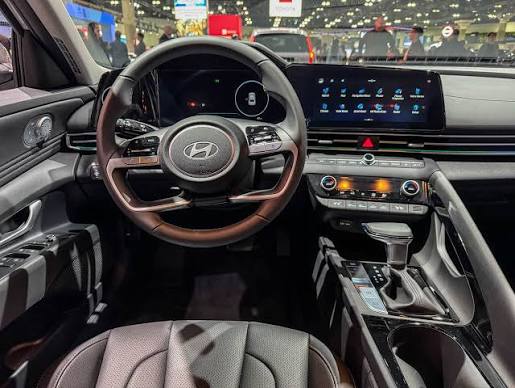
Everything else carries over from the 2024 refresh: the sharp “parametric” face, available dual 10.25-inch screens on higher trims, wireless Apple CarPlay/Android Auto on the smaller 8-inch screen (wired on the bigger one), and Hyundai’s long list of standard driver aids.
Typical U.S. starting MSRPs (destination extra on some listings):
- SE — about $22,625–$22,825
- SEL Sport — about $23,750–$23,950
- SEL Sport Premium — about $25,075–$25,275
- Limited — about $27,175–$27,375
- N Line — about $29,400–$29,600
- Hybrid Blue — about $25,450–$26,695
The lineup still covers three very different missions: a cheap, well-equipped daily driver; a 50-plus-mpg hybrid; and two performance flavors (201-hp N Line and the 276–286-hp Elantra N).
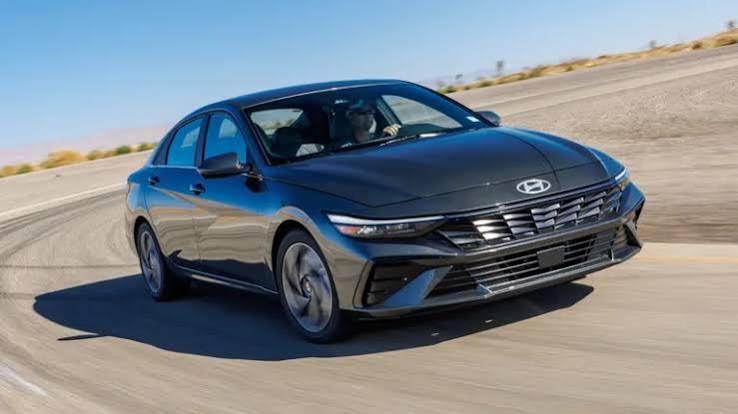
The current U.S.-spec 2026 Elantra (SEL Sport Premium and similar) keeps the seventh-generation look with blacked-out wheels and a modest trim update.
How the current 2026 Elantra drives and lives
The base 2.0-liter four-cylinder makes 147 hp and is paired with a CVT. It is not fast—Edmunds recorded 0–60 mph in about 9.4 seconds on one test car—but it is quiet enough, cheap to run, and easy to live with. EPA ratings sit around 31/40 mpg for the SE and 30/40 for most other gas trims. Real-world mixed driving often matches or beats those numbers.
The hybrid is the smarter buy for most people. Combined output is modest (around 139 hp in U.S. spec), but the electric motor fills the low-end hole. The Blue trim is rated 51/58/54 mpg and can theoretically cover nearly 600 miles on a tank. Higher hybrid trims drop to 49/52/50 mpg. The ride is composed, the cabin is roomy for the class (38 inches of rear legroom), and the trunk holds 14.2 cubic feet.
N Line (1.6T, 201 hp, 7-speed DCT) and especially the Elantra N (2.0T, up to 286 hp with N Grin Shift) change the character completely. The N remains one of the best-value performance sedans on sale: strong brakes, adaptive dampers, an electronic limited-slip differential, and a chassis that actually likes being driven hard. A 2026 TCR Edition adds a large swan-neck wing, forged wheels, and extra track hardware.
Safety is a highlight. The 2026 Elantra (excluding the N) is a 2026 IIHS Top Safety Pick and carries a 5-star NHTSA overall rating. Standard kit includes automatic emergency braking with pedestrian detection, blind-spot monitoring, rear cross-traffic alert, lane-keeping, and more. Warranty remains one of the best in the segment: 5 years/60,000 miles bumper-to-bumper and 10 years/100,000 miles on the powertrain.
Owner scores are generally strong on value, fuel economy, and features. Common complaints: the base engine feels strained when loaded, some plastic interior surfaces, and the lack of wireless CarPlay on the larger screen.
The big 2026 news: eighth-generation Elantra (Avante) is already on sale in Korea
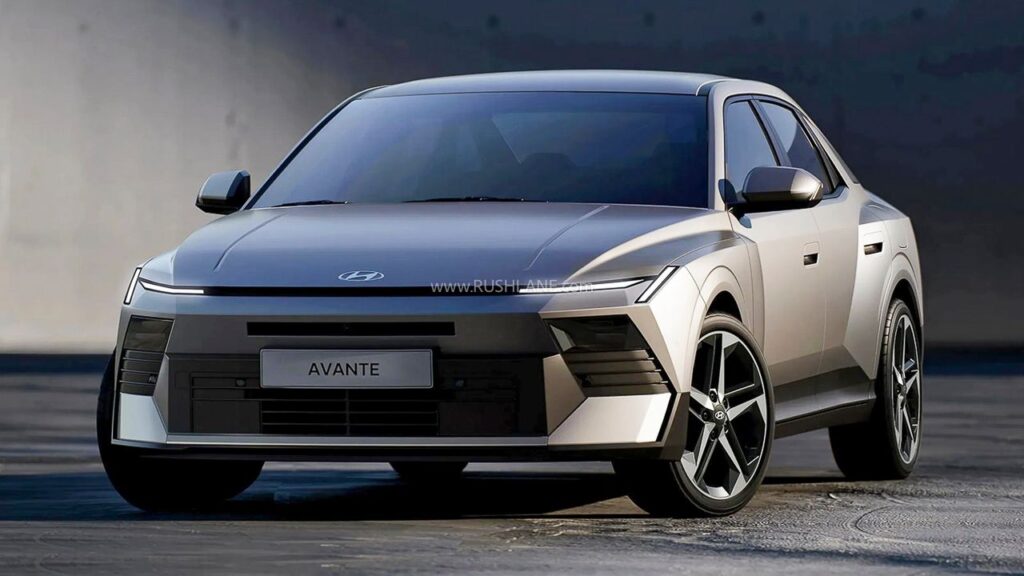
Hyundai unveiled the eighth-generation car at the 2026 Busan International Mobility Show in late June. It went on sale in South Korea in early August and set an Avante first-day order record of 11,094 units.
This is not a facelift. Dimensions jump to 4,765 mm long, 1,855 mm wide, 1,425 mm tall, on a 2,750 mm wheelbase—55 mm longer and 30 mm wider than the outgoing car, with 30 mm more wheelbase. Cabin space now approaches midsize-sedan levels. Trunk opening and load height were improved as well.
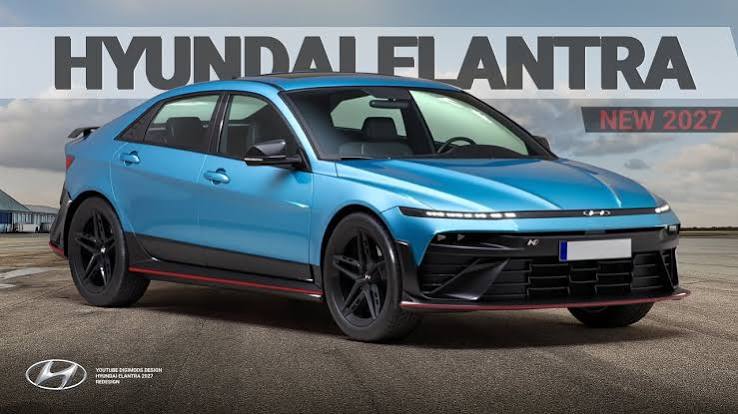
Design language is Hyundai’s new “Art of Steel”: cleaner surfaces, T-shaped LED DRLs over lower rhomboidal headlamps, a more traditional three-box profile, flush-type handles, and a full-width ducktail-style rear spoiler with large T-shaped tail lamps. It looks more grown-up and less origami than the seventh generation.
The all-new eighth-generation Elantra/Avante, revealed at Busan in June 2026, is longer, wider, and far more angular than the car still sold as the 2026 model in most markets.
Inside, the car adopts the Pleos Connect system first seen on the Grandeur: a slim digital driver’s display plus a large central screen (12.9 or 14.6 inches). Physical knobs remain for climate and media. Dual wireless phone pads, USB-C ports front and rear (some 100 W), ambient lighting, optional Bang & Olufsen audio, built-in dashcam, OTA updates, and a digital key are part of the package. Ten airbags are standard. New ADAS includes Navigation-based Smart Cruise Control 2, Remote Smart Parking Assist, Memory Reversing Assist, and Pedal Misuse Safety Assist.
The generative AI assistant is called Gleo (sometimes styled Gleoo). Early test drives in Korea praised rear-seat space and ride comfort but noted the voice assistant can still misinterpret simple climate commands and that Apple CarPlay stability needs work.
Powertrains in Korea:
- 2.0-liter naturally aspirated gasoline — 149 hp, CVT, combined fuel economy quoted up to 14.3 km/L
- 1.6-liter hybrid — 157 hp combined (up 16 hp), improved motor, battery, and transmission, plus Smart Regenerative Braking 3.0, predictive energy management, and a “Stay Mode” that runs climate and infotainment on battery with the engine off
Korean prices (August 2026): gasoline from 23.98 million won (~$17,000) to 31.52 million won; hybrid from 30.42 million to 36.99 million won before tax incentives. Fully optioned hybrids can exceed 40 million won. Critics initially called the hike steep; first-week demand proved otherwise.
A hotter Elantra N on the new platform is expected later—possibly with more power than the current 286 hp car—and is unlikely to reach showrooms before the 2028 model year in some markets.
India and other markets
The new eighth-generation car will roll out globally after Korea, with North America expected to see it as a 2027 (or late-2027) model. In India, prospects look weak. Sedan demand has collapsed in favor of SUVs and EVs; Hyundai’s product plan through 2030 emphasizes those segments. The previous Elantra was already withdrawn from the Indian lineup. Do not expect a quick local launch.
Verdict
If you need a car now, the 2026 Elantra (seventh generation) is still one of the strongest values in the compact-sedan class: cheap to buy, cheap to run, well equipped, and backed by a long warranty. The Hybrid Blue is the standout for most buyers. The N remains the enthusiast pick.
If you can wait, the eighth generation is a genuine step up in size, cabin quality, safety hardware, and software. It is no longer a bargain-basement compact; it is a near-midsize sedan with flagship-adjacent tech. Early Korean drives and record orders suggest Hyundai priced the extra substance correctly—at least in its home market.