
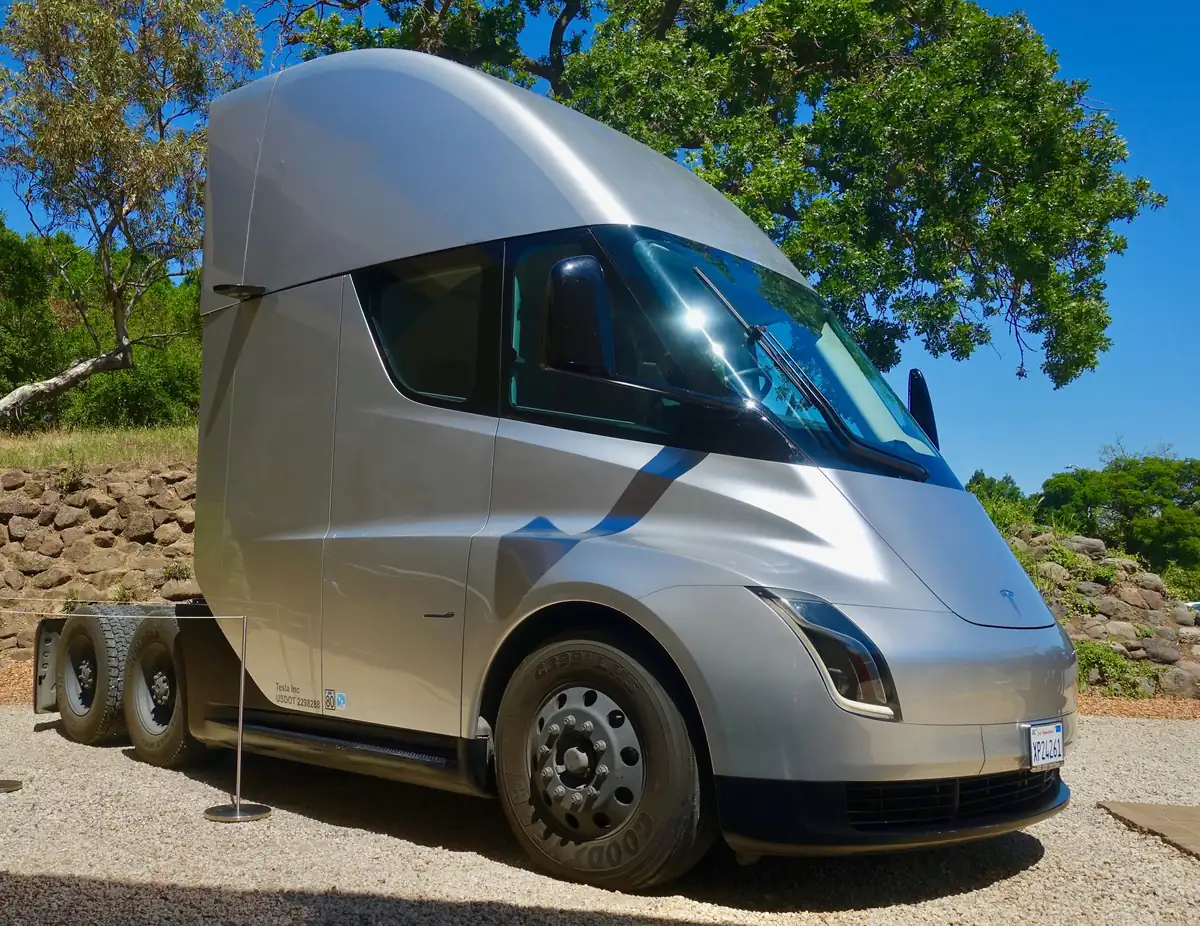
The Tesla Semi is finally in volume production. Tesla opened a dedicated Semi factory near Reno, Nevada, on September 24, 2026, and says the plant can build 50,000 trucks a year. Tesla still doesn’t publish a Tesla Semi price. The ICCT and Electrek report that the long-range truck has been quoted at about $290,000 and the Standard Range at about $260,000. That’s well above the $180,000 Tesla promised in 2017, but Electrek says it’s still below the average electric Class 8 truck. Here’s what fleets need to know.
We’ve followed this program for a while, including Musk’s earlier promise of a 2026 volume ramp and the redesigned cab. This update covers what’s actually happening now that the factory is open: price, specs, who is buying and how long the wait might be.
What’s confirmed
- Volume production has started. Tesla launched high-volume production at its new Nevada Semi factory, which it says can build 50,000 trucks a year, Electrek reported. Dan Priestley, Tesla’s director of Semi engineering, said the target works out to about 1,000 trucks a week, with “more than 3,000 jobs” during the ramp, according to CNBC. Tesla also said on its Q3 2026 earnings call that Semi production began in the third quarter.
- There are two trims. Tesla’s Semi page lists a Standard Range with up to 325 miles and a Long Range with up to 500 miles, both at 82,000 pounds gross combination weight.
- Efficiency and power: Tesla quotes 1.7 kWh per mile, up to 800 kW of drive power, and Megacharger charging that restores up to 60% of range in 30 minutes.
- Hardware changes: Electrek reports that the production truck switched to Tesla’s 4680 battery cells and electric steering as part of a four-year redesign “for true volume.” Tesla also claims more than 98% uptime for its Semi fleet so far in 2026.
- Customers: Trucks at the launch event carried PepsiCo, DHL, US Foods, ABF, Einride, IMC Logistics and WattEV branding. The ZET SCALE alliance named Tesla its primary supplier for an initial 2,500 trucks, and Einride agreed to buy 500, CNBC reported.
- Price: Tesla doesn’t list one. Both CNBC and Electrek point this out.
What’s rumored or reported
- Long Range price: about $290,000. CNBC attributes this to a recent ICCT report, and Electrek says Tesla has been quoting the same figure.
- Standard Range price: about $260,000, according to Electrek’s earlier reporting.
- Versus the market: Electrek says that’s about $145,000 below the average price of an electric Class 8 truck. It’s also up roughly 60% from the $180,000 Tesla advertised for the 500-mile truck in 2017.
- Self-driving: Musk said on Tesla’s July earnings call that FSD would come to the Semi “in the near future,” but he gave no date, CNBC reported. Rivals Aurora and Kodiak are already running driverless tests and hauling freight on US roads.
Tesla Semi price and specs
| Semi Standard Range | Semi Long Range | |
|---|---|---|
| Range (Tesla est., at 82,000 lb GCW) | Up to 325 mi | Up to 500 mi |
| Reported price | About $260,000 (Electrek) | About $290,000 (ICCT via CNBC; Electrek) |
| 2017 promised price | $150,000 | $180,000 |
| Energy use | 1.7 kWh/mi (Tesla) | |
| Peak drive power | Up to 800 kW (Tesla) | |
| Fast charging | Up to 60% in 30 min on a Megacharger (Tesla) | |
| Tesla-listed curb weight | Under 20,000 lb | 23,000 lb |
Sources: tesla.com/semi; 2017 prices per Electrek’s February 2026 spec report; 2026 prices are reported, not Tesla list prices.
From 2017 reveal to 2026 production: the Semi timeline
- 2017: Tesla unveils the Semi, quoting $150,000 and $180,000 for its two versions, and promises production for 2019, according to Electrek.
- 2022: PepsiCo gets the first hand-built trucks, CNBC and Electrek report.
- February 2026: Tesla publishes final specs for two trims, Standard Range and Long Range.
- September 2026: The Nevada factory opens and volume production starts. ZET SCALE names Tesla its primary supplier for 2,500 trucks.
- October 2026: Tesla confirms on its Q3 call that Semi production began in the third quarter.
Charging hardware is part of the purchase too. Tesla sells two depot options. The 1.2-MW Megacharger restores up to 60% of range in 30 minutes. The 120-kW Basecharger, meant for overnight depot use, restores up to 60% in about four hours on the Long Range truck. Both are listed on Tesla’s Semi page. Fleets that run refrigerated or hydraulic equipment should note the truck’s electric power take-off, rated at up to 25 kW.
What the price means for a US fleet
At about $290,000, a Long Range Semi costs a lot more up front than a diesel tractor. The case for it depends on energy and maintenance costs, and on what grants or vouchers apply in your state. We don’t have a sourced US diesel tractor price for October 2026, so we won’t invent a payback figure. Here’s how to think about it instead:
- Energy: Tesla’s 1.7 kWh per mile figure is your starting point. Multiply it by your contracted depot electricity rate and your annual miles, then compare that with your diesel spend. Megacharger pricing, if you use Tesla’s network, is a separate line item.
- Route fit: The Standard Range’s 325 miles covers regional and drayage routes that return to the depot. The 500-mile truck is for longer one-way runs, and only if there’s a Megacharger at the far end or along the way.
- Uptime: Tesla’s 98% uptime claim comes from its own fleet data. Ask for references from customers in your duty cycle, such as the PepsiCo, DHL or ABF operations named at launch.
- Service: CNBC reported that Tesla is building a dedicated Semi service network and sending mobile technicians. Check coverage in your lanes before you sign.
How long is the wait?
Tesla hasn’t published lead times. Capacity is 50,000 a year at full rate, but a new factory doesn’t start at full rate, and CNBC says Tesla is aiming to reach high volume “by next year.” Large fleet orders like ZET SCALE’s 2,500 trucks and Einride’s 500 will take up early slots. Our estimate is that a small fleet ordering today shouldn’t plan on trucks before mid-2027. Ask your Tesla commercial rep for a written delivery window. That’s our read of the ramp, not a Tesla quote.
Who should buy, and who should wait
Good fit now: fleets running regional or return-to-base routes under about 300 miles with depot charging. Fleets in states with strong zero-emission truck incentives will also come out ahead. So will operators who already run high-power charging.
Wait a year: long-haul carriers who would depend on public Megachargers along their routes, and small fleets that can’t absorb early-production issues. Fleets whose business case depends on self-driving should also wait, since Tesla hasn’t given a date for FSD on the Semi.
For background on how earlier pilot trucks performed, see our coverage of the 2026 Semi specs update.
FAQ
How much does a Tesla Semi cost?
Tesla doesn’t publish a price. The ICCT, cited by CNBC, puts the long-range truck at around $290,000. Electrek reports about $260,000 for the Standard Range.
Is the Tesla Semi in production?
Yes. Tesla launched volume production at its Nevada Semi factory in September 2026 and said on its Q3 call that production began in the third quarter.
What is the Tesla Semi’s range?
Up to 325 miles for the Standard Range and up to 500 miles for the Long Range at 82,000 pounds gross combination weight, according to Tesla.
Can individuals buy a Tesla Semi?
Tesla sells the Semi through its commercial team, and its launch customers are fleets. Tesla’s Semi page directs buyers to contact sales, so it isn’t a configure-and-order vehicle like a Model Y.
How many Tesla Semis will be built per year?
The Nevada factory is designed for 50,000 a year, or about 1,000 a week at full rate, according to Tesla’s Semi engineering director.
Does the Tesla Semi have Full Self-Driving?
Not yet. Musk said FSD would come to the Semi in the near future, but he gave no date.