
The best cheaper Tesla alternatives in the US right now are the Chevy Bolt, Nissan Leaf, Kia EV3, Subaru Uncharted, Chevy Equinox EV and Hyundai Ioniq 5. All six start below the $36,990 Tesla Model 3, and all six can charge at Tesla Superchargers. The Bolt is the cheapest at $27,600 to $28,995, depending on which Chevrolet figure you go by. If you can wait, the $28,350 Ford Fathom pickup and the $44,990 Rivian R2 Standard are both due in 2027. Below are prices, EPA range and which Tesla buyer each one suits.
Our best affordable electric cars in the USA roundup ranks the cheapest EVs overall. This guide does something different: it checks each one directly against the Model 3 and Model Y, since that’s the comparison most shoppers are actually making. All prices are US MSRP in dollars, checked on October 22, 2026, and we note for each one whether destination is included.
Tesla alternatives compared: price, range and charging
| Model | US starting MSRP | Destination | EPA range | Charging port | Status |
|---|---|---|---|---|---|
| Chevrolet Bolt LT | $27,600 or $28,995 (see note) | Unclear | 262 mi | NACS | On sale now |
| Kia EV3 Light FWD | $29,890 | + $1,495 | 221 mi (321 mi Wind FWD) | NACS | On sale now |
| Nissan Leaf S+ (2026) | $29,990 | + $1,575 | 303 mi | NACS (DC) | On sale now |
| Subaru Uncharted Premium FWD | $34,995 | + $1,525 | Up to 308 mi (est.) | NACS | Arriving at retailers this fall |
| Chevrolet Equinox EV LT1 FWD | $34,995 | + $1,800 | 319 mi | NACS | On sale now |
| Hyundai Ioniq 5 SE Standard Range | $35,250 | Excluded (amount not listed) | 245 mi (up to 318 mi) | NACS + CCS adapter | On sale now |
| Tesla Model 3 RWD | $36,990 | + $1,640 dest. and order fees | 321 mi | NACS | On sale now |
| Tesla Model Y RWD | $39,990 | + $1,640 dest. and order fees | 321 mi | NACS | On sale now |
| Ford Fathom | $28,350 | + $1,595 | Not announced | NACS | Upcoming: early 2027 |
| Rivian R2 Standard | $44,990 | Excluded | 275 mi (Rivian est., not EPA) | NACS | Upcoming: 2027 |
About the Bolt’s price: Chevrolet’s own Bolt page gives two different numbers. The headline and trim cards say the LT starts at $27,600, while the FAQ further down the same page says the Bolt “has a starting MSRP of $28,995.” Car and Driver also uses $28,995. The $1,395 difference is probably the destination charge, since Car and Driver quotes the EV3 and Fathom with destination included in that same article. Chevrolet doesn’t say so outright, though, so check the final number in Chevy’s build-and-price tool.
1. Chevrolet Bolt: the cheapest way into a Tesla-plug EV
The new Bolt is back “for a limited time,” Chevrolet says. That’s roughly $8,000 to $9,400 less than a Model 3 before fees, depending on which Bolt figure is right. You get 262 miles of EPA-estimated range, 210 hp, a native NACS port and a GM-estimated 25 minutes to charge from 10% to 80% on a DC fast charger. The RS trim starts at $31,600. Super Cruise hands-free driver assistance is available, which Chevy says makes the Bolt the cheapest vehicle you can get with hands-free driving.
Choose it over a Model 3 if price matters more than anything else and most of your driving is commuting. The Model 3 goes 59 miles farther on a charge. Chevy also recommends charging the Bolt’s new battery to 100% regularly, which is the opposite of the advice for most EVs.
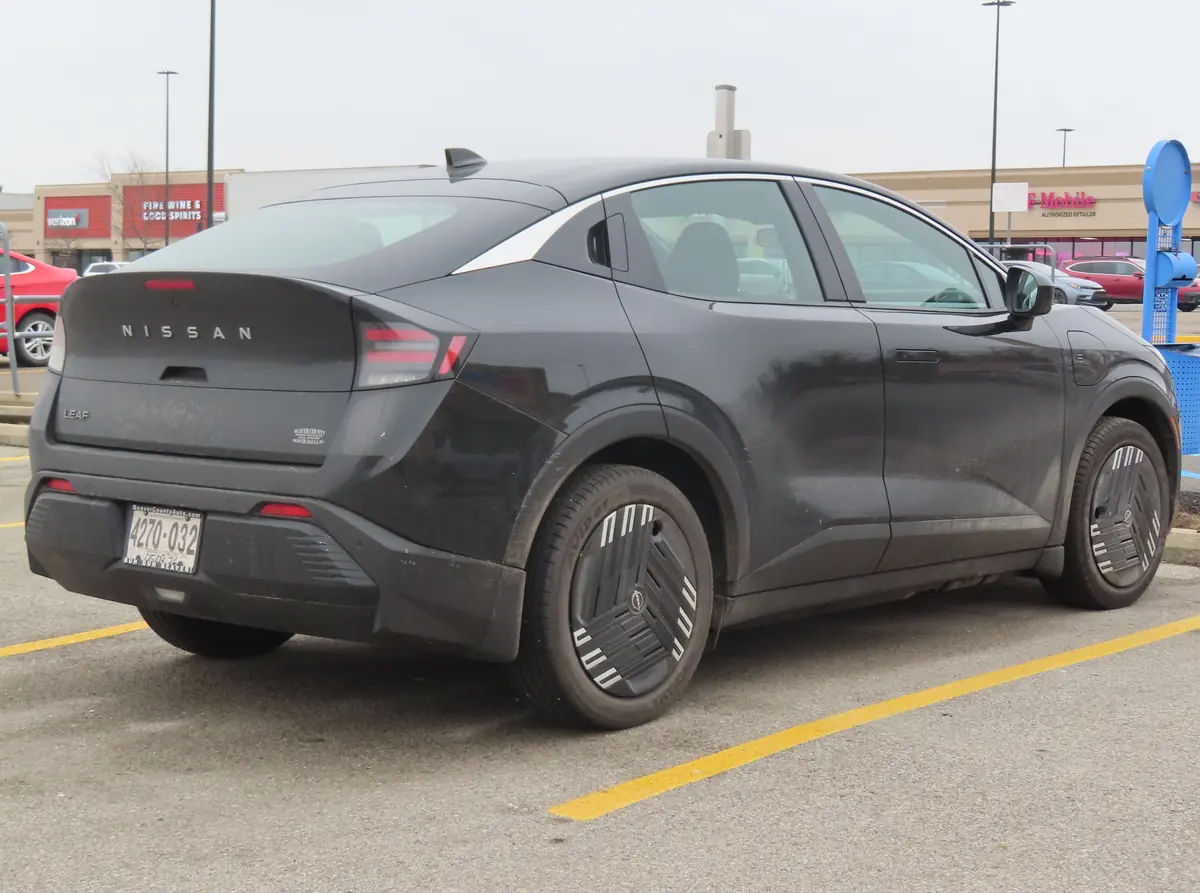
2. Nissan Leaf: the most range under $30,000
The third-generation Leaf is a small crossover now, not a hatchback. The S+ starts at $29,990 plus a $1,575 destination and handling charge, according to Nissan’s 2026 pricing release. Its 75-kWh battery gives it 303 miles of EPA-estimated range. That’s within 18 miles of the Model 3, for about $7,000 less. The SV+ costs $34,230 and the Platinum+ $38,990. Nissan builds in a NACS port with Plug & Charge. We couldn’t find 2027 Leaf pricing in Nissan’s published materials, so treat these as 2026 figures.
Choose it over a Model 3 if you want a Tesla-like range figure on a tight budget and prefer a hatch-style crossover to a sedan.
3. Kia EV3: the small SUV that matches the Model 3’s range for less
The EV3 Light FWD starts at $29,890, but its smaller 58.3-kWh battery is good for only 221 miles. The trim to look at is the Wind FWD. It costs $34,990 and gets 321 miles of EPA-estimated range from its 81.4-kWh pack, the same figure as a base Model 3 or Model Y. All prices exclude a $1,495 destination charge (Kia). With fees included, a Wind FWD comes to $36,485, compared with $38,630 for a Model 3. AWD versions are rated at 280 miles. The EV3 has a native NACS port. Kia quotes 29 to 31 minutes for a 10% to 80% DC fast charge.
Choose it over a Model Y if you want an SUV that’s easy to park and you don’t need Model Y-level cargo space. At 169.3 inches, the EV3 is a lot shorter than the 188.7-inch Model Y.
4. Subaru Uncharted: the cheapest AWD-capable pick
The 2027 Uncharted keeps its $34,995 starting price, and Subaru says it arrives at retailers this fall. The base Premium is front-wheel drive with 221 hp and up to 308 miles of estimated range. For all-wheel drive, the Sport ($39,795) and GT ($43,795) have 338 hp and are rated at 273 and 287 miles. All versions use a 74.7-kWh battery, charge at up to 150 kW and have a NACS port and 8.2 inches of ground clearance. Subaru’s release lists destination as $1,525, but some dealer and media listings say $1,475, so ask your retailer.
Choose it over a Model Y if you deal with snow or dirt roads. The AWD Sport undercuts Tesla’s cheapest AWD Model Y ($41,990 on Tesla’s configurator), though the Tesla goes farther on a charge. Toyota sells an AWD-only twin, the C-HR, which InsideEVs priced at $38,450 including destination for 2026.
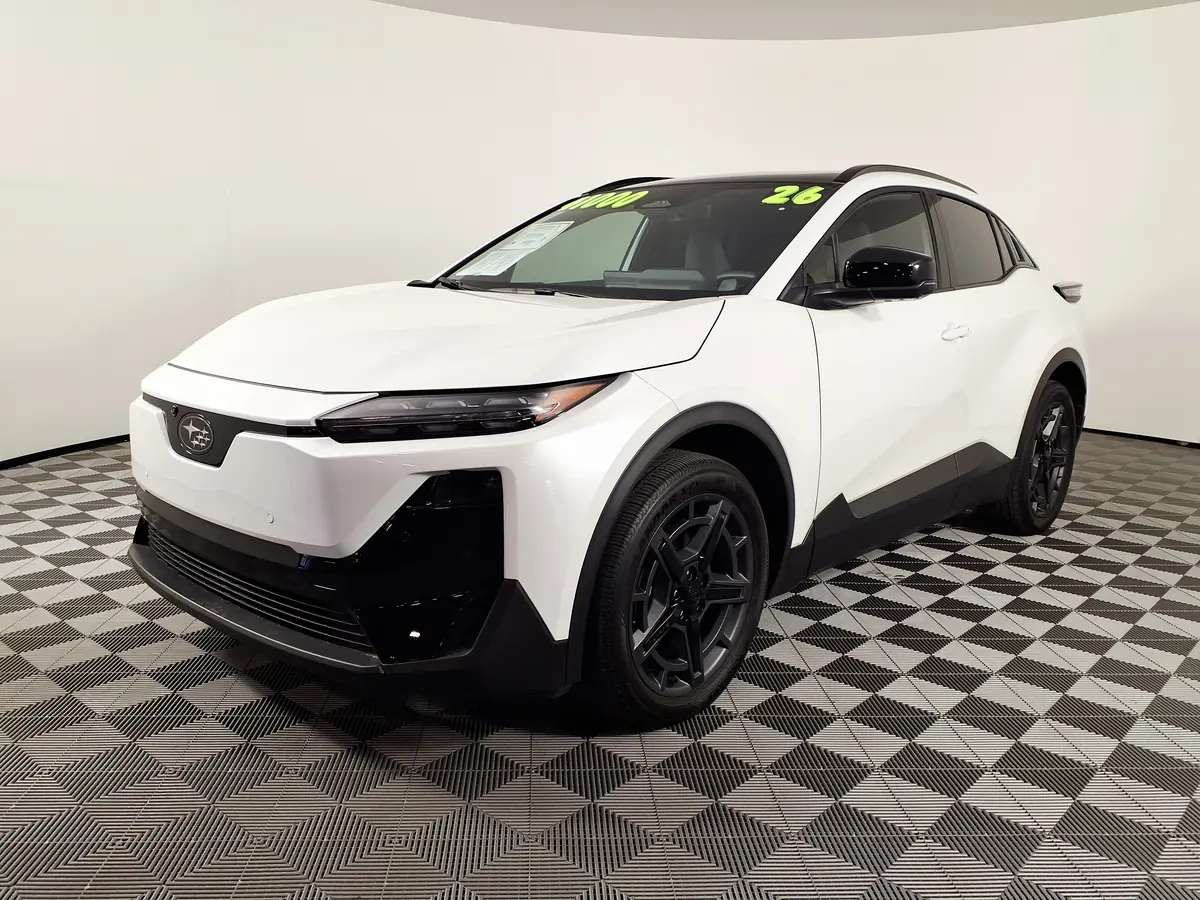
5. Chevrolet Equinox EV: the closest match to a Model Y
For 2027, the Equinox EV LT1 still starts at $34,995. FWD models get 319 miles of EPA range and AWD models 307, and this year adds a native NACS port. Electrek puts destination at $1,800 and the LT1 AWD at $38,295. At 190.6 inches long, it’s about the same size as a Model Y, and it has a 17.7-inch touchscreen, which Chevrolet says is the largest in its class. Super Cruise is available. We cover trim pricing in our 2027 Chevy Equinox EV guide.
Choose it over a Model Y if you want a similar-size family SUV for about $5,000 less and don’t mind giving up a couple of miles of range.
6. Hyundai Ioniq 5: the fastest charger here
The 2027 Ioniq 5 starts at $35,250 before freight for the SE Standard Range, which has 168 hp and 245 miles of range. Longer-range RWD versions reach 318 miles, and dual-motor models make 320 hp. Its 800-volt system can charge from 10% to 80% in about 20 minutes on a 350-kW charger using the included CCS adapter. Hyundai quotes about 30 minutes on a Tesla Supercharger through the NACS port. There’s also the lifted, off-road-styled XRT trim, and the battery warranty runs 10 years or 100,000 miles, compared with Tesla’s 8 years.
Choose it over a Model Y if you road-trip on non-Tesla networks like Electrify America, or you just want something that doesn’t look like every other car in the parking lot.
Coming in 2027-2028: cheaper Tesla alternatives worth waiting for
None of these can be bought today. We’ve split them into what the automakers have announced and what’s only been reported.
What’s confirmed
- Ford Fathom (early 2027): Ford’s midsize electric pickup starts at $28,350 plus a $1,595 delivery fee, and goes on sale in early 2027. It’s the first model on Ford’s Universal EV Platform and uses LFP batteries. Every Fathom gets a built-in NACS port, BlueCruise and bidirectional charging, Electrek reports. Ford hasn’t published range figures.
- Rivian R2 Standard (2027): Rivian’s R2 page lists the R2 Standard from $44,990 as a 2027 model. It has 350 hp, a 0-60 time of 5.9 seconds, 275 miles of Rivian-estimated range (not an EPA figure) and a NACS port. That’s more than a base Model Y, but $5,000 less than a $49,990 Premium AWD Model Y. A long-range Standard costs $48,490 and is due in the first half of 2027, according to Rivian’s lineup announcement.
What’s rumored or reported
- When the $44,990 R2 arrives: In March, Rivian said this version would come in late 2027. RivianTrackr has since reported a summer 2027 target. Rivian’s own R2 page only says “2027.”
- Fathom range: Electrek expects at least 300 miles. That’s Electrek’s estimate, not a Ford number.
- A cheaper Tesla: In April, Reuters reported that Tesla is developing a compact SUV about 14 feet long, with a single motor and a smaller battery, priced “substantially below” the Model 3. Tesla China called the report inaccurate. Reuters’ sources said it would be built in Shanghai first, and Electrek doesn’t expect production before 2027. Tesla’s Q3 2026 earnings call didn’t mention it, according to the Motley Fool transcript. We track it in our Tesla Model 2 explainer.
How to choose a Tesla alternative
- Compare delivered prices. With fees, a Model 3 comes to $38,630 and a Model Y to $41,630. Where the other automakers publish their destination fees, they run from $1,495 to $1,800, so add those before you compare.
- Don’t count on a federal tax credit. The IRS says the $7,500 new clean vehicle credit isn’t available for vehicles acquired after September 30, 2025. The home charger credit ended for equipment placed in service after June 30, 2026. Some states and utilities still offer rebates, so check yours.
- Get a native NACS port. Every car in our table has one, so you can plug into Tesla Superchargers without an adapter. The Ioniq 5 also comes with a CCS adapter for other networks. Older designs, like the Mustang Mach-E, still need an adapter to use Superchargers, according to Car and Driver.
- Count the miles you’ll use. If your daily round trip is under 100 miles, a 221- or 262-mile car is plenty. For frequent highway trips, look for 300 miles or more.
For everything else Tesla sells, see our 2027 Tesla lineup breakdown.
FAQ
What is the best Tesla alternative for 2027?
For most buyers it’s the Kia EV3 Wind FWD. It has the same 321-mile EPA range as a base Model 3 and costs about $2,000 less once fees are included. If you need more space, the Equinox EV is the closest thing to a Model Y.
What cars are like a Tesla but cheaper?
The Bolt, Leaf, EV3, Uncharted, Equinox EV and Ioniq 5 all start below the Model 3’s $36,990 and can use Tesla Superchargers.
What is the cheapest EV in the USA?
Among the cars we checked, it’s the Chevy Bolt LT, at $27,600 or $28,995 depending on whether destination is included. Chevrolet’s site shows both figures.
Are there Tesla alternatives with self-driving?
No car on sale drives itself, and that includes Teslas with FSD (Supervised). Some alternatives do offer hands-free highway assistance, though: Super Cruise on the Bolt and Equinox EV, BlueCruise on the coming Fathom, and Universal Hands-Free on the R2.
What’s the best alternative to the Tesla Model Y?
For a similar-size SUV that costs less, it’s the Equinox EV at $34,995. The Ioniq 5 charges faster. If you can wait and spend a little more, the R2 Standard is due in 2027.
Is a cheaper Tesla coming in 2027?
Not officially. A compact Tesla has been reported but never announced, and Tesla China has denied it. For now, the $36,990 Model 3 is the cheapest Tesla.