The Tesla Robotaxi app now contains code that would let owners add their own cars to the Robotaxi network, one vehicle at a time by VIN. That’s according to a teardown of version 26.10.0 posted early on October 22 by Tesla App Updates (@Tesla_App_iOS), an independent account that decompiles Tesla’s apps. Tesla hasn’t announced the feature, and code like this doesn’t always ship, so read everything below as an unconfirmed leak.
What’s confirmed
Tesla’s official statements on owner cars came on its Q3 2026 earnings call on October 21. Ashok Elluswamy, who leads Tesla’s AI and Autopilot software work, gave a rough timeline. “We suspect somewhere around Q2 next year is when we can turn on some of the first customer vehicles to be part of the robotaxi fleet,” he said, as quoted by Drive Tesla. The Verge and TechSpot also reported the plan, with TechSpot describing it as some Model Y owners joining around Q2 2027.
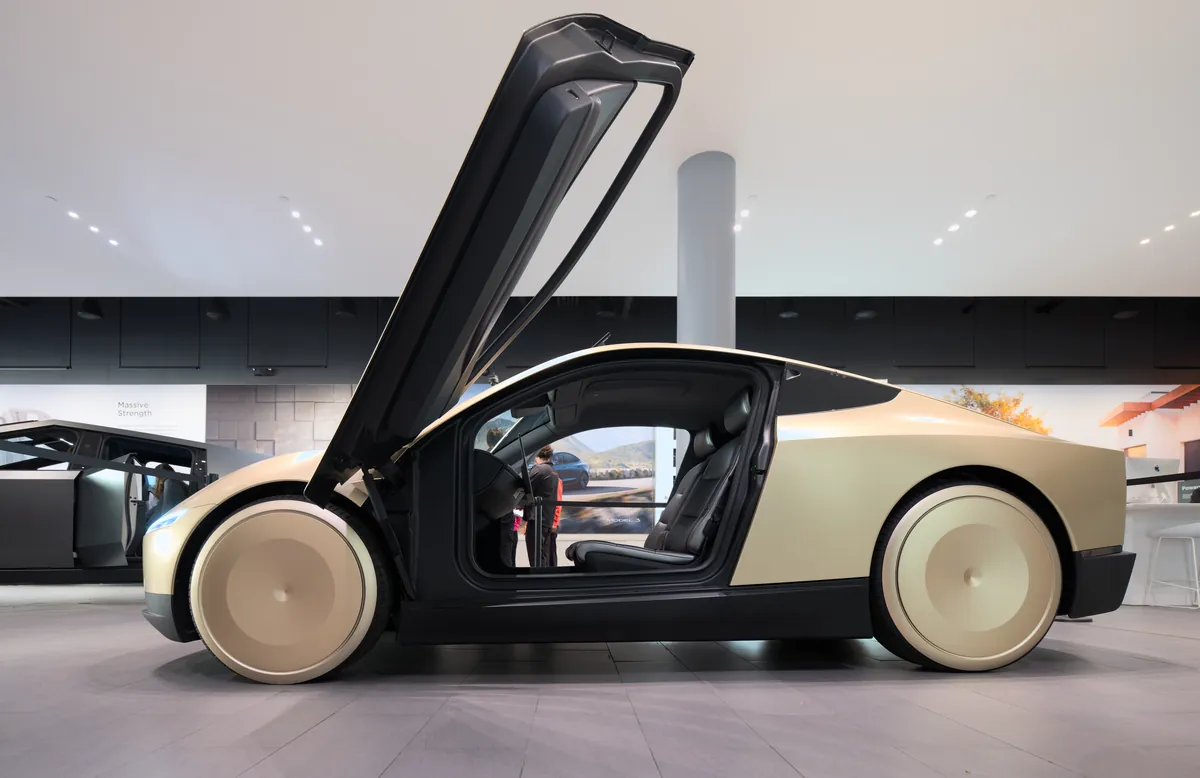
That’s a target, not a launch date. Tesla hasn’t said which cars will qualify, how owners would be paid, who carries insurance and liability, or which cities come first. On the same call, Tesla said it wants to start selling the Cybercab to customers by the end of this year. We cover that in Can you buy a Tesla Cybercab?
What the Tesla Robotaxi app code reportedly shows
According to the Tesla App Updates teardown, Robotaxi app 26.10.0 adds a per-vehicle enrollment call (api/1/vehicles/{vin}/robotaxi_enroll). Because it works by VIN, someone with more than one Tesla could pick which cars join. A second check tracks each car’s status, and the strings list states including “pending review,” “active,” “dispatched” and “unenrolled.” The account says the strings don’t show qualification checks, the revenue split or liability terms, and it lists the app’s build date as October 19.
The same teardown describes several rider features that haven’t been announced either:
- An augmented-reality “Find My Car” view that uses the phone’s camera to show the direction and distance to your assigned car.
- An in-app incident report form, with saved drafts that expire after a set time.
- Rear-seat controls from your phone, including recline, seat folding, rear seat heaters and ventilated seats.
- Trip sharing and a shared media queue for group rides.
- A fixed-route shuttle mode with predefined stops. Strings that mention Palo Alto campus pins suggest Tesla’s Palo Alto campus could be the first route.
A separate teardown of the main Tesla app, version 4.62.0, by the same account found a dedicated FSD referral tab. It also found an image file named “1-year-free-fsd,” which could mean a year of free FSD as a referral reward. The account itself calls that reward speculative. That teardown also found badges for hands-free FSD miles. Robotaxi-focused accounts such as Robotaxi Radar and The Tesla Newswire have reposted the enrollment find, but every report we found traces back to this one teardown.
Our credibility read: this is a single-source code find. Other accounts have repeated it, but nobody has confirmed it separately, and Tesla hasn’t commented. Strings in an app show what Tesla is building, not when it ships. As Drive Tesla points out, code findings don’t always turn into features.
What it would mean for Tesla owners
If the feature launches, it would be the first concrete step toward something Elon Musk has promised for years: owners earning money by sending their cars out as robotaxis while they aren’t using them. For now, Tesla’s own target is around Q2 2027. TechSpot also notes that owner cars would have to be added to Tesla’s geofenced service areas and fleet-management system before they could carry riders. Our Austin Cybercab launch explainer covers how the service works today, and our upcoming Tesla cars guide covers what’s coming next.