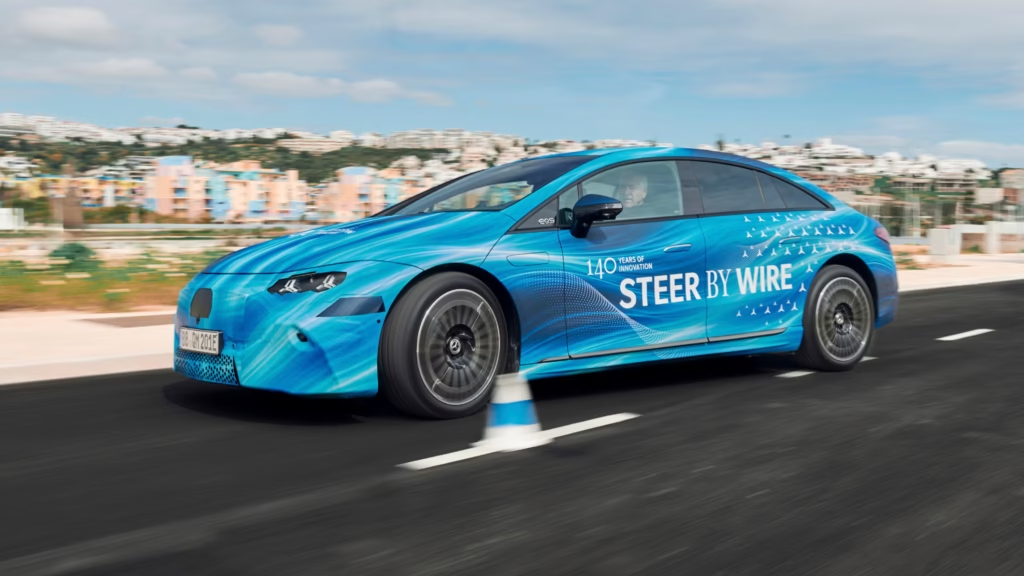
Mercedes-Benz is making headlines with the introduction of steer-by-wire technology as an optional feature in its refreshed EQS electric sedan. This marks a major shift for the luxury automaker and the broader automotive industry, replacing the traditional mechanical steering linkage with advanced electronic sensors and actuators. The move positions the EQS as one of the first production vehicles from a German manufacturer to offer full steer-by-wire, signalling that the technology Tesla popularised with the Cybertruck is quickly becoming mainstream.
What Is Steer-by-Wire and Why Does It Matter?
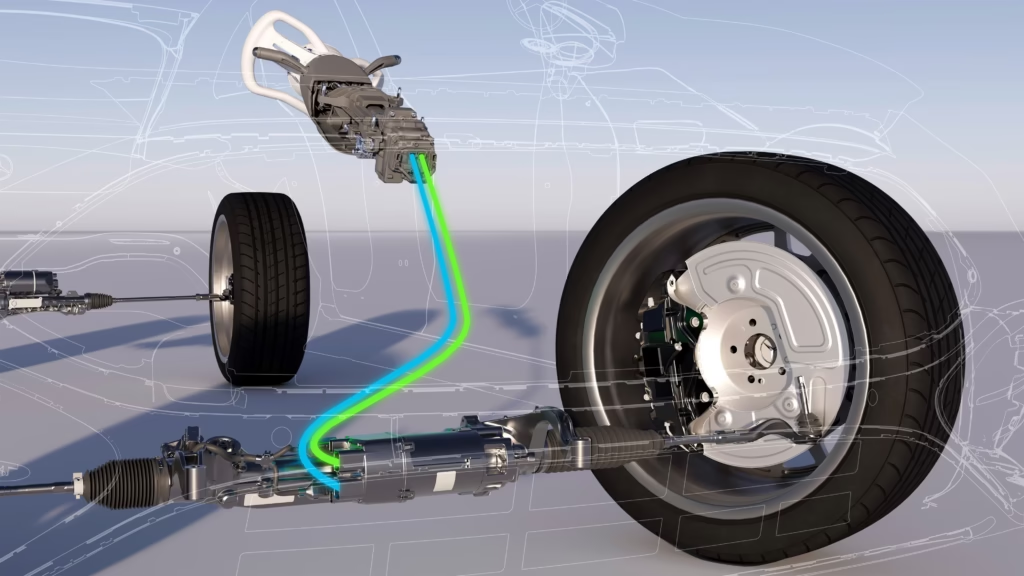
Steer-by-wire, also known as electronic steering or drive-by-wire steering, eliminates the physical connection between the steering wheel and the front wheels. Instead of a mechanical column, the system uses electronic sensors to detect steering inputs and actuators to turn the wheels precisely.
This innovation delivers several game-changing advantages:
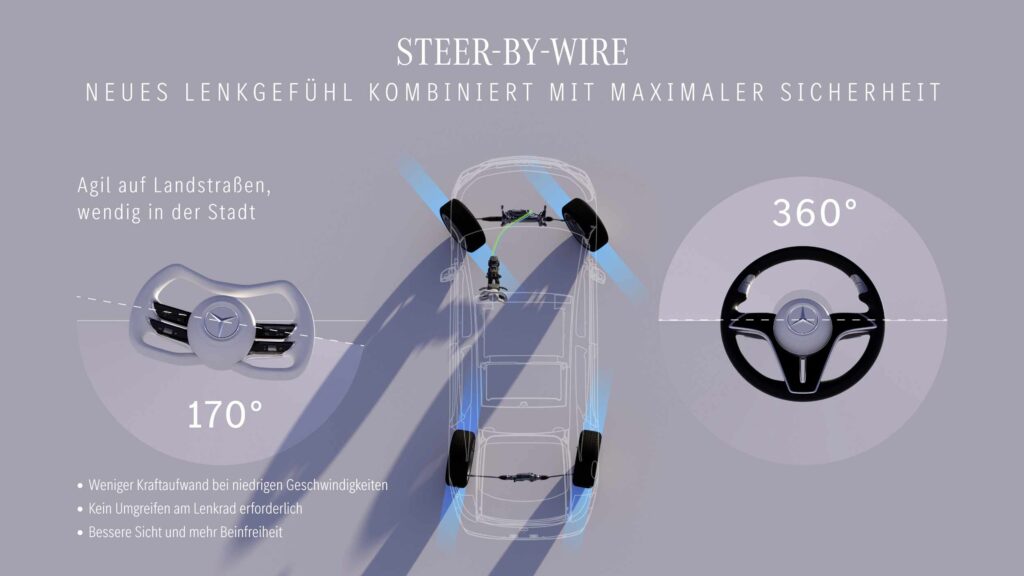
- Variable steering ratio: The system adjusts responsiveness instantly based on speed and driving conditions for sharper handling at low speeds and stability at highway velocities.
- Compact 170-degree lock-to-lock range: Drivers achieve full steering lock with far less wheel rotation than traditional setups.
- Integrated rear-wheel steering: Up to 10 degrees of rear-axle movement for dramatically improved maneuverability.
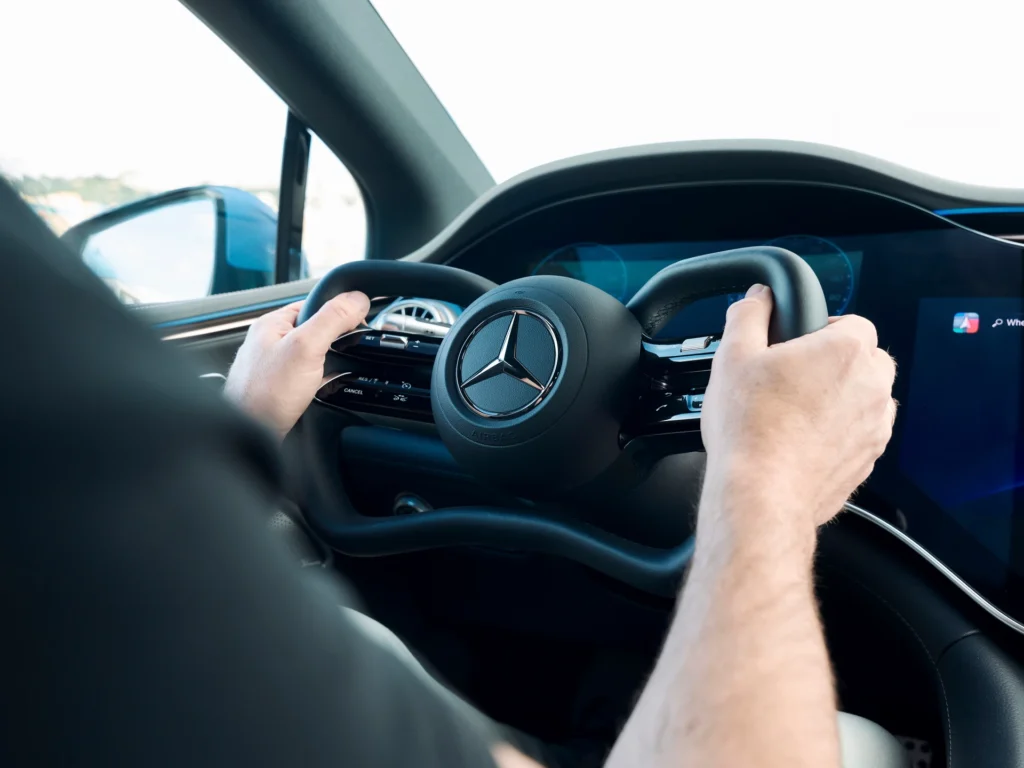
- Yoke-style steering wheel: A smaller, flatter design that frees up interior space and improves visibility of digital displays.
- Tighter turning radius: Exceptional agility, making parking and tight maneuvers effortless even in a large luxury sedan.
Mercedes-Benz has confirmed the technology will expand to future models, including the next S-Class and potentially internal combustion engine vehicles, underscoring its long-term commitment.
Inside the Refreshed Mercedes-Benz EQS: A Closer Look at the New Steering System
The 2026/2027 Mercedes-Benz EQS refresh introduces an optional steer-by-wire package (priced around €2,500 in Europe) that pairs seamlessly with the sedan’s existing rear-axle steering. Drivers get a modern yoke steering wheel—flat-bottomed and compact—paired with a newly engineered airbag system for maximum safety.
Real-world demonstrations show the difference immediately. In slalom courses and tight turns, the EQS prototype navigates with minimal hand movement on the wheel. The system feels intuitive and connected, transmitting road feedback through the fingertips while removing unwanted vibrations. Mercedes emphasizes that the steering “adapts to your current situation,” delivering effortless control whether parking or carving through corners.
The interior transformation is striking: the yoke design opens up the cabin, complements the massive dual-screen dashboard, and gives the EQS a futuristic cockpit feel without sacrificing luxury.
Tesla Cybertruck Proved Steer-by-Wire Is the Future—Mercedes Is Following Suit
Tesla was the first to bring steer-by-wire to mass production in the Cybertruck, where it delivered lightning-quick response, a tight turning radius, and a yoke that eliminated the need for multiple hand-over-hand turns. The Cybertruck demonstrated that removing the mechanical column isn’t just possible—it’s superior for electric vehicles.
Mercedes-Benz’s adoption validates this vision. While the EQS yoke is more refined and luxurious than the Cybertruck’s industrial design, both systems share the same core benefits: faster response, greater precision, and packaging freedom for designers. Industry observers note that Mercedes joining the steer-by-wire club (alongside limited offerings from Lexus, GMC Hummer EV, and others) accelerates mainstream acceptance. Legacy automakers that once resisted the technology are now racing to catch up.
Benefits Drivers Will Love in the Mercedes EQS Steer-by-Wire
- Superior low-speed agility: Navigate city streets and parking lots with ease—no more wrestling a large steering wheel.
- Highway confidence: Variable ratio keeps the car planted and responsive at speed.
- Enhanced safety: Redundant electronic systems and advanced fail-safes, plus the new airbag structure, maintain Mercedes’ legendary safety standards.
- Modern cabin experience: The yoke frees legroom and dashboard space while improving forward visibility.
- Future-proof design: Prepares the EQS for advanced driver-assistance features and eventual autonomous driving integration.
Early reviews from prototype drives describe the system as transformative—effortless yet connected, making the large EQS feel nimble and fun to drive.
What This Means for the Automotive Industry
Steer-by-wire represents the next evolution in vehicle dynamics. As electric vehicles dominate the market, traditional hydraulic and mechanical steering systems are becoming outdated. Mercedes’ decision to lead among German premium brands sets a benchmark that other manufacturers will likely follow.
Expect more luxury and performance cars to adopt similar systems in the coming years. The technology not only improves driving dynamics but also simplifies vehicle architecture, reduces weight, and opens new possibilities for interior design and autonomous features.
The Bottom Line: Steer-by-Wire Is Here to Stay
The refreshed Mercedes-Benz EQS with optional steer-by-wire isn’t just an incremental update—it’s a bold statement about the future of driving. By embracing the technology that Tesla’s Cybertruck pioneered, Mercedes delivers a more agile, responsive, and luxurious electric sedan that feels years ahead of the competition.
If you’re shopping for a premium electric luxury sedan, the new EQS steer-by-wire option could be the deciding factor. This is more than a steering upgrade; it’s a glimpse into tomorrow’s cars—today. Stay tuned as Mercedes rolls out the technology across its lineup, and more brands join the steer-by-wire revolution.