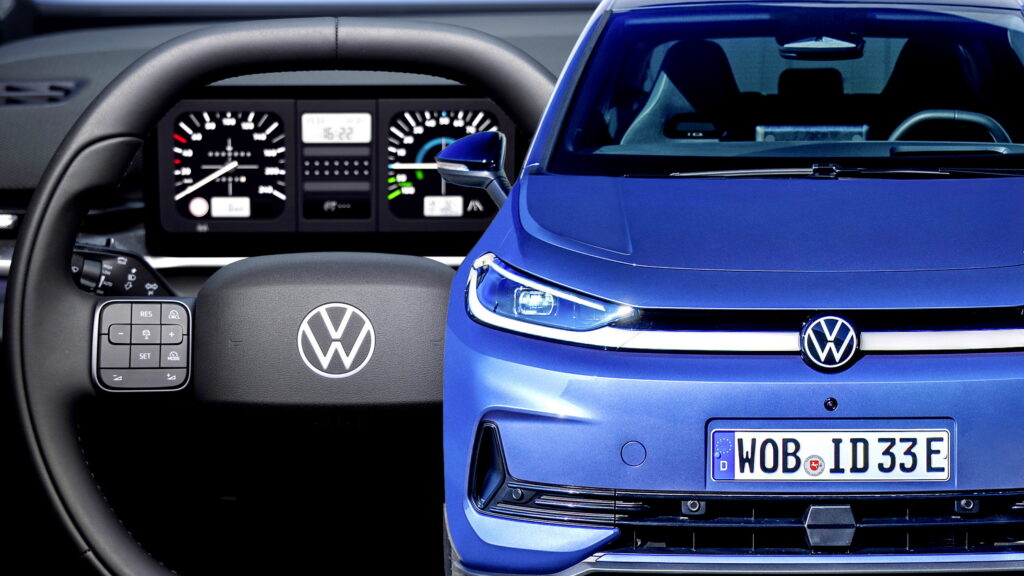
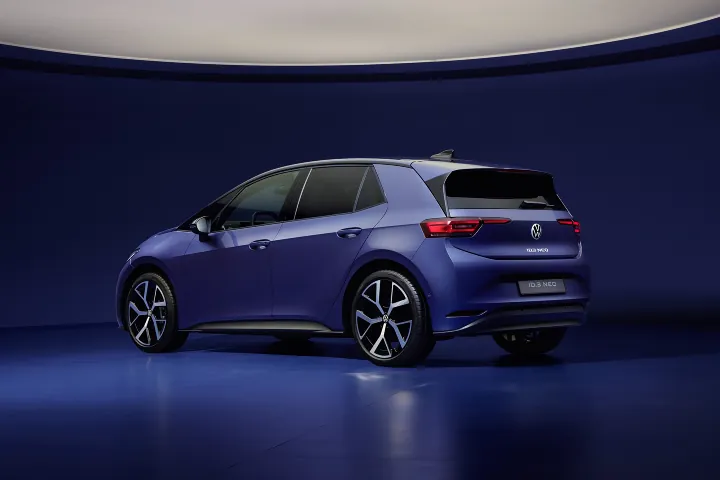
Volkswagen has officially unveiled the all-new interior of its updated ID.3 Neo, and the changes mark a major reversal for the German automaker. In a clear admission that its earlier touchscreen-heavy approach hurt the brand, VW is reintroducing physical buttons, knobs, and switches across the cabin of the 2026 ID.3 Neo. The move comes just days after images of the updated model surfaced, showing a dramatic shift from the previous ID.3’s minimalist, button-light design.
VW’s CEO Thomas Schäfer has been vocal about the need for change. He previously described physical controls as “non-negotiable” and noted that the lack of buttons in earlier models definitely did a lot of damage to the brand. The right-side image in the latest reveal highlights the old interior’s shortcomings — no dedicated climate buttons, no volume knob, and frustrating capacitive sliders that many owners criticised for being unintuitive and distracting while driving.
What’s New Inside the 2026 Volkswagen ID.3 Neo Cabin?
The refreshed ID.3 Neo interior focuses on usability and driver comfort with a complete redesign:
- Physical climate control buttons now sit prominently below the central air vents, allowing quick adjustments to temperature, fan speed, and defrost functions without diving into menus.
- A dedicated volume knob replaces the old touch slider for easier media control.
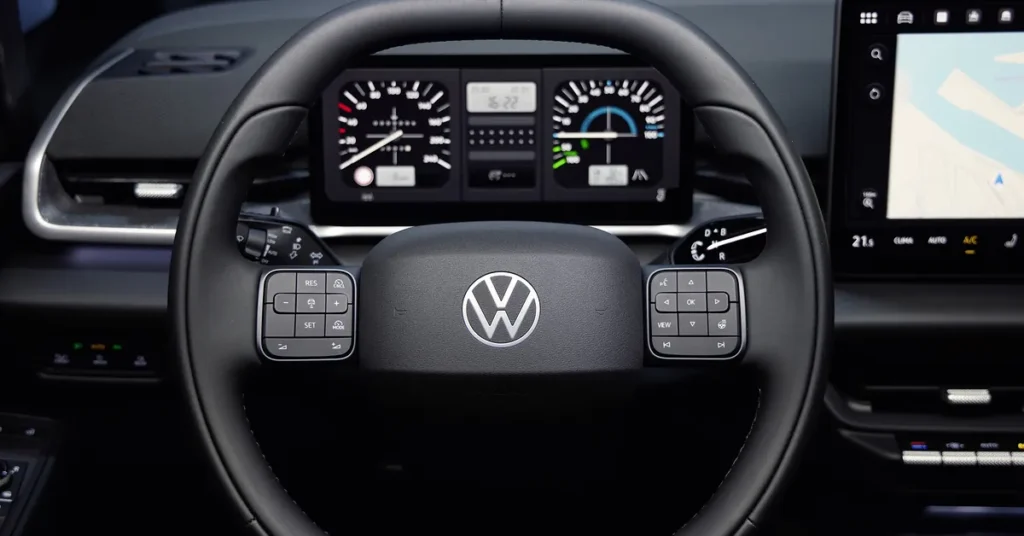
- More buttons on the steering wheel — the new two-spoke wheel features real, tactile controls instead of the previous capacitive pads.
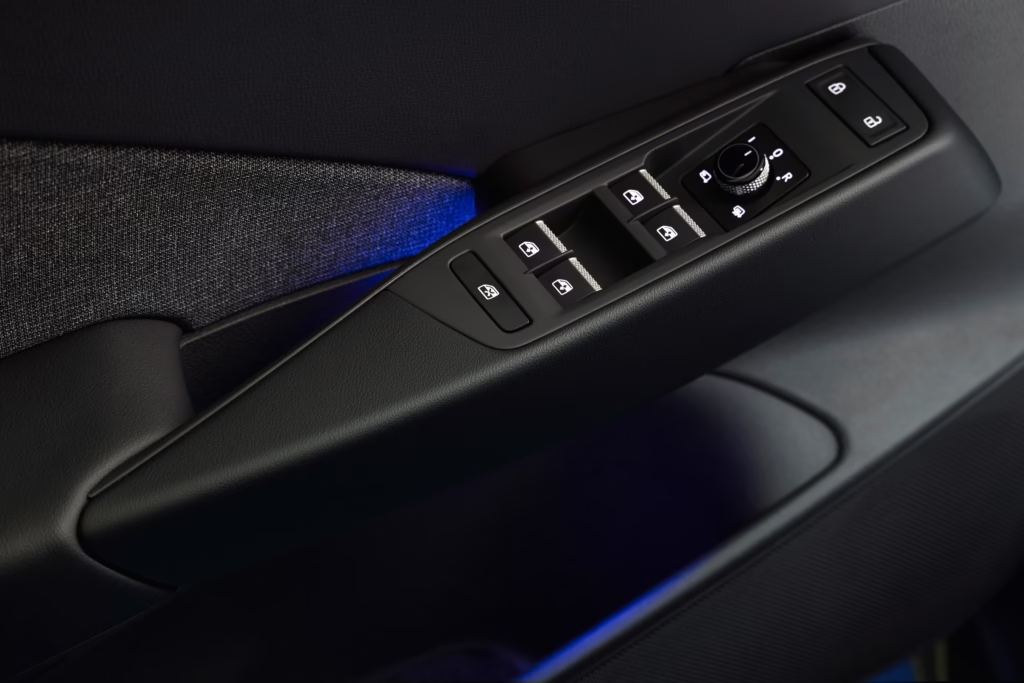
- Actual window switches return for both front and rear doors, addressing a long-standing complaint about the outgoing model.
- Higher-quality materials, a cleaner horizontal layout, and improved ergonomics round out the cabin, making it feel more premium and user-friendly.
These updates are part of a broader facelift that also includes a new name (ID.3 Neo), sharper exterior styling, and efficiency improvements that deliver up to 630 km WLTP range on the largest battery pack. Pre-sales are already starting in key European markets.
Why Volkswagen Is Reversing Course on Buttons
For years, Volkswagen — like many legacy automakers — chased a sleek, smartphone-inspired interior with touchscreens and haptic feedback dominating the dashboard. The strategy aimed to wow buyers with futuristic looks, but real-world feedback told a different story. Drivers found it harder to operate controls without taking their eyes off the road, leading to frustration and safety concerns.
Schäfer’s comments reflect a company-wide shift: VW is now prioritising customer clinics and real-user input over design trends. The ID.3 Neo is the latest proof that the brand is listening — and fixing past mistakes before the next-generation electric Golf arrives.
This isn’t just about one model. It signals a broader industry rethink on EV interiors. Physical controls are making a comeback because they simply work better for everyday driving.
How Does the VW ID.3 Neo Interior Compare to Tesla?
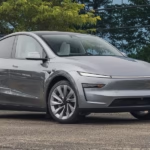
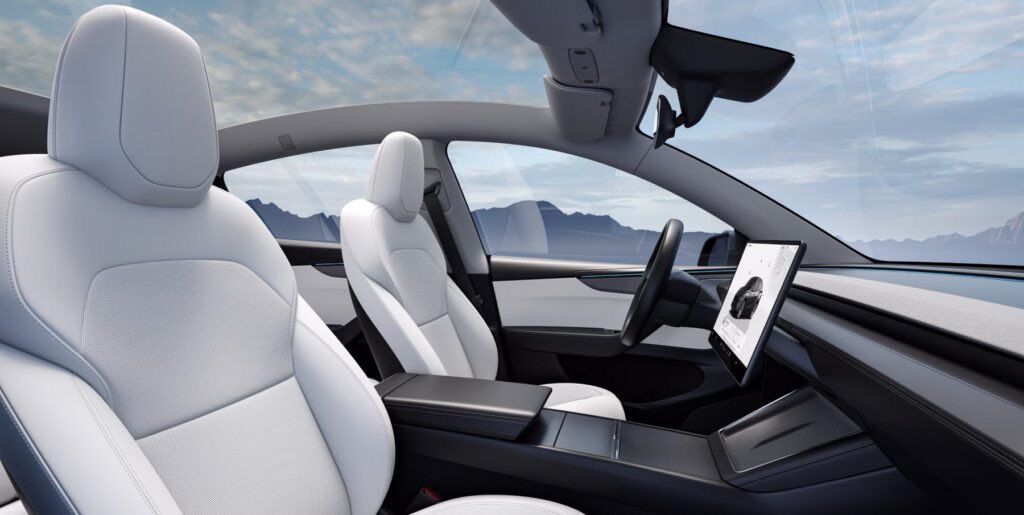
While Volkswagen is busy adding buttons back, Tesla has long championed a different philosophy: minimal physical controls paired with intuitive voice commands, large touchscreens, and software-first design. Tesla owners rarely complain about missing buttons because the system is built for quick, eyes-on-road operation — one tap or a simple voice request handles wipers, temperature, navigation, and more.
The contrast is striking. Legacy brands like VW spent years removing buttons only to realize the error and spend more years putting them back. Tesla started with the right balance from day one, focusing on software that actually delivers a seamless experience rather than chasing trends that don’t serve drivers.
As the EV market matures, this ID.3 Neo update highlights an important lesson: great design isn’t about how many screens you have — it’s about how easily and safely you can use the car every single day.
What This Means for EV Buyers in 2026
The Volkswagen ID.3 Neo’s interior refresh could help the brand win back customers who walked away from earlier ID models due to cabin frustrations. It also sets a new benchmark for compact electric hatchbacks in Europe, blending modern EV efficiency with classic Volkswagen usability.
If you’re shopping for an affordable electric car that doesn’t sacrifice everyday practicality, the ID.3 Neo is now worth a closer look. Physical buttons are back — and according to VW’s own CEO, they were never something the brand could afford to lose.
Stay tuned to usonwheels.com for more updates on the Volkswagen ID.3 Neo, Tesla comparisons, and the latest EV interior trends. Which approach do you prefer — physical buttons or voice-first minimalism? Let us know in the comments.