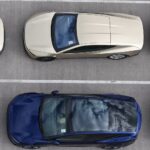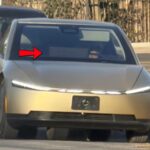
Thursday, September 3, 2026, is the date Tesla has locked for the public launch of the Cybercab in Austin, Texas. The company is holding an invite-only event at its Austin headquarters and livestreaming it. The vehicle joining the existing Robotaxi app is a two-seat electric pod with no steering wheel and no pedals, driven by camera-based neural networks.
That is the core of the story. The rest is how far the claim stretches, and how far the service still has to go.
What Tesla is launching on September 3
Tesla is not starting robotaxis from zero. A limited Robotaxi service has been running in Austin since June 2025, first with safety monitors and later with unsupervised Model Y vehicles in a geofenced area. The service has expanded into other Texas and Florida cities, including Dallas, Houston, Miami, Orlando, and Tampa, with permits also obtained for Arizona and Nevada.
September 3 is the formal debut of the purpose-built Cybercab inside that same service. Invitations went to frequent Robotaxi riders and sweepstakes winners. Tesla described the evening as a chance to “experience the future of full autonomy.” Everyday public access after the event is expected to stay limited at first, not citywide and unrestricted.
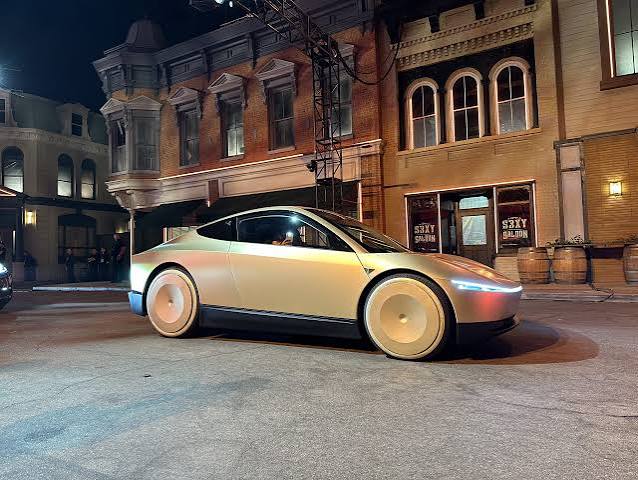
Before the event, Tesla added 51 Cybercabs to vehicles registered to operate in Texas, alongside hundreds of Model Y robotaxis. Production units without manual controls have been testing on Austin streets since late June 2026. Early tests often included a safety monitor in the front passenger seat. In the days before the launch, videos also showed unsupervised Cybercabs on public roads.
What the Cybercab is
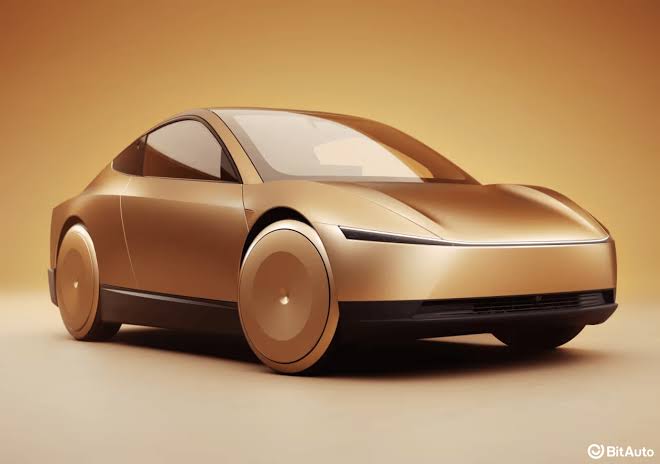
The Cybercab is Tesla’s first vehicle designed only for autonomy. It is not a Model 3 or Model Y with the wheel removed. It is a two-door, two-seat liftback coupe with scissor doors, no side mirrors, and no rear window. Franz von Holzhausen designed it. Assembly is at Gigafactory Texas.
Confirmed production specs from EPA filings include:
- Layout: front-motor, front-wheel drive
- Motor: 219 hp (163 kW)
- Battery: about 48 kWh lithium-ion
- Curb weight: 3,113 lb (1,412 kg)
- Adjusted range: about 293 miles (unadjusted lab figure: 418 miles)
- Efficiency: about 165 Wh/mi, among the best the EPA has certified
The small pack and low weight are the point. A robotaxi that loops city streets all day lives on energy cost, charging time, and wear, not family cargo space. Tesla has also designed the car for inductive charging. Musk has said Tesla intends to sell Cybercabs to consumers before the end of 2026, at a target price under $30,000, though the near-term job is fleet service.
Camera-only autonomy, not lidar
Tesla’s system uses cameras and neural networks trained on data from its global vehicle fleet. There is no lidar and no radar in the production autonomy stack. That is the company’s long-standing bet: vision is enough if the model is trained at scale.
Competitors disagree. Waymo has argued that cameras alone are not sufficient and continues to use lidar and radar. Tesla’s approach is cheaper to manufacture and easier to scale across factories, which is why the Cybercab can omit the sensor suite that other robotaxis carry on the roof. The tradeoff is that the software has to be good enough that no human can grab a wheel, because there is no wheel to grab.
That is the real threshold. A Model Y robotaxi can still have a person in the car. A production Cybercab cannot be sold or operated as a normal car. The hardware assumes the software works.
Why supporters call September 3 historic
The optimistic case, which is the one circulating at the Austin event, rests on four claims.
First, this is the first mass-market automaker to put a production vehicle with no manual controls into a commercial ride-hail service in a U.S. city.
Second, Tesla already has a manufacturing line. The first production Cybercab rolled off at Giga Texas in February 2026. Continuous production began in April. Musk has described the ramp as a stretched S-curve: slow at first, then faster toward the end of 2026. The long-term factory target discussed by Tesla is up to 2 million Cybercabs a year when multiple plants are at design capacity. That is a goal, not current output.
Third, unit economics look different from a five-seat SUV with a safety driver. Energy-only cost estimates based on the EPA efficiency figures land around a few cents per mile. Broader operating-cost estimates used in industry comparisons put Cybercab in the neighbourhood of $0.20 per mile versus higher figures often cited for lidar-heavy fleets. If those numbers hold at high utilisation, point-to-point transport gets cheaper than owning a second car for many urban trips.
Fourth, the service already exists. Adding a cheaper, purpose-built vehicle to an app people already use is a smaller jump than launching a brand-new network.
What the launch is not
It is not an unrestricted, go-anywhere robotaxi for the whole city on day one. Tesla’s Robotaxi service has always been geofenced. Commenters immediately asked how “travel anywhere without restriction” squares with a mapped service area. It does not, at least not yet.
It is not proof that Full Self-Driving is solved nationwide. NHTSA’s investigation into FSD-related crashes remains open. Tesla’s own manuals for supervised FSD still require driver attention in customer cars. The Cybercab removes the fallback of a human driver, which raises the safety bar rather than lowering it.
It is not millions of vehicles on the road tomorrow. Production has started. Scale has not. Tesla has been clear that early Cybercab and Semi output will be slow.
It is also not a finished business model. Tesla prefers to run operations in-house, including charging, cleaning, and repairs. Other autonomous fleets often partner with rental and ride-hail companies for that layer. Utilisation, deadhead miles, and downtime will decide whether the cost-per-mile story survives contact with a real city.
How this compares with the rest of the industry
Waymo already offers commercial driverless rides in several U.S. cities and has been doing so longer than Tesla’s unsupervised Model Y service. Zoox has also moved toward paid rides in a purpose-built vehicle. Tesla’s differentiators are manufacturing scale, a camera-only bill of materials, an existing consumer app, and a factory already building the dedicated cab.
The race is no longer “can a car drive itself on a good day.” It is “can a company run thousands of vehicles, all day, in mixed weather, without a person in the seat, at a price people will use instead of driving.” Austin on September 3 is Tesla’s first public answer with the vehicle it actually designed for that job.
What to watch after the livestream
The event itself will be staging: rides for invited guests, footage of empty cabins, and a claim that the future of transport started on a Thursday in Texas. The useful questions come after the cameras leave.
- Do paying customers in the Robotaxi app start getting Cybercab as an option in Austin, and how large is the geofence?
- Are the vehicles unsupervised from the first public rides, or do monitors remain for a transition period?
- How quickly does Tesla add units beyond the dozens already registered?
- Does NHTSA’s proposed rule change for vehicles designed never to be driven by a human remove the last federal ambiguity around wheel-free cars?
- Does Musk’s pledge to sell Cybercabs to private buyers by the end of 2026 survive the first months of fleet duty?
September 3, 2026, is a product launch and a service milestone, not the end of the argument. A car with no steering wheel is only historic if it keeps working when no one famous is watching. Austin is about to find out whether Tesla built that car, or only built the body for it.