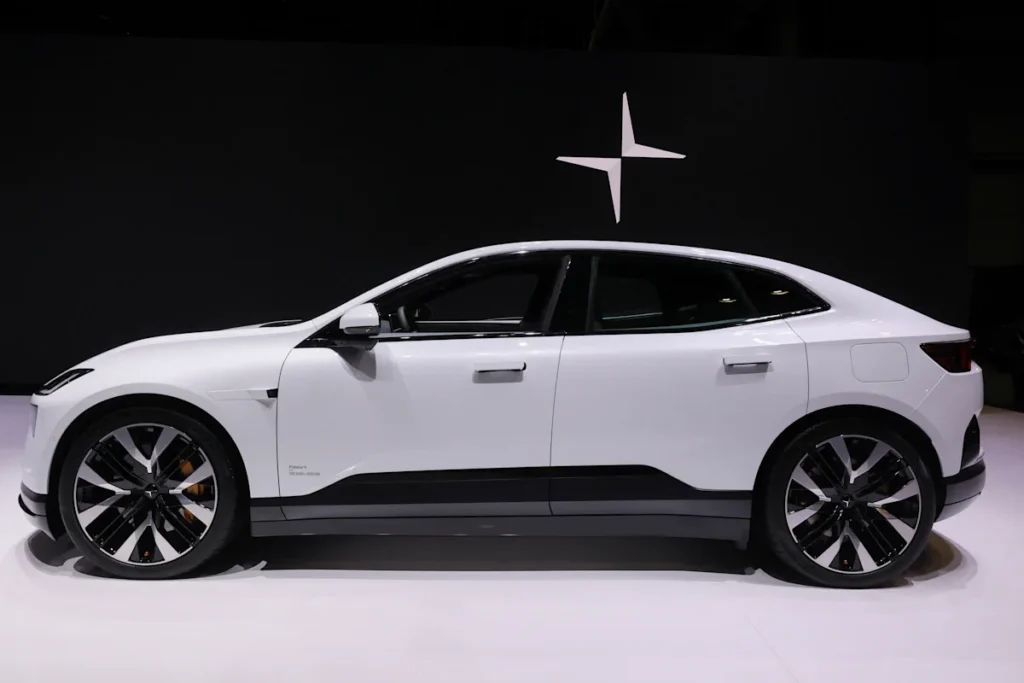
Polestar, the Swedish electric vehicle brand majority-owned by China’s Geely, announced on June 25, 2026, that it will stop selling new vehicles in the United States starting with the 2027 model year. The decision follows the U.S. Department of Commerce’s Bureau of Industry and Security denying the company authorisation under the Connected Vehicle Rule (CVR).
The move comes just months after Polestar ran a bold, widely discussed advertising campaign that directly targeted Tesla and Elon Musk — lines that are now circulating widely online with a heavy dose of irony.
The Polestar Ad That Targeted Tesla
Earlier in 2026, Polestar launched a minimalist campaign with the tagline “Choose better. Not the status quo.” The 30-second spot (and related print/social versions) took direct aim at Tesla’s brand pillars:
- “Choose Conquering Mars (good luck with that).”
- “Choose popcorn Robots.” (a jab at Tesla’s Optimus humanoid robot and its viral demo clips)
- “Choose to ignore the science.”
- “Choose plastic interiors.”
- Other variants included “Choose boredom,” “Choose fake news,” and “Choose denial.”
The ad positioned Polestar as the grounded, premium, Earth-focused alternative — emphasising real-world performance, better interiors, and serious engineering over “distractions.” Some versions offered significant incentives (up to $14,000 off) to Tesla owners considering a switch.
The campaign was polarising. Critics called it desperate shade-throwing; supporters praised it as sharp challenger marketing. It generated significant buzz on X (formerly Twitter), TikTok, and automotive forums.
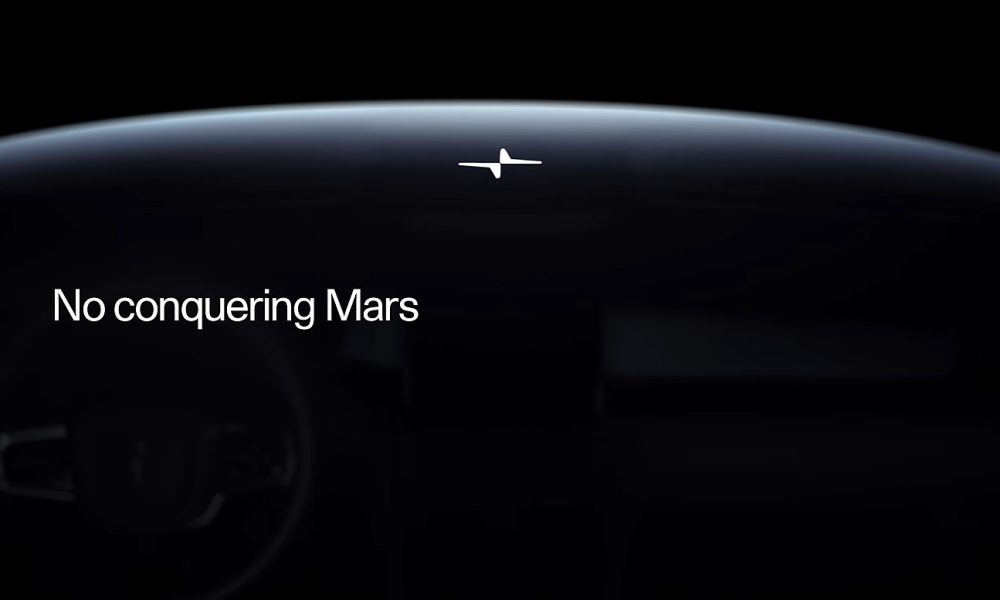
Polestar’s earlier “No conquering Mars” creative (from a previous campaign) used similar minimalist, high-contrast styling that carried into the 2026 Tesla-targeted ads.
Polestar’s Official US Exit Announcement
On June 25, 2026, Polestar confirmed it will no longer be able to sell or market new model-year 2027 and later vehicles in the United States.
Key points from the company’s statement:
- Existing inventory of the Polestar 3 and Polestar 4 will continue to be sold until depleted.
- Full service, warranty, and support will remain available for current owners.
- The company is refocusing resources on Europe (which already accounts for nearly 80% of global retail sales) and other strong markets.
- In Q1 2026, 94% of Polestar’s global sales came from outside the U.S.
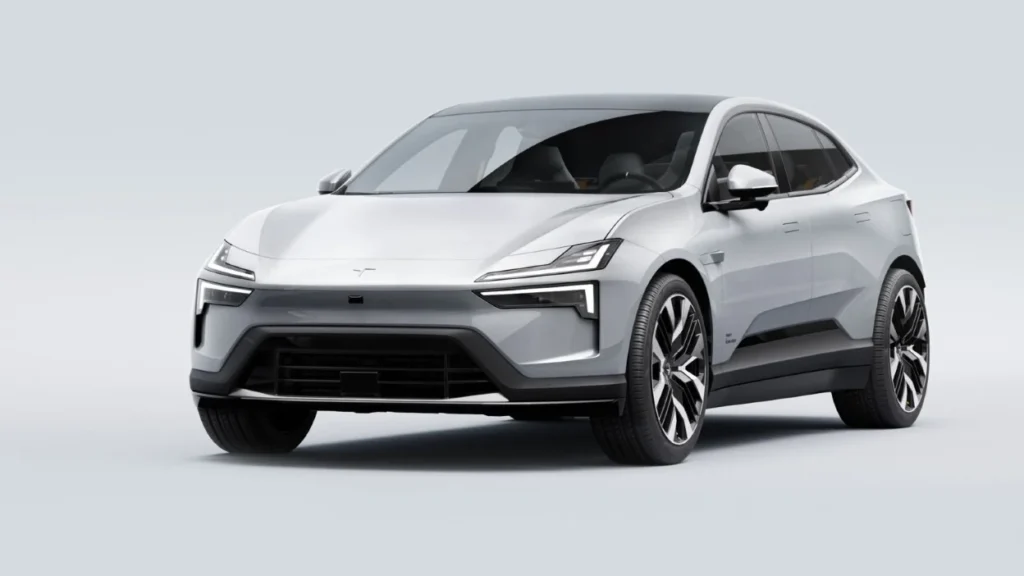
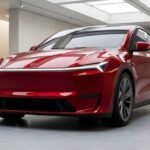
Polestar 4 — one of the models still available in the remaining U.S. inventory.
Why Was Polestar Banned? The Connected Vehicle Rule Explained
The Connected Vehicle Rule (finalised in 2025) prohibits the import and sale of vehicles containing certain connected hardware, software, or automated-driving technology linked to China or Russia. The stated goal is national security — preventing potential remote access, data exfiltration (location, driving patterns, cabin cameras/microphones), or vehicle disabling by foreign adversaries.
Polestar is majority-owned by Zhejiang Geely Holding Group (the same parent as Volvo Cars). While the Polestar 3 is assembled in South Carolina and the Polestar 4 in South Korea, the rule focuses on technological and corporate links to China — not just final assembly location. Polestar’s connected systems, infotainment, OTA update architecture, and platform sharing with Geely brands triggered the restriction.
Notable contrast: Volvo Cars (also Geely-owned) received authorisation to continue selling in the U.S. Factors cited in reporting include Volvo’s longer U.S. manufacturing history, more established separate corporate structure, and larger existing U.S. footprint.
Polestar’s US Sales Were Already Declining Sharply
The regulatory decision arrives against a backdrop of weak U.S. demand:
- 2024: ~13,000+ units
- 2025: ~5,384 units (down ~59%)
- 2026: Very low volumes so far (hundreds per month in some reports; one data point showed just 335 units in May)
Polestar has struggled with high pricing, intense competition (Tesla, Hyundai Ioniq 5/6, Kia EV6, BMW, Mercedes), and slower brand recognition compared to its European performance. The anti-Tesla ad did not appear to reverse the trend.
Reactions: “Karma,” Lost Choice, or Geopolitics at Work?
The viral X post captured the dominant online sentiment among many EV enthusiasts:
“Earlier this year, Polestar put out this advertisement that was clearly targeted towards Elon Musk and Tesla… Funny how that ad worked out for them.”
Tesla supporters largely celebrated it as “FAFO” (play stupid games…). Others pointed out:
- U.S. sales were already marginal (<6% of Polestar’s global volume).
- Fewer choices for American EV buyers is generally negative.
- The policy reflects broader U.S.-China tensions over connected vehicles, data security, and EV supply chains.
What Happens Next for Polestar?
- Short term: Sell through remaining Polestar 3 and 4 inventory. Strong service network continues.
- Medium term: Heavy focus on Europe and faster-growing markets. Newer models (Polestar 5, 6, etc.) are unlikely to reach the U.S. without major policy changes.
- Production note: Polestar 3 production in South Carolina may continue for other markets or be adjusted.
Bottom Line
Polestar’s decision to exit the U.S. market for new vehicles is driven primarily by U.S. national security regulations targeting Chinese-linked connected vehicle technology. The timing, however, has created a perfect social media storm because of the brand’s earlier decision to run a high-profile ad campaign mocking Tesla’s Mars ambitions, Optimus robot, and “plastic interiors.”
Whether you view it as karmic timing, a cautionary tale about challenger marketing, or simply the collision of geopolitics and business strategy, one thing is clear: Polestar is choosing to focus where it already wins — and the U.S. is no longer part of that equation.
FAQs
Can I still buy a new Polestar in the US right now?
Yes, while the current inventory of the Polestar 3 and Polestar 4 lasts.
Will existing Polestar owners lose service?
No. Polestar has committed to maintaining its full service and support network.
Is this because Polestar cars are made in China?
Not entirely. The Polestar 3 is built in South Carolina. The issue is corporate ownership by Geely and the connected systems/technology links to China.
Will the policy change?
Unclear. It would require either a regulatory exemption or a broader policy shift.