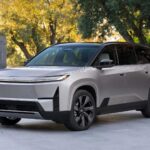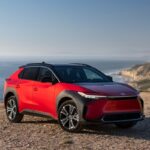
Toyota has officially pulled the plug on gas and hybrid versions of the Highlander. For the 2027 model year, the popular three-row family SUV goes fully electric — and it’s bringing serious upgrades in power, charging speed, styling, and family-friendly tech.
As highlighted in a recent MotorTrend feature, the 2027 Toyota Highlander EV arrives with more power, faster NACS charging, bolder styling, bigger screens, and smarter everyday features for modern families.
This is Toyota’s first three-row battery-electric vehicle (BEV) for the U.S. market and the fourth EV in its growing lineup.
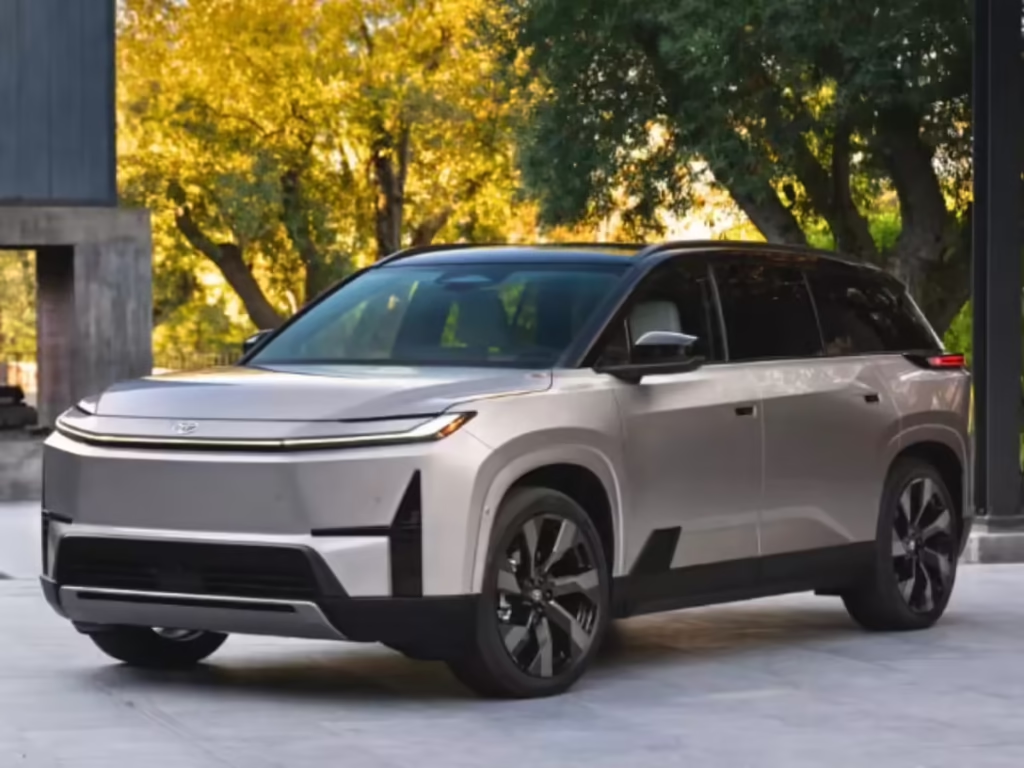
2027 Toyota Highlander EV Key Specifications at a Glance
| Specification | Details |
|---|---|
| Powertrain | Fully electric (BEV) |
| Horsepower | 221 hp (FWD) / 338 hp (AWD) |
| Torque | 198 lb-ft (FWD) / 198/125 lb-ft (AWD) |
| Battery Options | 77.0 kWh or 95.8 kWh |
| Estimated Range | Up to 320 miles (95.8 kWh AWD) |
| DC Fast Charging | 10–80% in ~30 minutes (NACS port) |
| Onboard Charger | 11 kW |
| Drivetrain | FWD or electronic AWD |
| Seating | 7 or 8 passengers |
| Cargo Space | 15.9 ft³ (behind 3rd row) / 45.6+ ft³ (folded) |
| Production | Toyota Motor Manufacturing Kentucky (USA) |
| On-Sale Date | Late 2026 |
Exterior Design: A Bold New EV Face
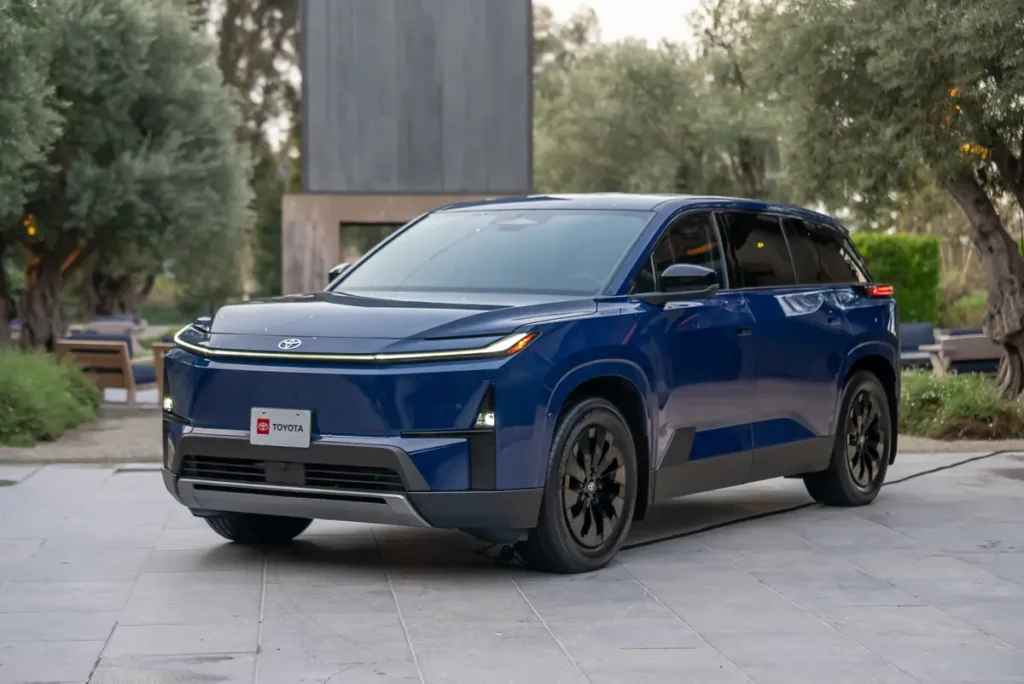
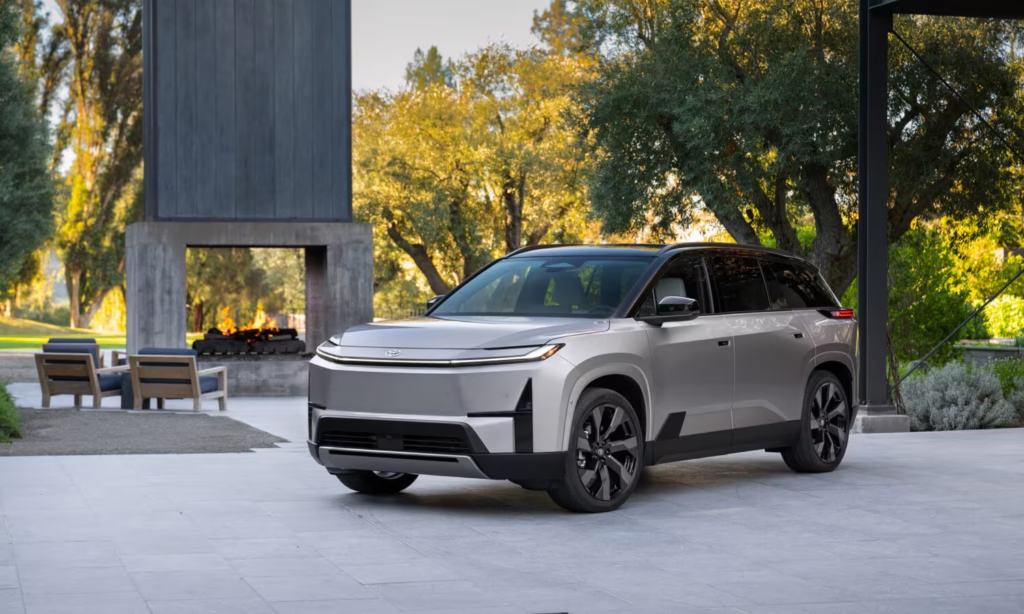
The 2027 Highlander EV ditches the traditional grille for a clean, upright EV-style front end with slim LED headlights and a full-width light bar. It draws inspiration from the Land Cruiser with broader fenders and a more planted, rugged stance.
Key changes include:
- Wheelbase stretched by 8.1 inches (to 120.1 inches) for better interior space
- Overall width increased by 2.3 inches
- Slightly lower roofline for sleeker proportions
- Semi-flush electronic door handles
- Available two-tone paint schemes
The result is a more modern, aerodynamic, and premium-looking three-row SUV that still looks like a proper Toyota family hauler.
Interior & Technology: Big Screens and Family-First Design
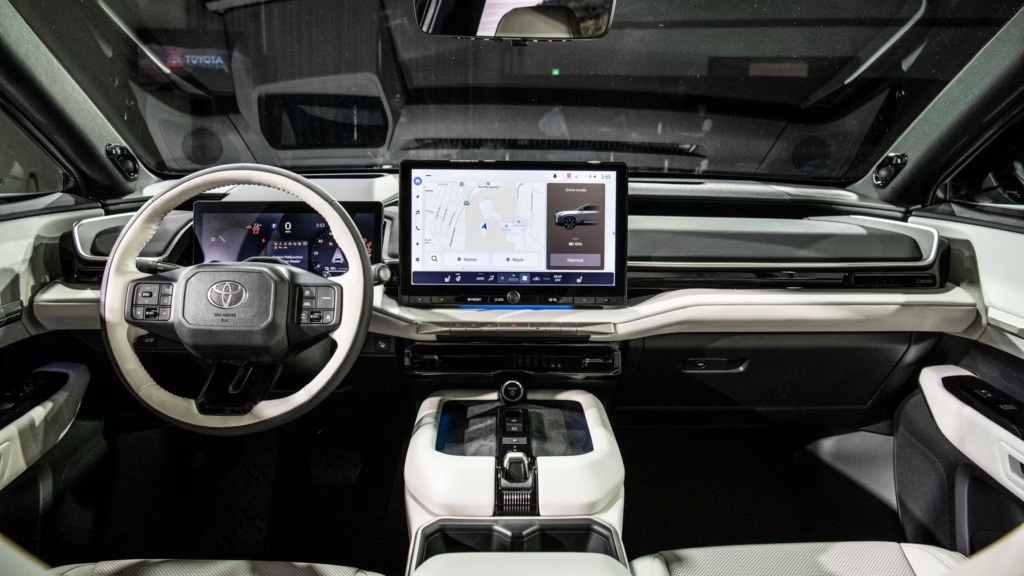
Toyota completely redesigned the cabin. The dashboard features cleaner lines, geometric shapes, and far fewer physical buttons.
Highlights include:
- 14-inch touchscreen with Toyota Audio Multimedia (shared with Tacoma/Tundra/Sequoia)
- 12.3-inch digital instrument cluster
- Available Head-Up Display
- Dual wireless phone chargers
- 64-color customizable ambient lighting
- 18 total cup/bottle holders
- Thoughtful second-row console with tablet/phone slots
- One-touch second-row seat folding
- Hands-free power liftgate
- Built-in Drive Recorder (uses exterior cameras to save 20-second clips — standard)
Second-row captain’s chairs are standard on most trims (bench seat available on XLE AWD). The third row is easier to access thanks to electronic assistance and offers usable space for kids or occasional adult use.
Performance, Battery & Charging
Toyota offers two battery packs and two power outputs:
- 77 kWh battery → 221 hp FWD or AWD variants (270–287 miles range)
- 95.8 kWh battery → 338 hp AWD (up to 320 miles estimated range)
All AWD models get Multi-Terrain Select and Crawl Control for light off-road or slippery conditions.
Charging is a major upgrade:
- Native NACS (Tesla-style) port
- DC fast charging: 10–80% in about 30 minutes
- 11 kW onboard charger (Level 2)
- Battery preconditioning (manual or automatic via navigation)
- Plug & Charge capability on supported networks
- Vehicle-to-Load (V2L) standard — power tools, tailgates, or even your home during outages
Safety & Driver Assistance
Every 2027 Highlander EV comes standard with Toyota Safety Sense 4.0, which includes:
- Enhanced Pre-Collision System with pedestrian/cyclist detection
- Full-Speed Range Dynamic Radar Cruise Control
- Lane Tracing Assist + Lane Departure Alert with Steering Assist
- Automatic High Beams
- Road Sign Assist
- Proactive Driving Assist
Additional standard features include Blind Spot Monitor, Rear Cross-Traffic Alert, and the built-in Drive Recorder for extra peace of mind.
Pricing, Trims & Availability
Trims: XLE (FWD or AWD) and Limited (AWD only)
Expected Pricing: Toyota has not announced official MSRPs yet. Industry estimates point to a starting price in the mid-$50,000s (likely $54,000–$60,000 range depending on configuration), which would make it competitive with the Kia EV9.
On-sale date: Late 2026 (into early 2027) in the United States. It will be the first Toyota BEV assembled in America (Kentucky plant) with North American-sourced batteries.
Global availability (including India) has not been confirmed yet.
How the 2027 Highlander EV Compares
| Model | Max Power | Max Range (est.) | Fast Charging | Starting Price (approx) | Notes |
|---|---|---|---|---|---|
| 2027 Highlander EV | 338 hp | 320 miles | ~30 min (10-80%) | ~$55k | 3-row, US-built, V2L |
| Kia EV9 | 379 hp | ~304 miles | ~24 min | ~$55k | Strong rival, premium feel |
| Toyota Grand Highlander Hybrid | 362 hp | N/A (hybrid) | N/A | ~$44k | Still available, more efficient for some |
The Highlander EV brings Toyota’s legendary reliability reputation into the three-row EV space while offering strong range and fast charging.
Final Verdict: Should You Wait for the 2027 Toyota Highlander EV?
If you need a spacious three-row family SUV and want to go electric without giving up Toyota’s reputation for durability and resale value, the 2027 Highlander EV looks very promising.
It offers:
- Competitive range and performance
- Excellent family packaging
- Modern tech
- Proper NACS charging infrastructure access
- Toyota’s first serious attempt at a volume three-row EV
Bottom line: This is one of the most important Toyota launches in years. Families who have been waiting for a practical, no-compromise electric three-row SUV from a mainstream brand finally have a strong new option.