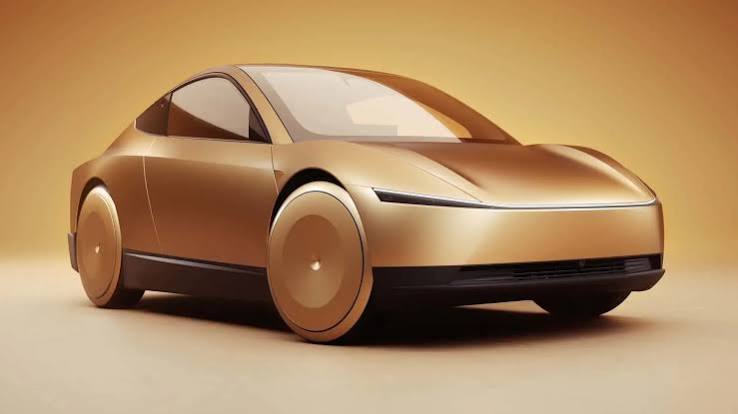
Billionaire investor Ron Baron has outlined a striking long-term financial case for Tesla’s Cybercab and robotaxi network. In a recent discussion, Baron detailed how the purpose-built autonomous vehicle could generate roughly $40,000 in profit per car each year once deployed at scale. Under his assumptions, this model could deliver $40 billion in annual profit in the first year of high-volume operation, rising to $80 billion in year two and $120 billion in year three as the owned fleet compounds.

Baron, founder of Baron Capital and a long-time Tesla shareholder, framed the opportunity as a fundamental shift in Tesla’s business model—from primarily manufacturing and selling vehicles to building and operating its own high-utilization autonomous fleet.
The Core Math Behind the Projection
Baron’s reasoning starts with production economics and utilization benchmarks drawn from existing robotaxi operators.
Tesla plans to manufacture the Cybercab primarily for its own network rather than retail sales in this scenario. He estimates a production cost of about $30,000 per vehicle and a manufacturing rate of at least one million units annually once ramped.
He referenced Waymo’s reported performance of approximately 66,000 revenue miles per vehicle per year at a rate of $3 per mile. Tesla, he suggested, would likely charge less—potentially $1 to $2 per mile—to drive higher utilization and market share.
At a conservative $1 per mile, that utilization yields $60,000 in annual revenue per Cybercab. After operating costs, Baron projected roughly $40,000 in profit per vehicle each year. Critically, he noted the vehicle is designed for a million-mile lifespan, effectively making the capital asset last “forever” relative to typical automotive depreciation cycles.
Scaled across a growing owned fleet, the profits compound:
- Year 1 (1 million vehicles): ~$40 billion profit
- Year 2 (2 million cumulative): ~$80 billion profit
- Year 3 (3 million cumulative): ~$120 billion profit
Beyond the robotaxi network, Baron pointed to humanoid robots (Optimus) as an even larger long-term product opportunity for Tesla.
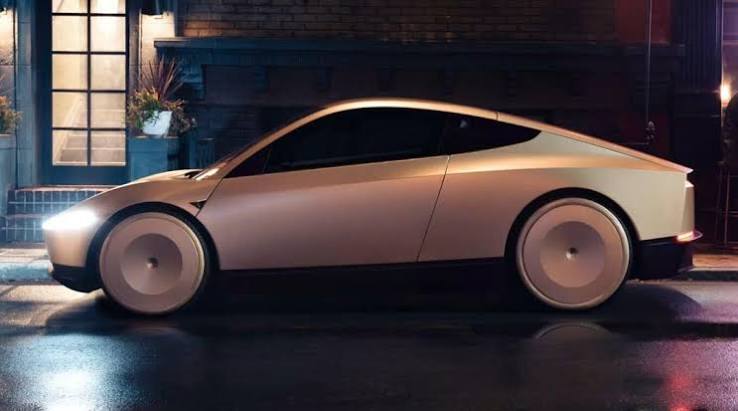
Cybercab Context in 2026
Tesla began Cybercab production at Giga Texas in early 2026, with early units already rolling off the line using the company’s new “unboxed” manufacturing approach aimed at high volume and lower cost. Target production cost has consistently been cited near or under $30,000, aligning with Baron’s figure. The two-seat design prioritizes efficiency for ride-hailing, where the majority of trips involve one or two passengers.
The vehicle has no steering wheel or pedals and relies entirely on Tesla’s vision-based Full Self-Driving system. Tesla has previously indicated ambitions for multi-million annual production capacity across factories once scaled, though early production follows a typical S-curve ramp with initially slower rates due to new processes and components.
Key Assumptions and Real-World Considerations
Baron’s numbers are internally consistent under the stated conditions, but several variables must align for the timeline and scale to materialize:
- Utilization and pricing: Sustained 66,000+ revenue miles per year at $1–$2 per mile requires strong demand, efficient fleet management, and competitive pricing versus traditional ride-hailing and other robotaxi operators.
- Operating costs: The $40,000 profit estimate assumes relatively low per-mile opex (charging, cleaning, maintenance, insurance, remote support). Tesla has targeted all-in operating costs potentially as low as $0.20 per mile at scale.
- Regulatory and technical readiness: Widespread unsupervised operation depends on continued progress in FSD validation, regulatory approvals across jurisdictions, and proven safety performance at volume.
- Fleet ownership model: The projection assumes Tesla retains ownership of the majority of Cybercabs rather than selling most units to third-party operators or individuals.
- Competition and market size: Global taxi and ride-hailing demand is large, but rapid deployment of millions of dedicated robotaxis will face competition, infrastructure needs, and potential market saturation in major cities.
Current unsupervised robotaxi fleets remain limited in size, and Cybercab production is still in the early stages of its ramp. Material contribution to Tesla’s overall financials is widely expected to build more gradually through the late 2020s rather than reaching tens of billions of dollars in the immediate next year or two.
Why This Matters for Tesla’s Valuation Thesis
Baron has long argued that Tesla’s shift toward autonomy and robotics will drive multi-fold returns over a decade. The Cybercab math illustrates one concrete pathway: converting relatively low-cost hardware into a high-margin, recurring revenue service business with exceptional asset longevity.
If realized even partially, robotaxi profits at this scale would represent a transformative addition to Tesla’s automotive and energy businesses. Combined with potential contributions from Optimus and continued FSD software monetization, it underpins the more optimistic long-term valuation scenarios discussed by growth-oriented investors.
The projection remains forward-looking and assumption-dependent. Execution on production ramp, software reliability, regulatory access, and fleet operations will determine how closely reality tracks the model. For now, it offers a clear, quantified illustration of the economic potential Tesla is targeting with its purpose-built autonomous vehicle.
As Cybercab production continues to scale and unsupervised miles accumulate, the industry will gain clearer data on actual utilization rates, pricing power, and unit economics—providing the real-world test of these ambitious projections.