Tesla’s Full Self-Driving (FSD) software continues to evolve at a rapid pace, with version rollouts varying significantly across global markets. As of April 2026, the latest Tesla FSD versions highlight the company’s regional approach to autonomous driving technology, balancing regulatory requirements, local data training, and hardware compatibility. Whether you own a Tesla Model 3, Model Y, or Cybertruck, understanding these differences is crucial for owners tracking software updates and for investors watching Tesla’s path to unsupervised robotaxi deployment.
Here is the current breakdown of Tesla FSD versions by major regions based on the latest fleet data:
- United States and Canada: V14.3
- Europe: V14.2.2.5
- Australia and New Zealand: V13.2.9
- South Korea: V14.2
- China: Localized V13.2.9
These versions reflect Tesla’s strategy of pushing cutting-edge updates first in North America, where regulatory oversight from the NHTSA allows faster iteration, while adapting to stricter rules elsewhere. V14.3 in the US and Canada represents the most advanced build, featuring improved highway merging, city street navigation, and smoother handling of complex intersections. Many owners report near-unsupervised performance on well-mapped roads.
Europe lags slightly behind with V14.2.2.5, likely due to ongoing compliance with EU safety standards and the need for additional validation in diverse traffic environments. South Korea follows closely at V14.2, benefiting from strong local infrastructure support and Tesla’s expanding presence in Asia.

Meanwhile, Australia and New Zealand remain on the older V13.2.9, sparking frustration among local owners who note slower progress compared to North America. China operates a fully localized V13.2.9 version, customized to meet national data security rules and mapping regulations. This separation ensures compliance but can delay feature parity with global builds.
Hardware matters too. Vehicles equipped with Hardware 3 (HW3) often stay on earlier supervised versions like V12.6.4 in some markets, while HW4 and newer hardware unlock the full potential of V14.x releases. Tesla has confirmed ongoing efforts to unify the experience, but regional testing and approval cycles create natural delays.
Why do Tesla FSD versions differ by country?
Several factors drive the staggered rollout. First, regulatory bodies in each region require distinct safety validations. Europe’s focus on pedestrian-heavy urban zones and Australia’s unique road rules demand extra fine-tuning. Second, Tesla relies heavily on real-world data collected from its massive fleet. North America generates the highest volume of miles driven under FSD, accelerating training for newer versions. Third, localization plays a key role—China’s version integrates with government-approved mapping services, while Europe incorporates region-specific traffic signs and languages.
For Tesla enthusiasts, these differences highlight both progress and challenges. The jump to V14.3 in the US demonstrates how close the company is to unsupervised autonomy on highways and city streets. Owners in lagging regions like Australia often ask when V14 will arrive, with many hoping for a quick catch-up in the coming weeks.
Looking ahead, Tesla’s global FSD strategy supports its ambitious robotaxi vision. Consistent updates across borders could accelerate deployment in multiple markets, boosting revenue through Full Self-Driving subscriptions and future ride-hailing services. Analysts tracking Tesla stock performance point to these software milestones as key catalysts for valuation growth.
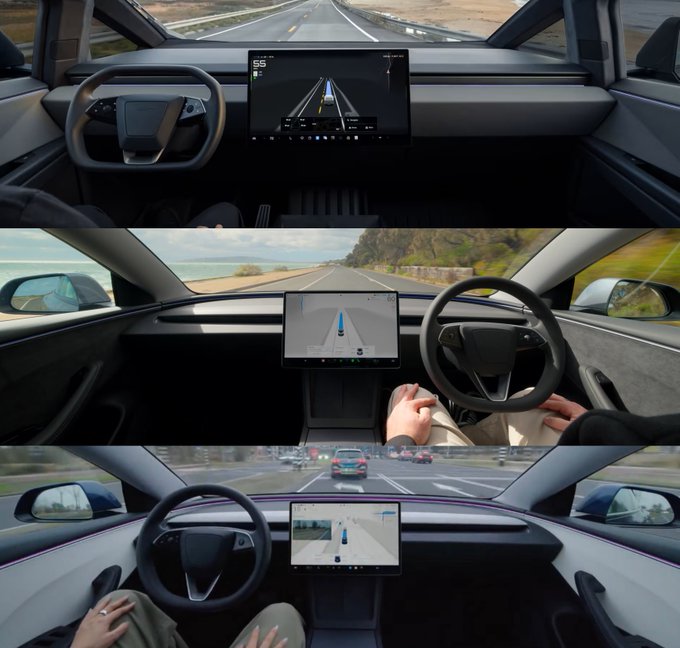
If you own a Tesla, check your vehicle’s software section regularly for over-the-air updates. Enabling advanced FSD features and ensuring your car is connected to Wi-Fi maximises the chances of receiving the latest version as soon as it becomes available in your region.
Tesla FSD continues to set the benchmark for consumer autonomous driving technology. While version gaps exist today, the rapid pace of improvement suggests a more unified global experience is on the horizon. Stay tuned for the next major update—V14.x could soon become the new standard worldwide.