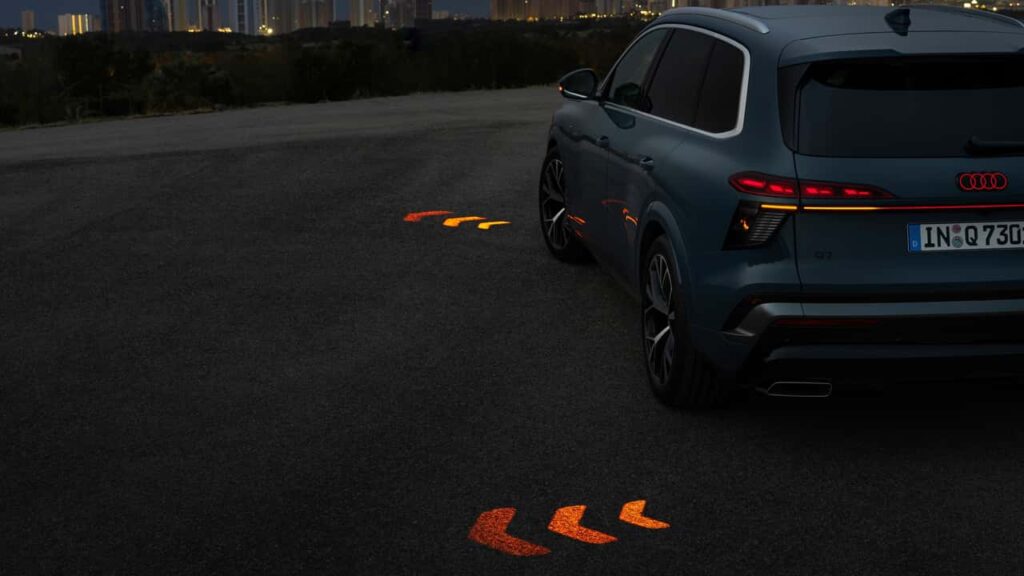
A viral video from tech and EV commentator Sawyer Merritt has sparked widespread excitement online. It shows the all-new 2027 Audi Q7 projecting its turn signals directly onto the road surface while featuring a clever “marking light” that illuminates pedestrians in the dark.
This is not a concept — it’s production-ready technology in Audi’s third-generation Q7, and it represents one of the most advanced vehicle-to-environment communication systems yet in a luxury SUV.
The New 2027 Audi Q7: Quick Overview
The redesigned 2027 Audi Q7 (and high-performance SQ7) brings a bolder stance, more interior space (including a new six-seat option), and significantly upgraded technology. Power comes from a 429-hp twin-turbo V6 in the Q7 or a 591-hp V8 in the SQ7, both paired with quattro all-wheel drive and strong towing capacity (up to 7,700 lbs).
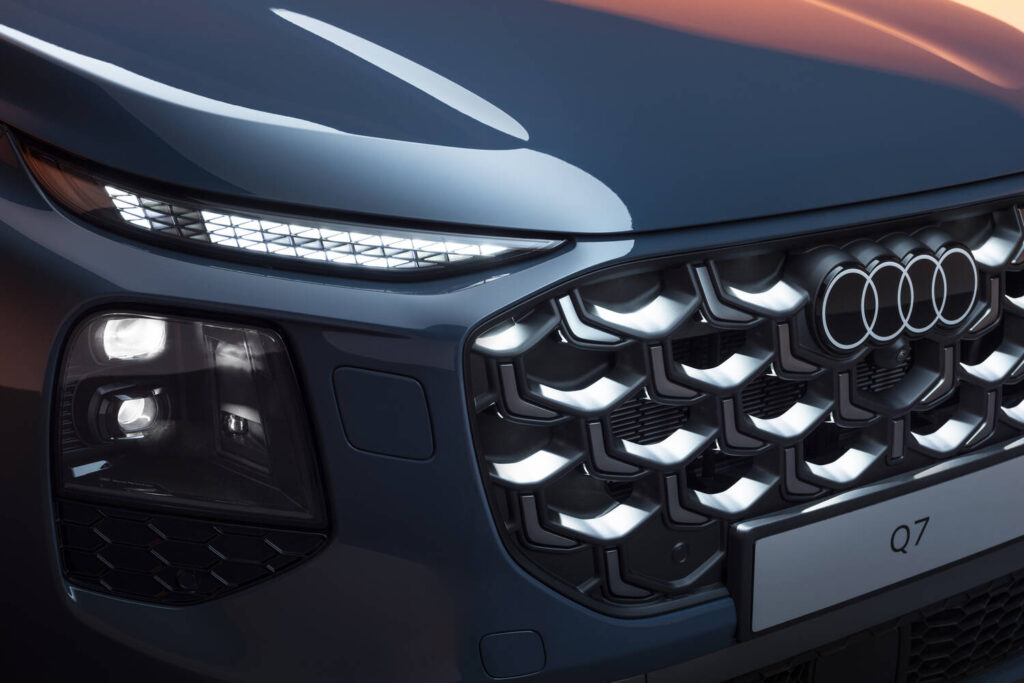
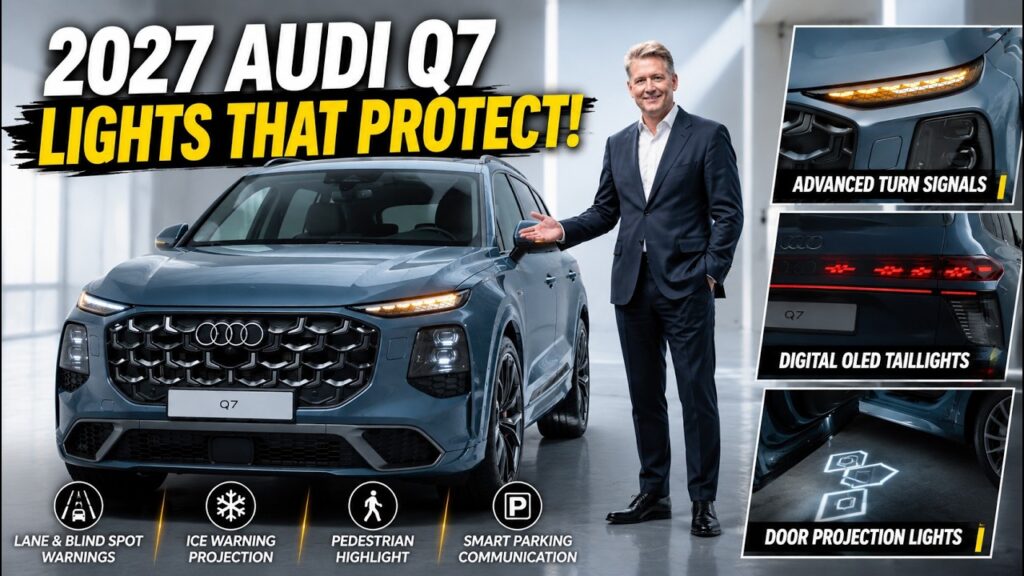
While the mechanical updates are impressive, the standout innovation highlighted in recent videos and official materials is the advanced lighting system — specifically the Digital Matrix LED headlights and their groundbreaking projection and marking capabilities.
Digital Matrix LED Headlights: The Brain Behind the Features
Each headlight in the 2027 Q7 uses approximately 25,600 individually controllable micro-LEDs. This allows precise, real-time adaptation of the light beam — maximizing visibility for the driver while minimizing glare for oncoming traffic.
Beyond basic illumination, the system enables several intelligent functions:
- Adaptive high beam
- Lane guidance in construction zones
- Warning projections (e.g., ice warnings)
- The two headline features: projected turn signals and pedestrian marking light
Projected Turn Signals on the Road — How It Works
When you activate the turn signal (with headlights on), the Q7 projects stylized directional arrows or patterns onto the road surface in front of and behind the vehicle. These projections sync perfectly with the sequential LED turn signals.
Key benefits:
- Makes your turning intentions instantly clear to pedestrians, cyclists, and drivers who might not see traditional blinkers (especially at night or in poor weather).
- Helps vulnerable road users (VRUs) anticipate the vehicle’s path.
- The feature works from both the front headlights and rear taillights.
Audi describes this as a major step forward in vehicle communication. Similar ground-projection ideas appeared in earlier Audi concepts (like the 2022 “light digitization” research), but the 2027 Q7 brings it to a production SUV in a refined, regulatory-approved form for markets like the US.
Marking Light: Illuminating Pedestrians for Safer Nights
The marking light function uses the same Digital Matrix LED system to directly highlight pedestrians standing near the roadway in dark conditions.
Instead of just detecting them via cameras/sensors and warning the driver, the headlights actively cast light onto the person. This makes them more visible to the Q7 driver and potentially to other road users. It works in conjunction with the high-beam assistant and is particularly useful on unlit roads or in rural/suburban areas.
This is a proactive safety measure that goes beyond traditional night vision systems.
Additional Lighting Innovations in the 2027 Q7
- OLED Taillights: Available with customizable digital signatures and animated effects. They can also display warning symbols or act as additional communication tools.
- Rear Projection Elements: Some versions include projection lighting on the rear spoiler or tailgate area.
- Sequential & Dynamic Effects: Turn signals and other lighting elements feature smooth, flowing animations.
These features build on Audi’s long-standing leadership in automotive lighting (Matrix LED, OLED, etc.).
Safety Impact & Online Reactions
Proponents argue these features meaningfully improve communication between cars and vulnerable road users — a critical need as long as human drivers remain the majority on roads. Clearer turn intentions and better-lit pedestrians can reduce accidents in low-visibility scenarios.
Critics (especially in Tesla communities) call it “gimmicky” compared to full self-driving autonomy, noting that perfect sensors + AI should eventually eliminate the need for such visual cues. Some also worry about potential distraction for other drivers.
Realistically, both approaches have merit: advanced lighting improves safety today for human-driven vehicles, while autonomy aims to solve the root problem over the long term. Audi’s system is already approved for the US market.
Availability & Pricing
The 2027 Audi Q7 is expected to reach US dealerships in the fourth quarter of 2026. Pricing has not been officially announced, but expect a noticeable increase over the current generation (which starts around $63,000–$84,000 before options). The SQ7 will command a significant premium.
In India and other right-hand-drive markets, the new generation will likely arrive in 2027 or later. Expect strong demand in the luxury SUV segment once launched.
Final Thoughts
The 2027 Audi Q7’s projected turn signals and pedestrian marking light are more than flashy tech — they represent Audi’s continued push to make vehicles better communicators on the road. Whether you see it as clever engineering or overkill depends on your view of the transition to autonomy.
One thing is clear: when you see those arrows lighting up the pavement at night, it’s hard not to be impressed by how far automotive lighting has come.
What do you think of this technology? Would you want it on your next SUV, or do you prefer a more minimalist approach like Tesla? Let us know in the comments.