
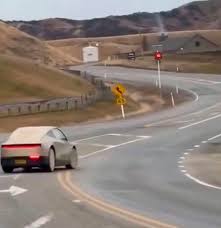
Tesla’s two-seat autonomous robotaxi, the Cybercab, has been captured on video driving on public roads in New Zealand’s South Island for the first time. The footage, shared widely on July 24, 2026, shows the vehicle navigating wet rural roads near Wanaka during the Southern Hemisphere winter. This marks a clear sign that cold-weather validation is well underway.
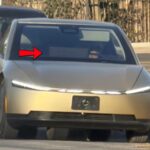
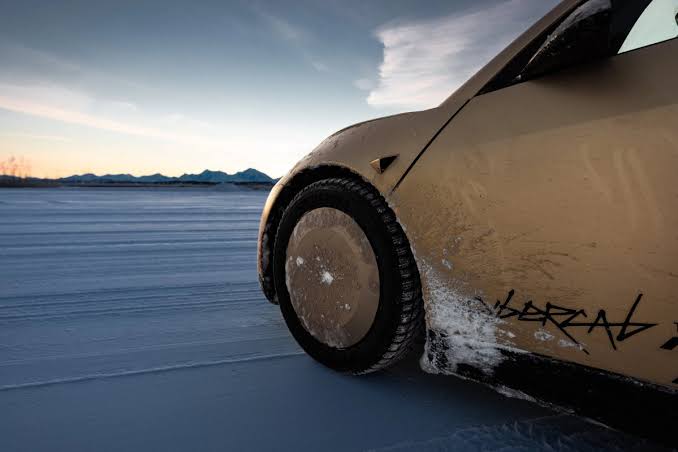
The short clip, originally posted by local spotter Stephen Hillier and amplified by accounts such as Sawyer Merritt, depicts a light-colored gold or beige Cybercab prototype coated in road grime. It lacks traditional side mirrors, features the distinctive Cybercab silhouette with aero wheel covers and a continuous rear light bar, and carries yellow New Zealand registration plates. Sheep graze on nearby hillsides as the car negotiates curves and intersections under overcast, damp conditions typical of New Zealand’s alpine winter.
Background: From Transporter to Public Roads
This is not the Cybercab’s first appearance in New Zealand. In mid-June 2026, at least two gold prototypes were photographed and filmed on an open car transporter heading south. Tesla later confirmed the vehicles belonged to the company and were bound for the Southern Hemisphere Proving Grounds near Cardrona, northeast of Queenstown and close to Wanaka.
The Southern Hemisphere Proving Grounds is a specialised winter testing facility used by multiple global manufacturers. It offers reliable snow, ice, sub-zero temperatures, and low-angle winter sun during the Northern Hemisphere’s summer months from June to August in New Zealand. Tesla has previously used the site for Model S, Model 3, Model X, Model Y, and Cybertruck cold-weather development.
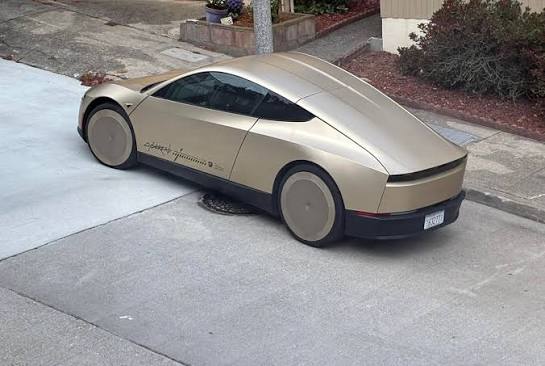
The July public-road footage indicates the prototypes have progressed beyond closed-track work and are now logging real-world miles on open roads in the Cardrona Valley and Wanaka area.
Key Cybercab Specs from EPA Filings
EPA certification documents released in June 2026 provide the clearest technical picture yet of the production-intent Cybercab. The vehicle uses an approximately 47.6 to 48 kWh lithium-ion battery pack. It is powered by a single front-mounted permanent-magnet synchronous motor producing 163 kW or 219 horsepower in a front-wheel-drive layout. Curb weight is listed at 3,113 pounds or 1,412 kilograms. Unadjusted combined test cycle range reaches about 418 miles, with the expected real-world EPA-adjusted range around 293 miles or 472 kilometers.
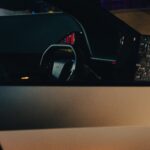
The body style is a two-passenger coupe designed primarily for autonomous operation. The vehicle is engineered without side mirrors and relies on Tesla’s camera suite. Current test prototypes still carry a steering wheel and conventional controls for safety drivers.
Why Winter Testing Matters for the Cybercab
Camera-based Full Self-Driving systems face unique challenges in cold, wet, or snowy conditions. These include reduced visibility from spray, fogged or iced lenses, low-contrast road markings, and altered traction. Battery performance, cabin heating efficiency, and thermal management of sensors also require validation in sustained low temperatures.
By testing in New Zealand during the Southern winter, Tesla gains an extra season of data that would otherwise have to wait until the next Northern winter. This accelerates development of the Cybercab’s vision-only autonomy stack, preconditioning strategies, and all-weather reliability. These elements are critical for a vehicle expected to operate around the clock in robotaxi fleets across varied climates.
Production and Timeline Context
Tesla began pilot production of the Cybercab at Gigafactory Texas in early 2026, with formal introduction into commerce listed as May 29, 2026 in regulatory filings. Elon Musk has previously targeted volume production before 2027 and a price under 30,000 dollars for the robotaxi version.
Widespread unsupervised robotaxi deployment still depends on regulatory approval in key markets. The New Zealand testing program does not signal an imminent local launch. It forms part of broader global validation efforts.
What the Footage Reveals
The Wanaka-area video is notable for several reasons. It is the first clear public-road driving footage of a Cybercab outside the United States. The vehicle is visibly dirty from extended testing rather than appearing as a clean show car. It operates in typical winter road conditions with wet pavement, rural curves, and mixed traffic. Local plates and left-hand-drive configuration confirm it is a dedicated engineering mule rather than a locally sold vehicle.
More sightings are expected on Central Otago roads through the remainder of the Southern winter testing season.
Looking Ahead
The Cybercab represents Tesla’s dedicated robotaxi platform. It is smaller, lighter, and more efficient than a modified Model Y or Model 3. Successful cold-weather validation in New Zealand strengthens the case for all-climate unsupervised operation, which will be essential for scaling a global robotaxi network.
As more footage and data emerge from both United States and Southern Hemisphere testing, the timeline for unsupervised Full Self-Driving and commercial Cybercab deployment will become clearer. This development keeps the Cybercab firmly on track as one of the most closely watched vehicles in the autonomous EV space.