Tesla already leads the electric vehicle market with the Model Y — America’s best-selling SUV in recent years. But what if the company expanded its SUV offerings into a complete, all-electric, self-driving lineup perfectly tailored for US families? The proposal outlines three SUVs:
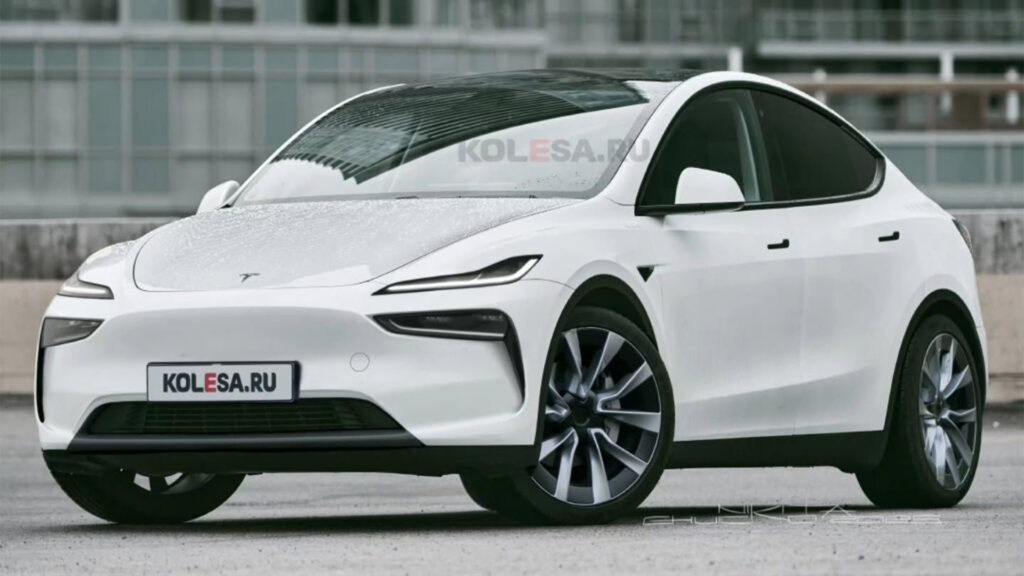
- Model Y (188 inches long, two rows)
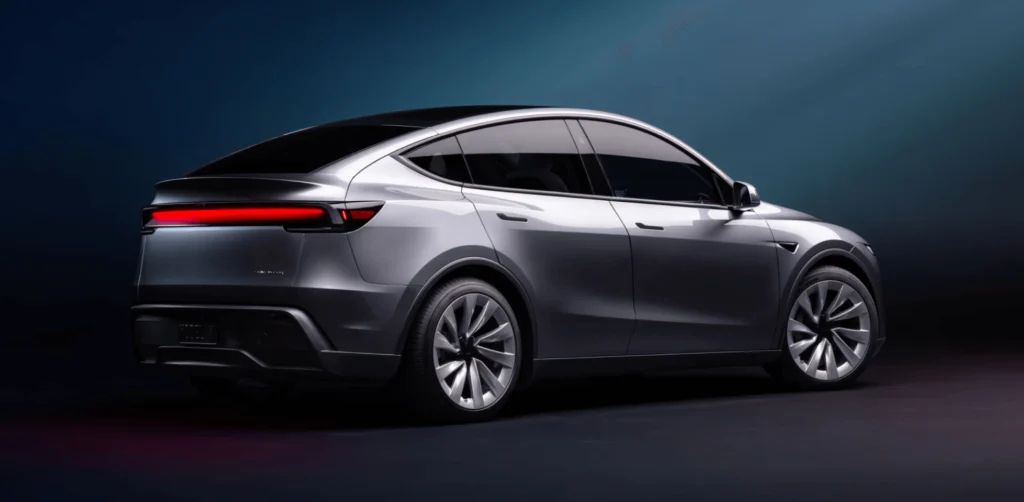
- Model Y L (196 inches long, three rows)
- Cyber SUV (~210 inches long, full-size three rows, matching the GMC Yukon)
This lineup would cover compact, mid-size, and full-size family needs while delivering zero-emissions driving, Full Self-Driving (FSD) capability, and Tesla’s legendary performance and efficiency. Here’s why this Tesla SUV lineup could be a game-changer for American drivers in 2026 and beyond.
The Current Tesla SUV Gap in the US Market
US buyers love SUVs. From compact crossovers to full-size three-row haulers like the GMC Yukon, Chevrolet Tahoe, and Ford Explorer, families want space, safety, towing capability, and versatility.
Tesla’s current US SUV portfolio is limited:
- The Model Y dominates as a compact-to-midsize crossover with two rows (or occasional third-row options in other markets).
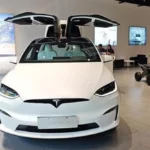
- The Model X (now nearing the end of production in some reports) is a premium three-row option, but too expensive and polarising for mass-market family buyers.
This leaves a huge hole for growing families who need more than five seats but don’t want a minivan or gas-guzzling traditional SUV. Merritt’s proposed Tesla SUV lineup fills that gap perfectly — and at scale.
Breaking Down the Proposed Tesla SUV Lineup
1. Model Y (188″ long, 2 rows)
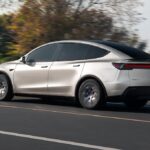
The proven bestseller. With seating for five, exceptional range (often 300+ miles), and rapid acceleration, the Model Y already outsells most gas SUVs. It’s the perfect entry point for smaller families or couples who want efficiency without sacrificing utility. In this lineup, it serves as the “compact” option — easy to park, highly efficient, and fully capable of Full Self-Driving.
2. Model Y L (196″ long, 3 rows)
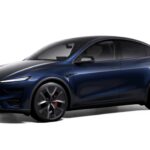
The “missing middle” many Tesla owners have been demanding. A longer wheelbase Model Y with true three-row seating (likely 6- or 7-passenger configurations) would compete directly with the Toyota Highlander Hybrid, Honda Pilot, and Kia Telluride.
Early versions already exist in markets like China and Australia, where the extended Model Y offers over 400 miles of range in some specs. Bringing the Model Y L to the US would give families a practical, affordable three-row EV without jumping to full-size dimensions. Expect strong demand from suburban parents who need extra seats for carpooling, sports teams, or road trips.
3. Cyber SUV (~210″ long, full-size 3 rows)
The flagship beast. Sized like America’s favorite full-size SUVs (GMC Yukon, Chevrolet Tahoe, Ford Expedition), the Cyber SUV would bring Cybertruck-inspired angular design, massive interior space, and serious capability.
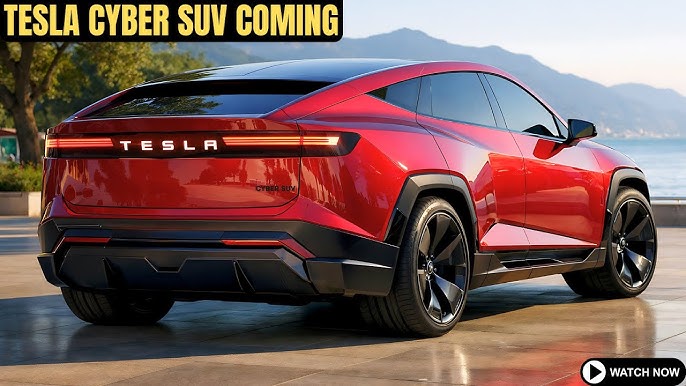
Imagine 7–8 seats, best-in-class towing, PowerShare vehicle-to-home capability, and FSD for highway road trips. It would appeal to large families, those who tow trailers or boats, and buyers who simply want maximum presence and space — all while slashing fuel and maintenance costs compared to gas V8 SUVs.
Together, these three models would create a seamless Tesla SUV ladder: start with the agile Model Y, step up to the family-focused Model Y L, or go big with the Cyber SUV.
Why This Tesla SUV Lineup Would Be Unstoppable
- Covers Every Family Size: From young couples (Model Y) to growing families (Model Y L) to large households or multi-generational buyers (Cyber SUV).
- All-Electric + Self-Driving Ready: Zero tailpipe emissions, lower operating costs, and future-proof FSD hardware across the entire lineup. No other automaker offers this level of autonomy integration in mass-market SUVs.
- Cybertruck Synergies: Shared platform tech, design language, and manufacturing efficiencies with the Cybertruck could keep costs competitive.
- Market Domination Potential: Replies to Merritt’s post flooded in with enthusiasm — “A CyberSUV would change America,” “We need a Suburban equivalent,” and “This would be the end for everyone else.” The three-row EV market in the US is still tiny; Tesla’s aggressive entry could capture it overnight.
Competitors like Rivian, Lucid, or legacy automakers’ electric offerings (e.g., Cadillac Escalade IQ, Ford Explorer EV) are either ultra-premium or limited in range and availability. A Tesla SUV lineup priced accessibly would be hard to beat.
Challenges and What Tesla Fans Are Hoping For
Tesla has focused heavily on autonomy, the Robotaxi/Cybercab, and next-gen vehicles. Some critics in the replies worry the company is “not interested in selling compelling cars anymore.” However, ending Model X production opens the door for fresher three-row options.
Fans are also calling for:
- Steering wheels on future models (for those who want them)
- Competitive pricing on the Cyber SUV
- Higher ground clearance options for light off-road use
If Tesla acts on this vision, the timing couldn’t be better. With improving battery tech, falling EV prices, and growing demand for family-friendly electric vehicles, 2026–2027 could be the year Tesla cements its dominance beyond sedans and compact crossovers.
The Bottom Line: A Tesla SUV Revolution Is Overdue
Sawyer Merritt’s X post perfectly captures what thousands of Tesla owners and EV-curious families have been waiting for — a complete, practical, all-electric SUV lineup that finally matches America’s love for SUVs with the future of driving.
Whether you need the efficient daily driver Model Y, the spacious family Model Y L, or the full-size powerhouse Cyber SUV, this trio would check every box: safety, range, tech, capability, and self-driving convenience.
Would you buy one? Drop your thoughts in the comments — and keep an eye on Tesla’s roadmap. The Cyber SUV and Model Y L could be the vehicles that finally convince millions of American families to go electric for good.
What Tesla SUV are you most excited about? Model Y L or the full-size Cyber SUV? Let us know below!