Tesla owners who use an aftermarket adapter to pull power from their car say the latest software has broken it. According to a thread on the Tesla Motors Club forum, Tesla V2L adapters from third-party companies such as Elejoy now shut off within minutes on software 2026.38.5.1 and later. The timing is awkward: two days earlier, Tesla said every new Tesla can now power tools and gadgets through its own Powershare system.
What’s confirmed
Tesla hasn’t said anything about third-party adapters. What it has announced is its own vehicle-to-load support. On Oct. 27, the Tesla North America account posted on X that “every new Tesla can now power your tools or gadgets via Powershare.” A follow-up said the feature uses Tesla’s Mobile Connector with an Outlet Adapter and works in the US and Mexico, as TeslaNorth reported.
Tesla North America on X: Powershare announcement
Earlier in October, Tesla turned on Powershare Home Backup for the Model 3 and Model Y with a Powerwall 3. Electrek reported that Tesla’s support page only guarantees the hardware on Model 3 and Model Y vehicles ordered in the US or Puerto Rico on or after Oct. 1, 2026. Tesla says “some, but not all” older cars have it. Owners can check under Software, then Additional Vehicle Information, where a capable car shows “Powershare Support: Enabled.”
The catch for older Teslas is clear: if your car doesn’t have the Powershare hardware, Tesla’s official route isn’t open to you. Third-party adapters filled that gap.
What’s rumored or reported
The report comes from owners, not from Tesla. In a Tesla Motors Club thread titled “DO NOT INSTALL 2026.38.5.1,” a Model 3 owner posting as FalconFour says they had run a third-party V2L box almost daily for more than a year and a half. After the update, they say the car “throws a BMS_a076_SW_Dch_While_Charging fault and shuts down” after about three minutes at roughly 3 kW. The old workarounds, Theater mode, Camp mode and Service Mode, reportedly no longer help.
Another owner in the thread says the cutoff comes after 15 to 20 minutes no matter the load. Elejoy reportedly sent one owner test firmware, and it didn’t fix the problem. Not a Tesla App and Drive Tesla Canada have both written up the thread.
A note on how solid this is: it’s a handful of forum posts, and the numbers come from owners’ own testing. No one has shown that Tesla meant to block these adapters. Forum members think the car now checks whether energy is actually flowing into the battery during what the adapter presents as a charging session. That’s a theory, not a confirmed explanation. A change made for some other reason could also have broken the trick. Tesla hasn’t commented.
How these adapters worked
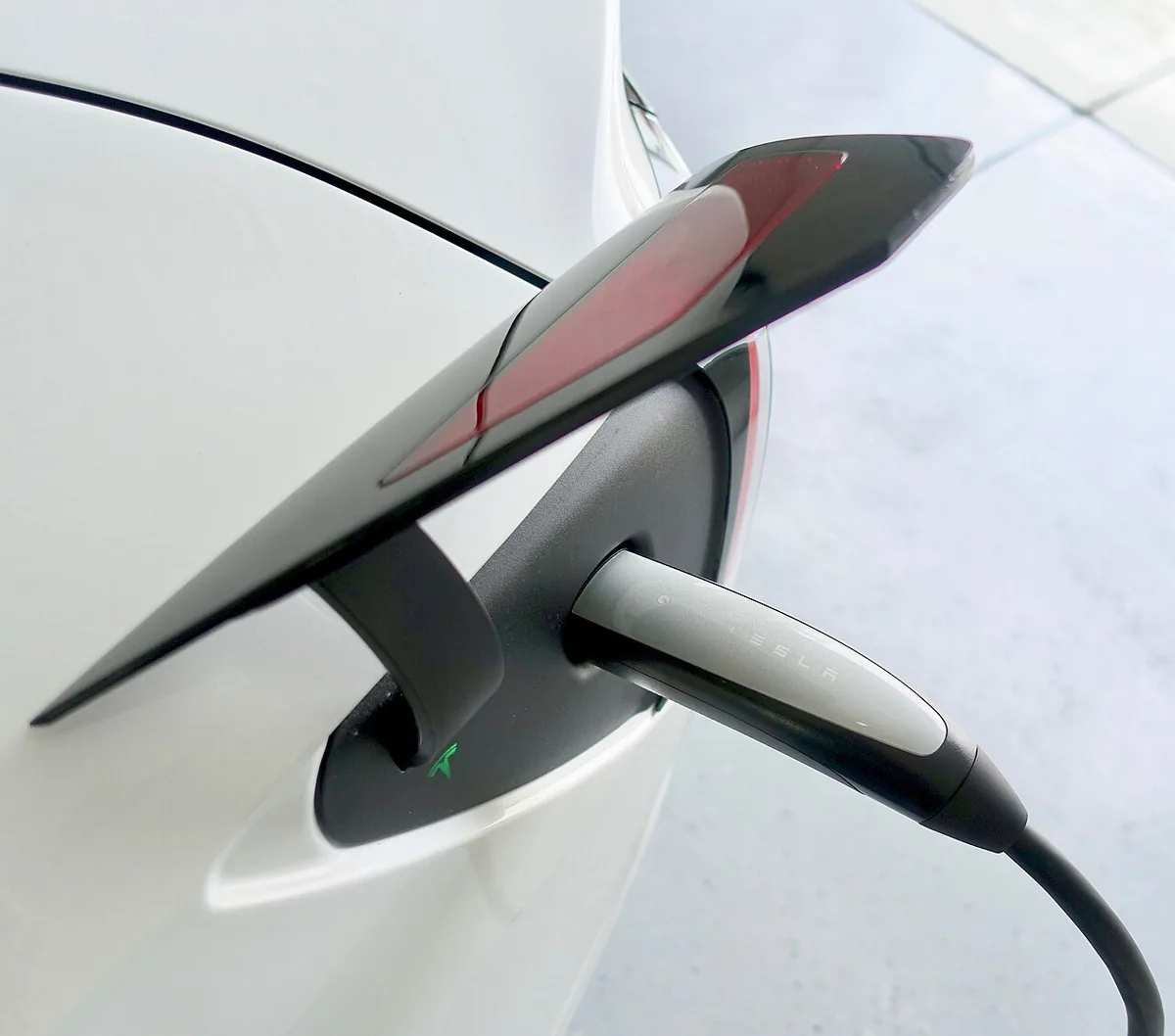
Adapters like Elejoy’s plug into the CCS charge port and start what the car sees as a DC fast-charging session. Then they reverse the flow and pull power out of the battery to run household outlets. Owners say it worked on cars as old as a 2017 Model 3 with a CCS retrofit. It took a routine to keep it running: AC off, music paused, Theater mode on and the driver’s door left partly open so the car didn’t fault.
What it means if you own one
- If your car runs older software and you rely on a third-party V2L box, owners in the thread are advising you to hold off on 2026.38.5.1 or later for now.
- If your Model 3 or Model Y was ordered on or after Oct. 1, 2026, Tesla’s own Powershare outlet route is the supported option.
- If your car is older, check the Powershare Support line in the Additional Vehicle Information screen before you buy any adapter. Some older cars qualify.
- Watch for a firmware update from your adapter’s maker. Several owners are testing fixes, but nothing works yet.
What’s next
The big question is whether this is permanent. If Tesla’s software now checks for real energy going into the pack, a simple firmware fix from the adapter makers may not be enough. We’ll update this story if Tesla, Elejoy or another adapter company says more. For more recent owner-reported Tesla changes, see our story on the Model Y L Zen Grey textile dash and the latest Model Y financing changes.