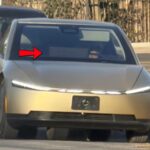
In the fast-evolving world of electric vehicles (EVs) and autonomous technology, Tesla continues to set the pace. Fresh drone footage from Giga Texas reveals a stunning sight: rows of gleaming Cybercabs lined up and ready for transport. With over 100 units already shipped offsite, Tesla’s robotaxi ambitions are shifting into high gear – just weeks before the official mass production kickoff. If you’re searching for the latest on Tesla Cybercab updates, production timelines, or how this impacts the future of self-driving cars, you’ve come to the right place.

Drone capture shows at least 16 more Cybercabs – testing versions with signature wraps – queued for shipment, adding to the growing fleet. (Source: Joe Tegtmeyer via X)
Tesla’s In-House Manufacturing Edge: Why Cybercab is a Game-Changer for Robotaxis
Tesla’s Cybercab isn’t just another EV; it’s a purpose-built autonomous vehicle designed to revolutionise urban mobility. Unveiled in late 2024, the compact, two-seater robotaxi promises unsupervised Full Self-Driving (FSD) capabilities right out of the gate, priced at an accessible $30,000. Unlike competitors such as Waymo, which retrofit imported platforms from China with add-on hardware, Tesla’s vertically integrated approach allows for seamless, in-house production.
Recent X posts from Tesla enthusiasts like Nic Cruz Patane and drone pilot Joe Tegtmeyer highlight the momentum: “A Cybercab will roll off the production line every ~10 seconds or less,” Patane noted, emphasising Tesla’s manufacturing supremacy. This isn’t hype – it’s backed by real progress at Giga Texas, where the first Cybercab rolled off the line in mid-February 2026, ahead of the anticipated April mass production start.
As Elon Musk reaffirmed in February, “We’re putting in the extra effort to ensure quality from day one,” despite initial delays in scaling. With unsupervised FSD now standard, these vehicles are primed for robotaxi fleets, ride-hailing services, and even personal ownership. For those eyeing Tesla Cybercab specs, expect a sleek, inductive-charging design with no steering wheel or pedals – pure autonomy.
Key Milestones in Tesla Cybercab Production Timeline
| Milestone | Date | Details |
|---|---|---|
| Unveiling | October 2024 | Cybercab revealed alongside Robovan at Tesla’s “We, Robot” event. |
| Cybercab was revealed alongside Robovan at Tesla’s “We, Robot” event. | February 2026 | Test manufacturing ramps up at Giga Texas, beating April target. |
| Over 100 Units Shipped | March 2026 | Inventory transport surges, with testing wraps spotted nationwide (e.g., Washington DC). |
| Mass Production Start | April 2026 | Official rollout, aiming for one unit every 10 seconds. |
| Consumer Availability | Late 2026 | $30,000 price point with FSD included; fleet operations begin. |
This timeline underscores Tesla’s agility in the autonomous vehicle market, where delays plague rivals. Early sightings of Cybercabs in real-world testing – from California highways to East Coast streets – signal readiness for deployment.
Implications for the EV and Autonomous Driving Landscape in 2026
The Cybercab’s rapid production ramp-up isn’t just a win for Tesla shareholders; it’s a seismic shift for the entire automotive industry. As gas cars fade into obsolescence – a trend we’ve explored in our guide on Why EVs Are Better Than Gas Cars: Top Reasons Tesla Owners Can’t Go Back in 2026 – autonomous EVs like the Cybercab promise to slash transportation costs by up to 90%.
Imagine hailing a driverless ride for pennies per mile, or owning your own Cybercab that generates passive income via Tesla’s network. This aligns with broader EV adoption, building on successes like the Tesla Model Y Premium Crowned 2026 Car of the Year, dominating sales charts with its blend of range, tech, and affordability.
Critics point to regulatory hurdles and safety validations, but Tesla’s data advantage – billions of FSD miles logged – positions it ahead. As Patane puts it, “Tesla has already won; people just don’t know it yet.” For rugged EV fans, this pairs well with the bulletproof upgrades in the Tesla Cybertruck. Bulletproof Features: Now Available for Just $60,000, expanding Tesla’s ecosystem.
We’ve been tracking the Cybercab closely since production whispers began. Dive deeper into its launch with our exclusive coverage: Tesla Cybercab 2026: Buy Your Own Autonomous Vehicle for $30,000 with Unsupervised FSD.
What’s Next for Tesla Cybercab Owners and Investors?
With Giga Texas buzzing and shipments underway, eyes are on April’s mass production launch. Will we see Cybercab fleets dominating U.S. cities by summer? Early indicators say yes, especially as Tesla integrates it with the refreshed 2026 Tesla Model Y Performance.
Stay ahead of the curve on Tesla news, EV reviews, and autonomous tech breakthroughs. Subscribe to Uson Wheels for daily updates – your go-to source for everything on wheels in the U.S. What do you think of the Cybercab surge? Share your thoughts in the comments below!