Denmark joins the Netherlands, Lithuania, and Estonia as Tesla accelerates its Full Self-Driving rollout across Europe.
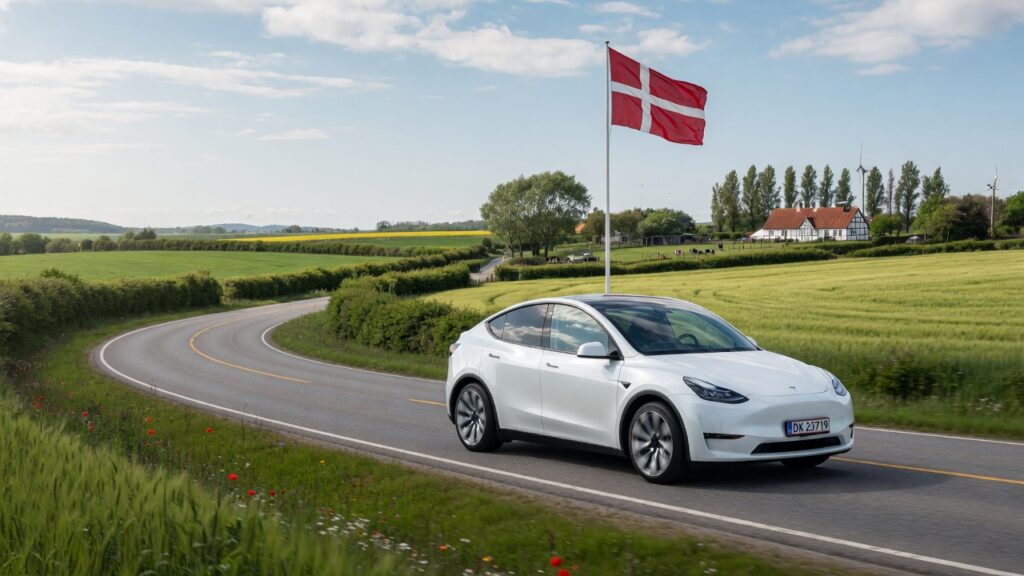
On June 9, 2026, Tesla’s Full Self-Driving (FSD) Supervised system received official approval in Denmark. This marks a significant milestone, making Denmark the fourth European country to greenlight the technology in just two months. Tesla Europe confirmed the news on X, stating: “FSD Supervised now approved in Denmark 🇩🇰. Rollout will begin soon.”
What Happened: Danish Road Authority Grants Provisional Approval
The Danish Road Traffic Authority (Færdselsstyrelsen) granted provisional approval after reviewing and accepting the type approval originally issued by the Netherlands’ RDW (vehicle authority) on April 10, 2026.
This national recognition approach allows faster progress than waiting for a full EU-wide harmonized approval. Denmark’s decision follows the same pathway used by Lithuania and Estonia.
Key points from the official announcement:
- The system assists with acceleration, braking, steering, and lane changes.
- It remains FSD Supervised — the driver must stay fully attentive and responsible at all times.
- Tesla and Danish authorities emphasize improved road safety. Tesla’s global fleet data shows significantly lower accident rates with FSD engaged compared to manual driving.
European FSD Approval Timeline (2026)
| Country | Approval / Activation Date | Status |
|---|---|---|
| Netherlands | April 10, 2026 | First in Europe |
| Lithuania | May 20, 2026 | Second |
| Estonia | May 29, 2026 | Third |
| Denmark | June 9, 2026 | Fourth – Rollout soon |
This rapid “domino effect” shows growing regulatory confidence in Tesla’s vision-based approach across smaller and mid-sized European markets.
How FSD (Supervised) Works in Denmark
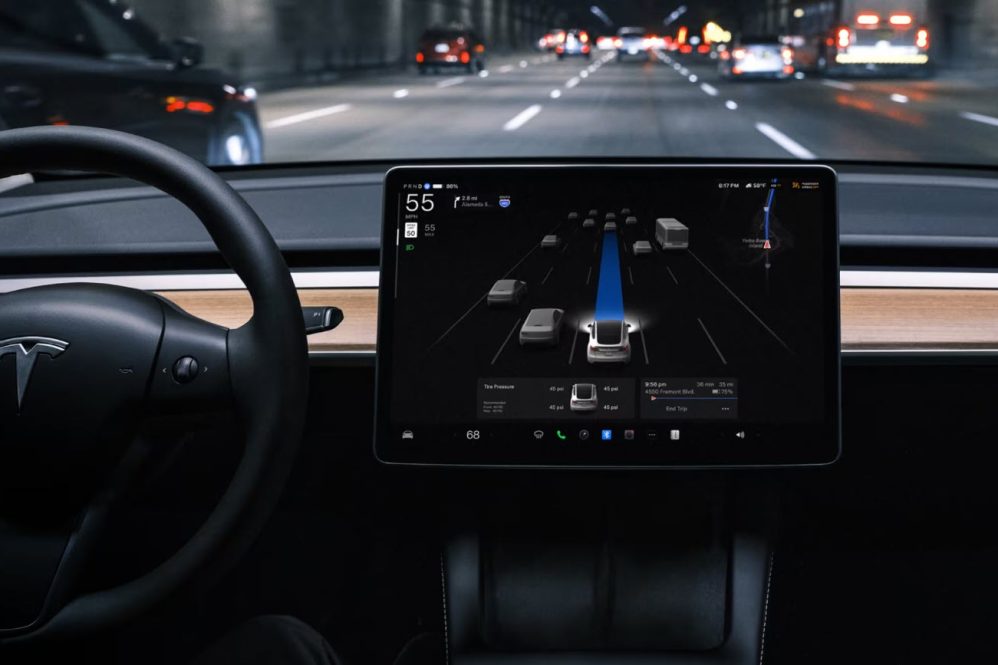
FSD (Supervised) uses Tesla’s neural networks trained on billions of miles of real-world driving data. In approved countries it can:
- Navigate complex urban environments
- Handle highway driving and lane changes
- Recognize traffic lights and stop signs
- Perform automatic parking and summon features (where enabled)
Important: It is not unsupervised autonomy. Drivers must keep their hands on the wheel (or be ready to intervene) and remain responsible for the vehicle. Danish authorities and Tesla both stress this point clearly.
Global Context: FSD Now Available in 12 Countries
With Denmark’s approval, Tesla FSD (Supervised) is now officially cleared in 12 territories worldwide:
- North America: United States, Canada, Mexico, Puerto Rico
- Asia-Pacific: China, South Korea, Australia, New Zealand
- Europe: Netherlands, Lithuania, Estonia, Denmark
Tesla’s fleet has driven over 11 billion miles with FSD-related features, providing the massive real-world data advantage that regulators are increasingly recognizing.
What This Means for Danish Tesla Owners
Tesla has stated that rollout to customers in Denmark will begin soon via over-the-air (OTA) software update. Owners who have already purchased the FSD package should watch for the update in the coming weeks.
Early adopters in Lithuania and Estonia have reported that while approval comes quickly, actual wide availability can sometimes lag as Tesla fine-tunes regional mapping and validation. Danish owners are hoping for a smoother experience.
Why This Matters for Tesla and the Future of Mobility
This approval represents more than just another checkbox for Tesla. It demonstrates:
- Regulatory momentum in Europe using mutual recognition of national approvals.
- Growing acceptance of vision-only, AI-driven autonomy versus traditional sensor-heavy approaches.
- Safety validation — Tesla continues to publish data showing FSD reduces harsh maneuvers and collision rates.
Larger European markets like Germany, France, and Belgium are widely expected to follow using similar national pathways. The UK and Nordic neighbors (Sweden, Norway, Finland) are also closely watched.